
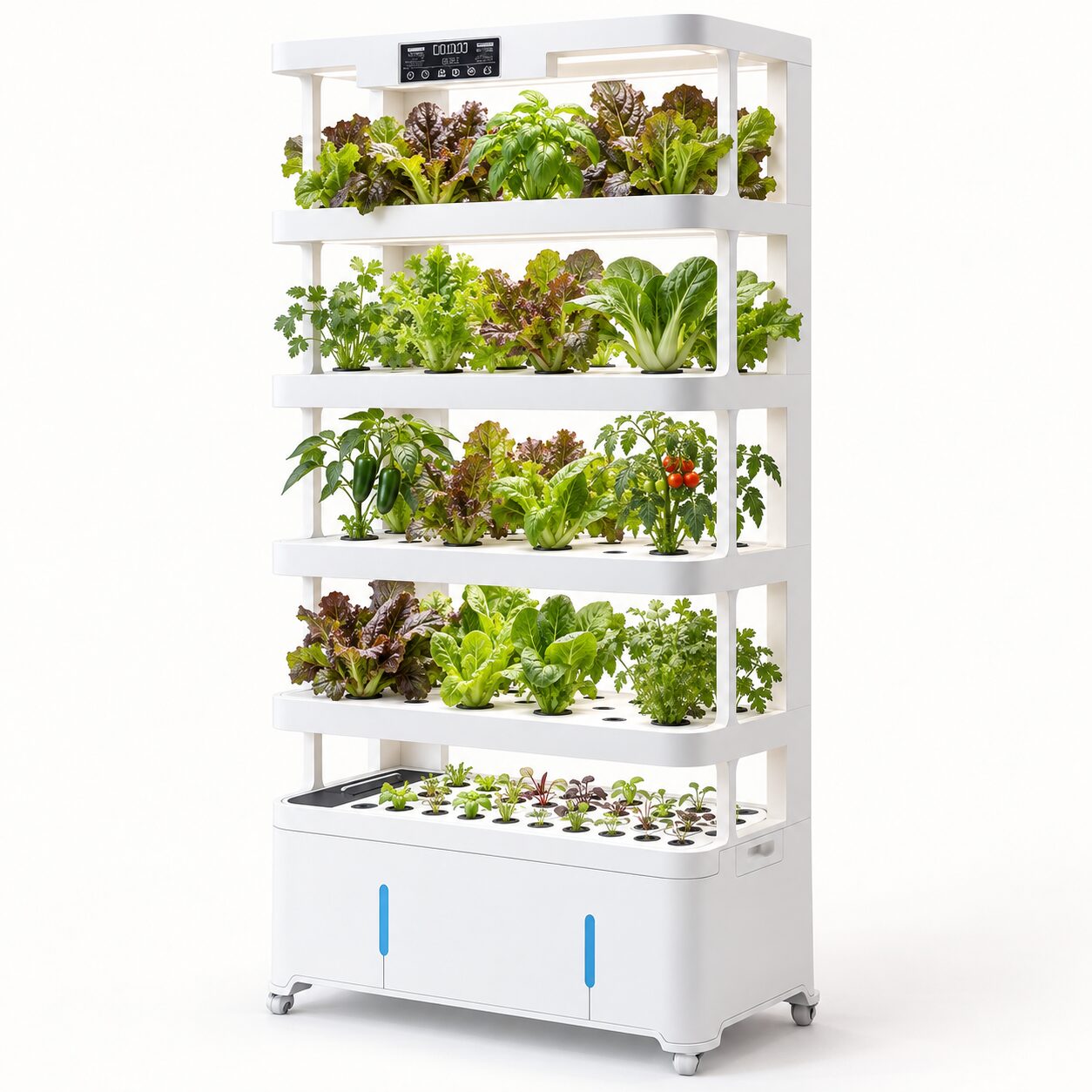
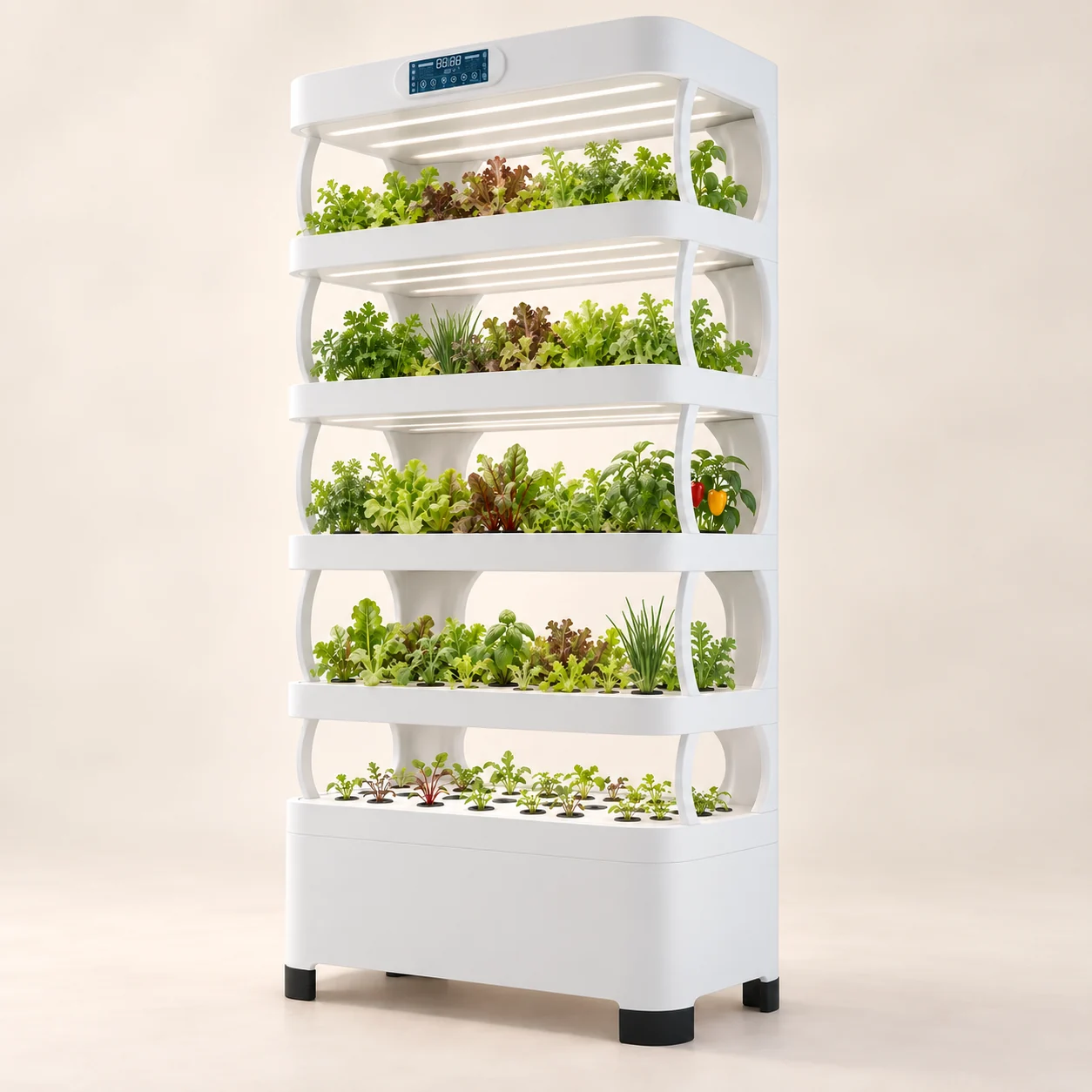
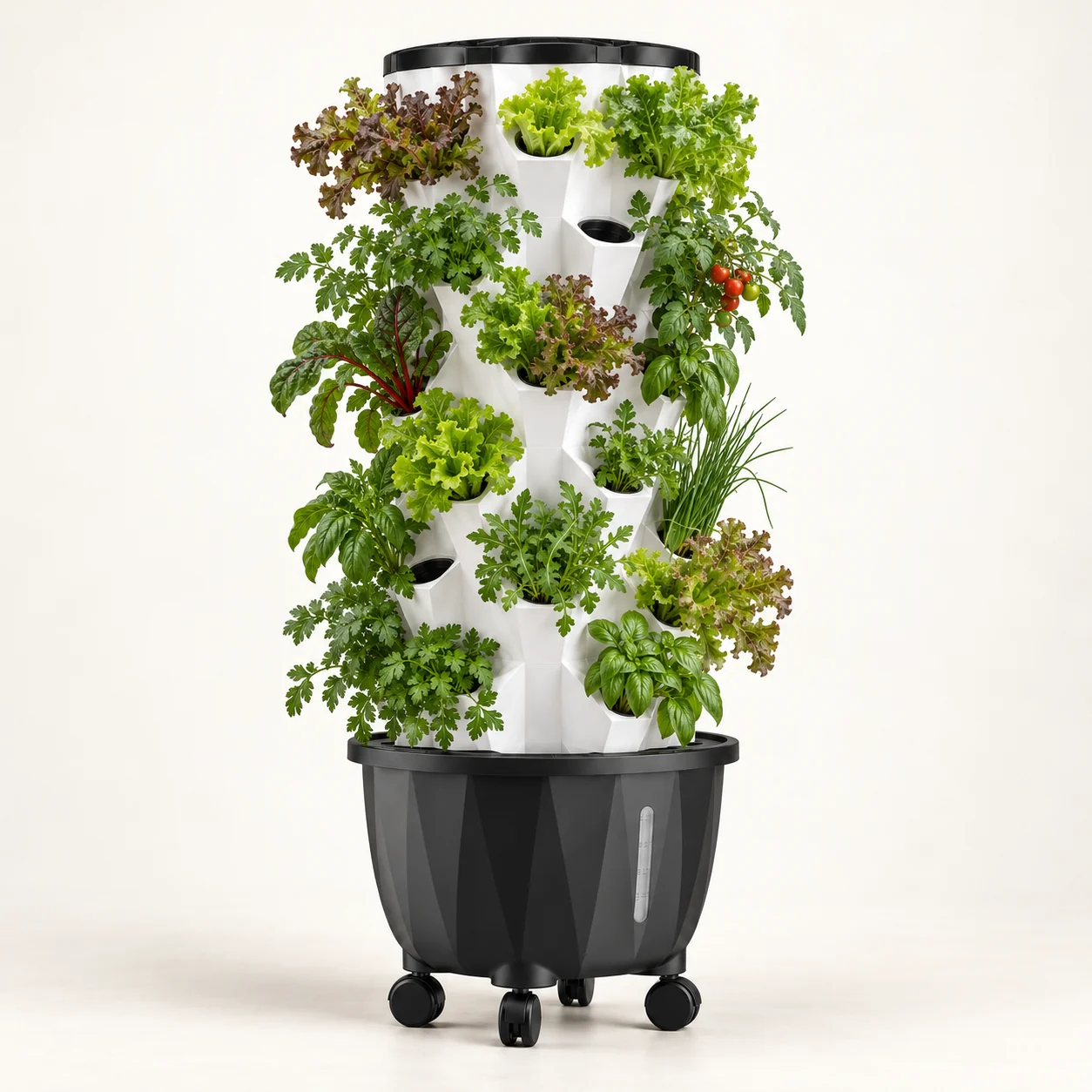
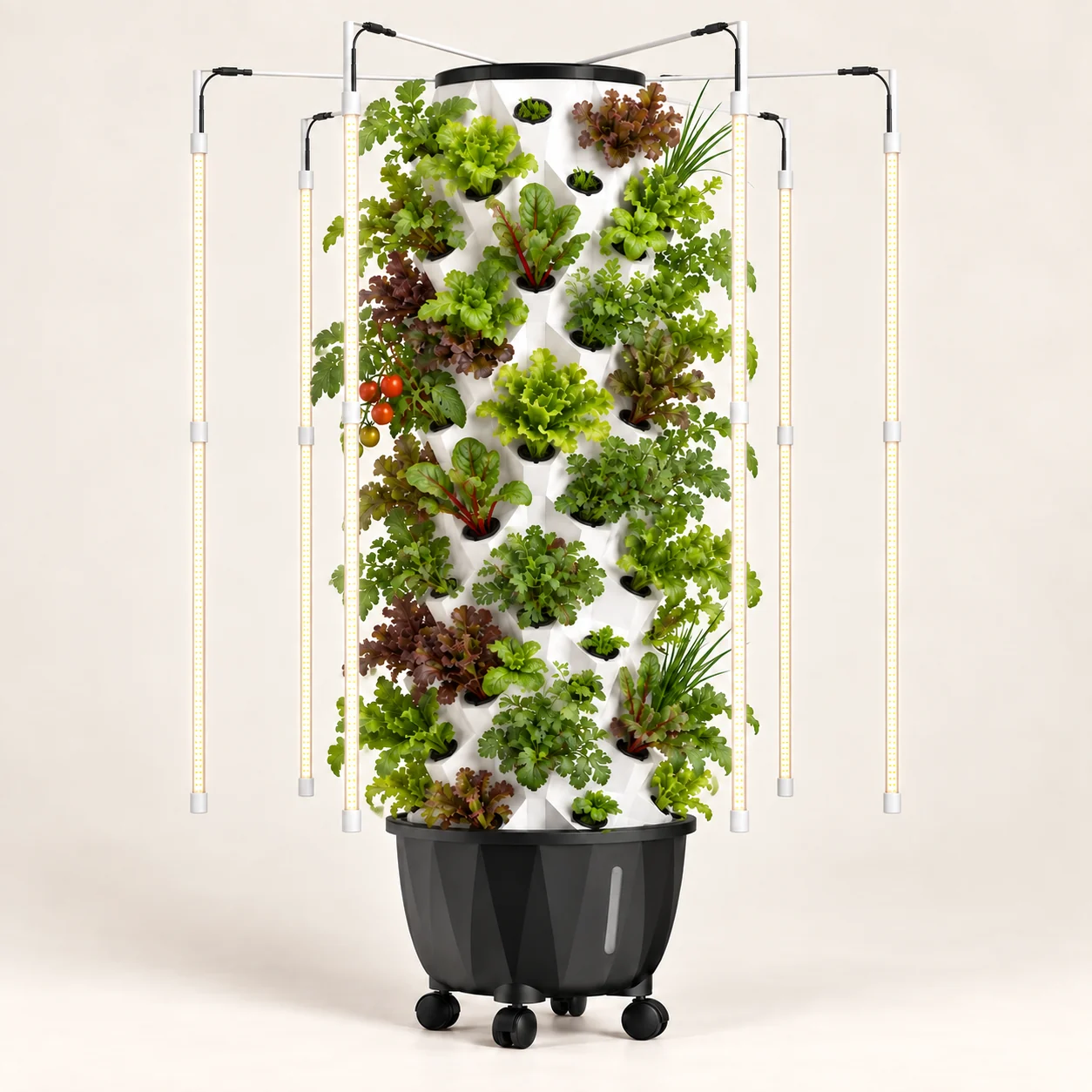


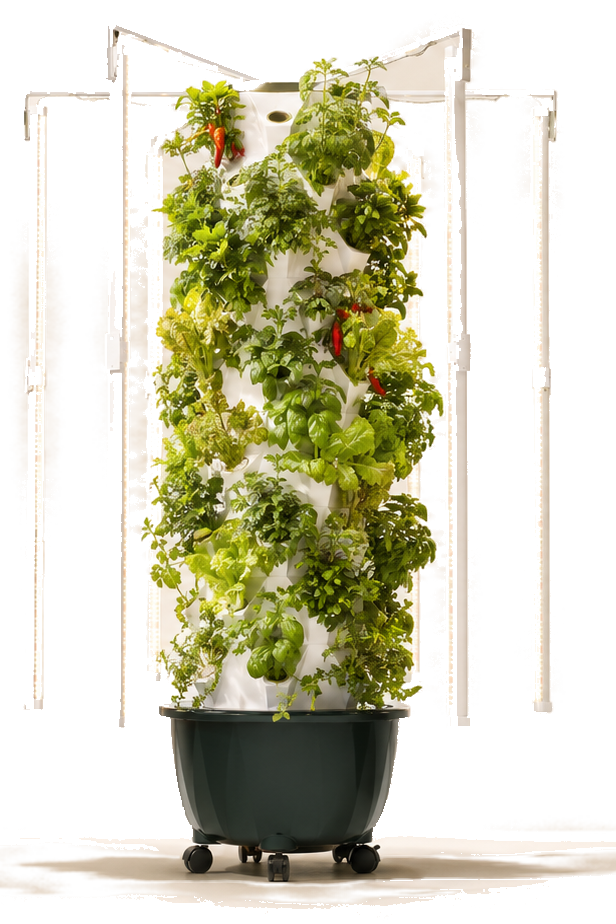
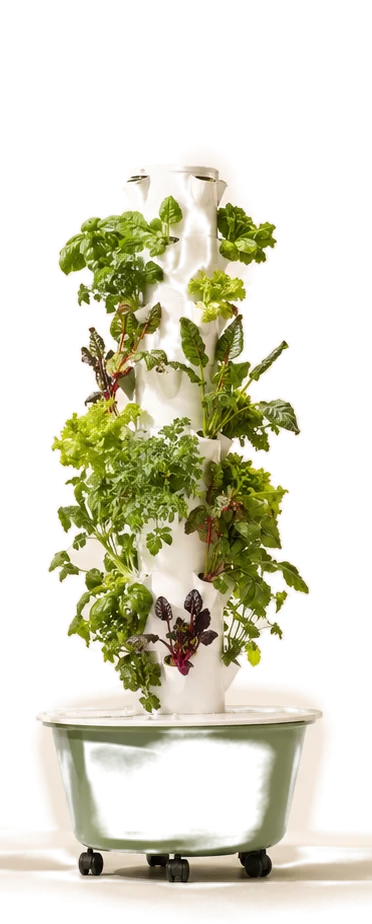


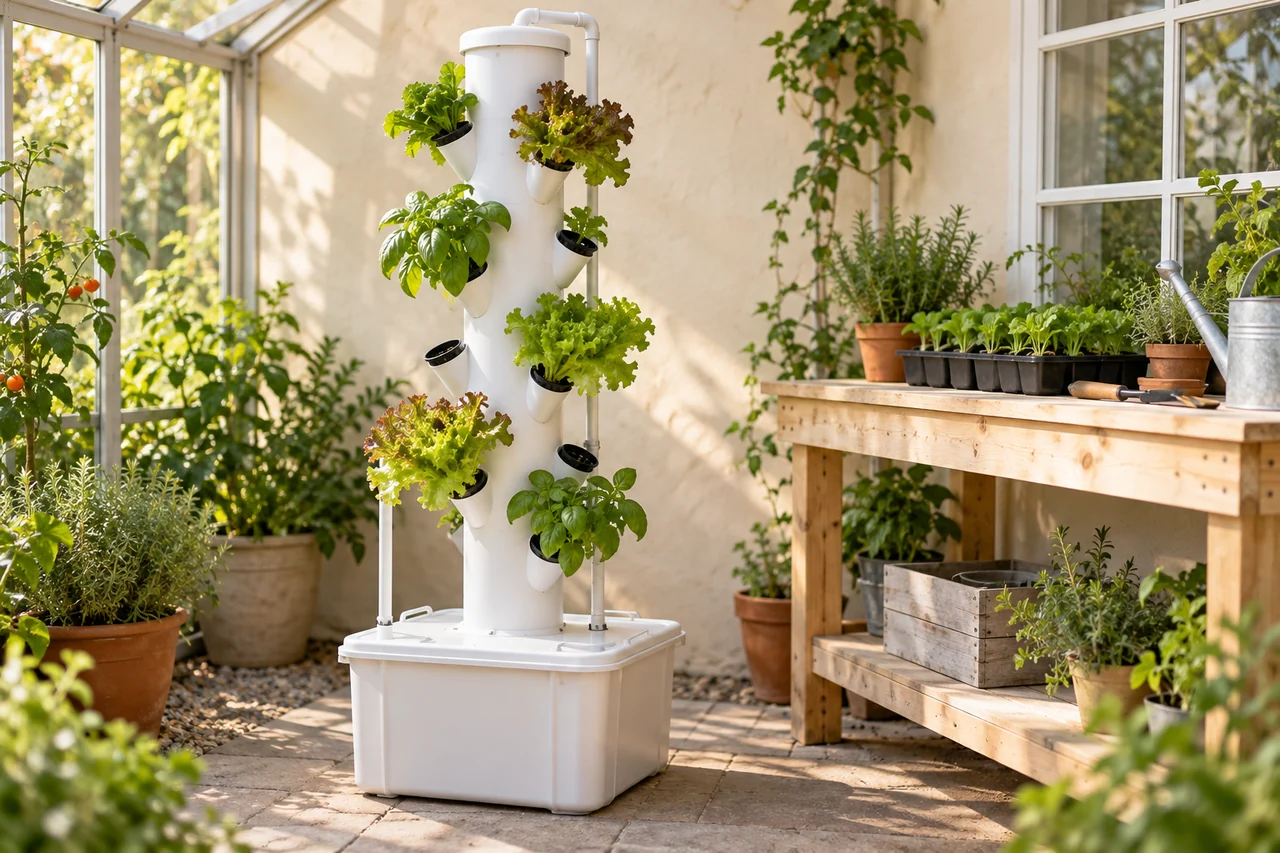

The quick answer
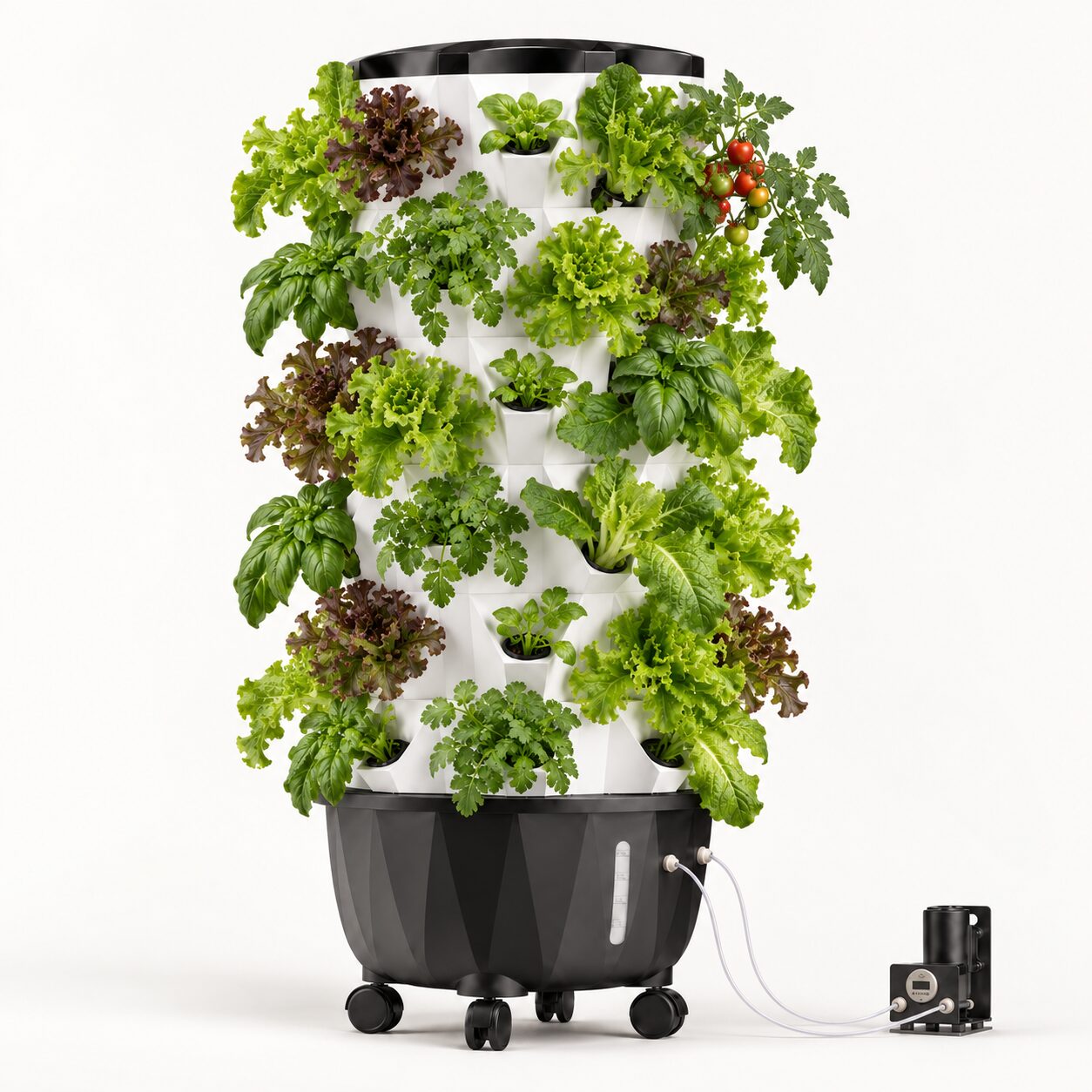
Tower Garden recirculates nutrient solution from a reservoir to the top of a vertical tower, then over exposed roots and back to the base. HOME and FLEX suit different space and crop plans. Growing year-round depends on suitable light, temperature and regular care—not on the tower alone. Start with leafy greens and herbs, then expand as your routine becomes familiar.
What is a Juice Plus Garden Tower?
“Juice Plus Garden Tower” is a common search name for the Tower Garden brand. This guide covers the U.S. HOME and FLEX systems, which support plants in soilless growing media above a nutrient reservoir.
Planning a purchase? Read the Nutraponics vs Tower Garden comparison alongside the exact manufacturer specification for the model you are considering.
How the growing cycle works
The pump lifts solution to a shower cap at the top. It falls through the tower, wets the roots and returns to the reservoir. Tower Garden calls this aeroponics; it is not the same as every high-pressure mist system. The timer repeats the cycle while roots also have access to air.
A recirculating growing cycle
Water, nutrients and light support the plants.
Automation helps with routine delivery.
You still refill, feed, prune and clean.
The pump lifts water from the reservoir to the tower top.
The shower cap spreads solution over the roots inside the tower.
Exposed roots receive moisture and nutrients while accessing air.
Water returns to the reservoir; refill and clean as directed.

Know the key components
Check the contents of your exact kit. Lighting, supports and extension parts may be separate purchases.

Reservoir
Stores the working nutrient solution. Leave access for refilling and cleaning.

Pump & timer
Move water through the tower on the schedule specified for the model and setting.

Tower & shower cap
Stacked sections hold the plants; the top distributor spreads the returning solution.

Grow sites & media
Net pots and rooted starter cubes support seedlings while roots develop inside.

Lighting
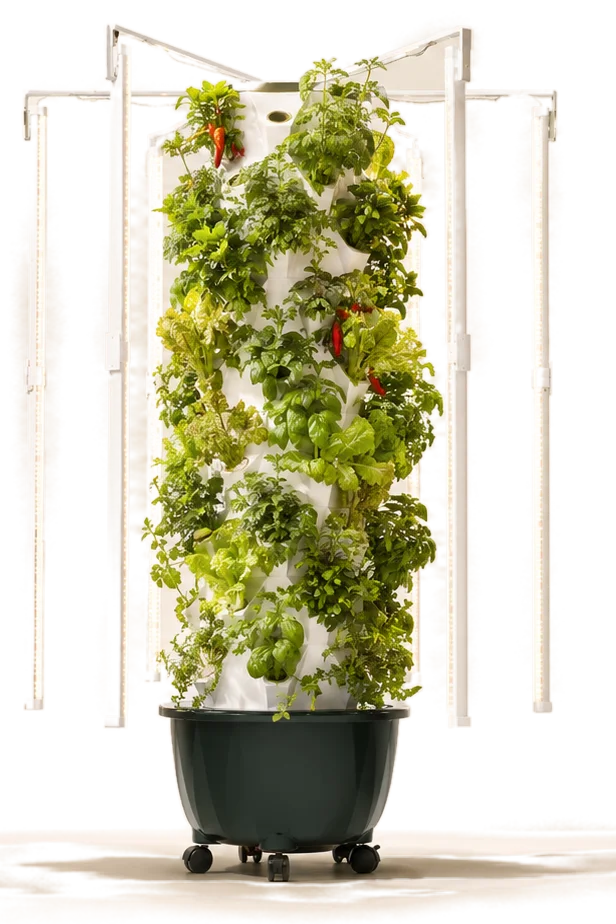
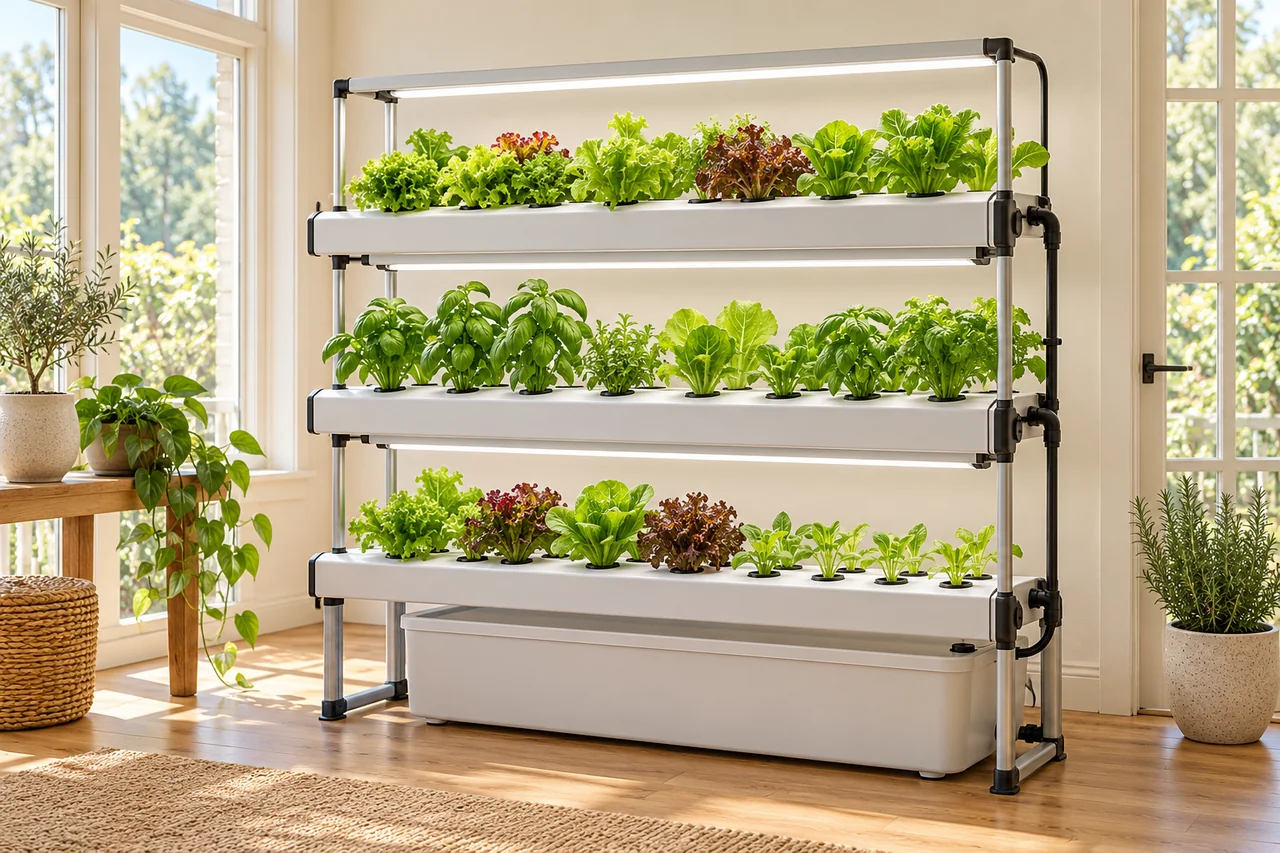
Indoor crops need suitable grow lights. Confirm whether your selected bundle includes them.
Your first growing cycle: six steps
Plan the location
Choose a level, stable surface with access to water and power. Allow space for mature foliage, lights, harvesting and cleaning. Indoor winter growing requires suitable lighting; outdoor crops need season-appropriate conditions.
Assemble before powering
Follow the HOME or FLEX assembly guide for sections, support rods, hose and shower cap. Keep the pump unplugged until assembly is complete and the reservoir is filled. Route cords as directed, with drip loops.
Prepare the solution
Use the actual nutrient label and current model growing guide for water volume, mixing strength and pH adjustment. Measure carefully. Do not copy a single feed recipe across seedlings, mature crops and different products.
Start healthy seedlings
Sow suitable seeds in prepared starter cubes using the crop instructions. Keep the medium moist and provide light after germination. Transplant when the seedling is established and roots emerge from the cube, rather than by calendar age alone.
Check delivery and light
Use the prescribed pump mode for the model and location. Observe water delivery and return, check for leaks and confirm that every planted level receives light. Do not adopt a universal 15-minute cycle from an unrelated setup.
Harvest and renew
Begin with a small crop mix. Harvest greens and herbs as they reach usable size, following crop guidance; do not strip plants bare. Start replacement seedlings in batches so the garden keeps producing instead of finishing all at once.
Use the current manufacturer instructions linked under Sources for assembly, feeding and timer settings.
What can you grow?
Start with crops you enjoy eating. Site size, light, climate and mature plant size matter more than filling every opening.
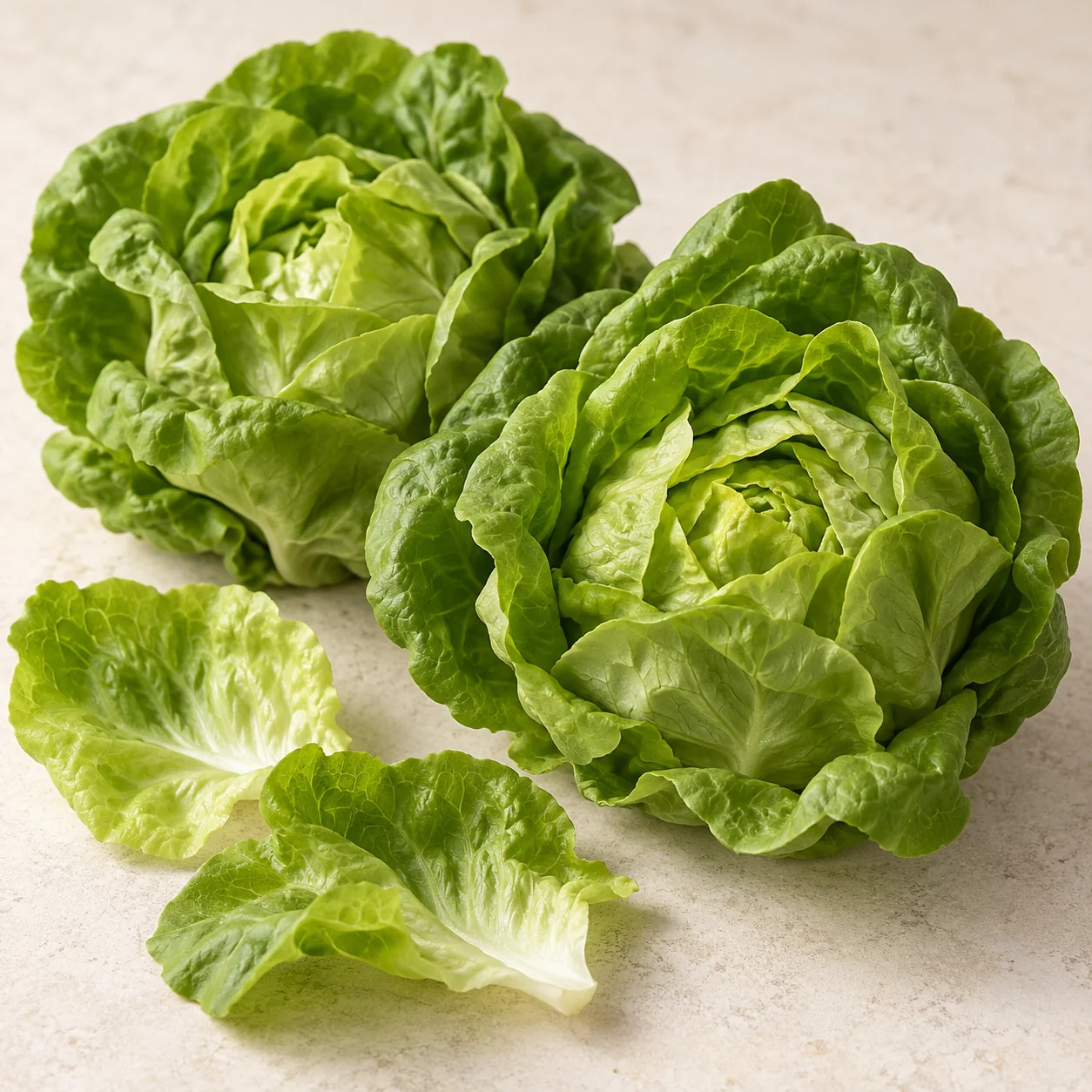
Leafy greens
Lettuce, kale and chard are useful starting crops. Give mature leaves room.
Fresh herbs
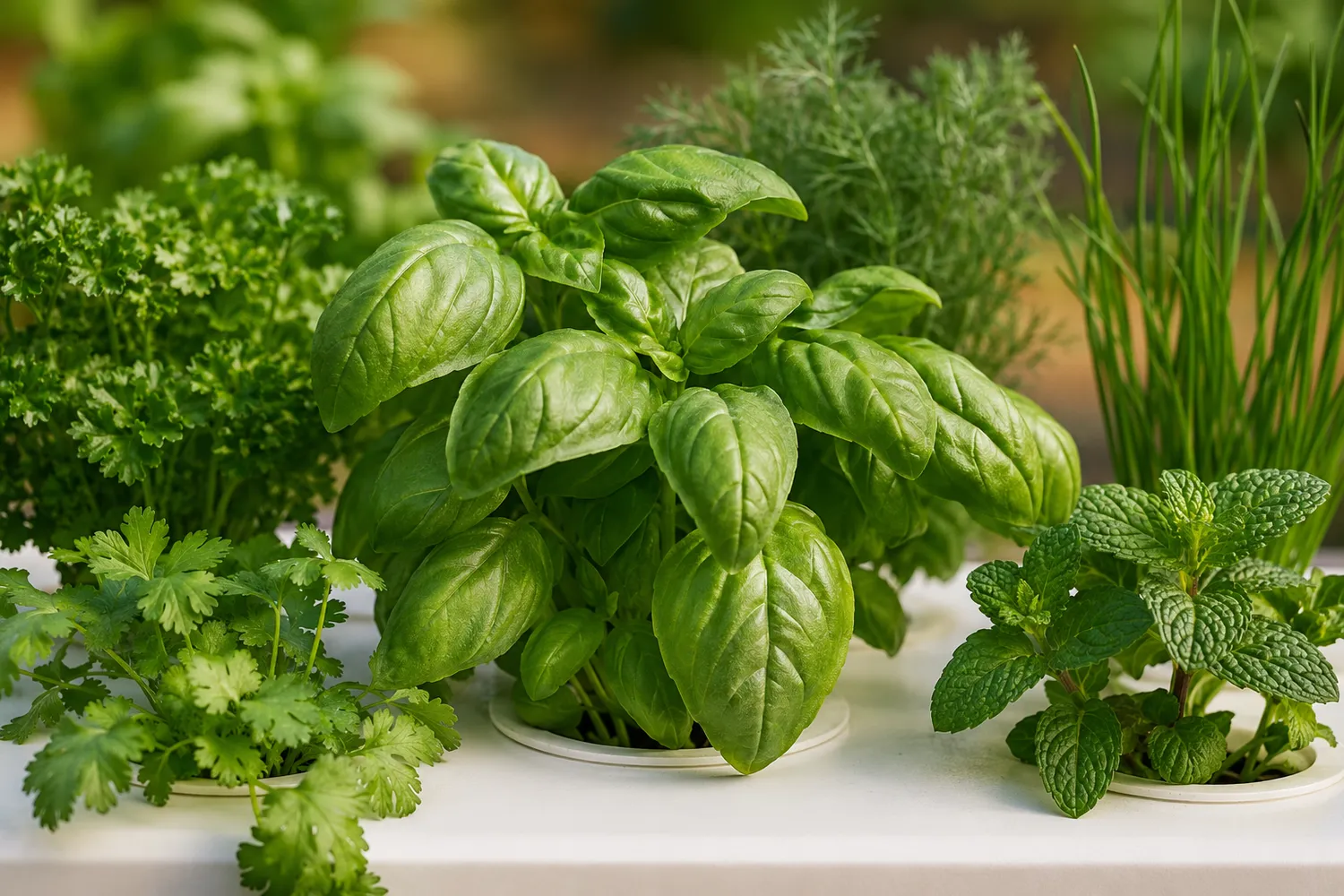
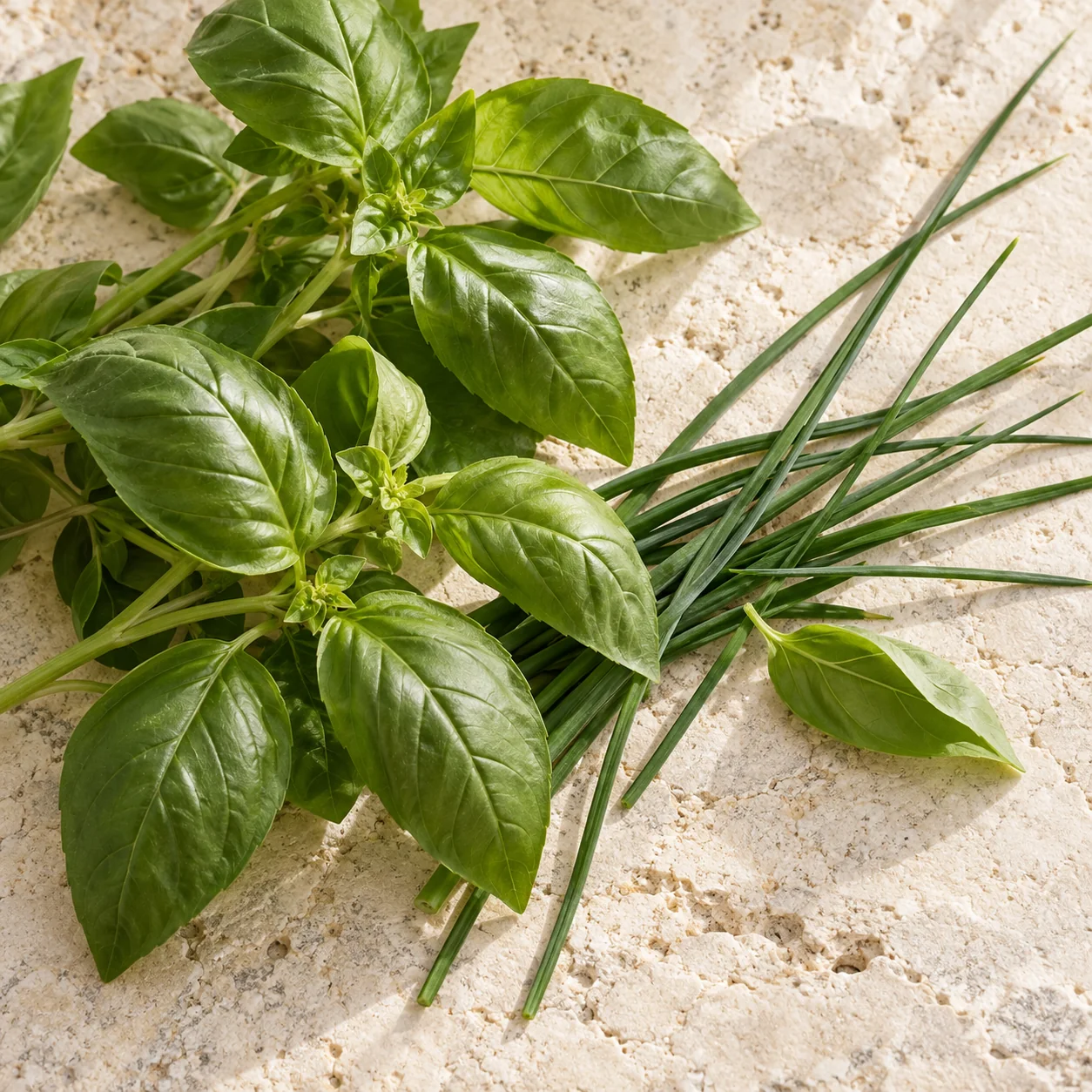
Basil, chives and parsley keep everyday harvests close. Prune vigorous growth.
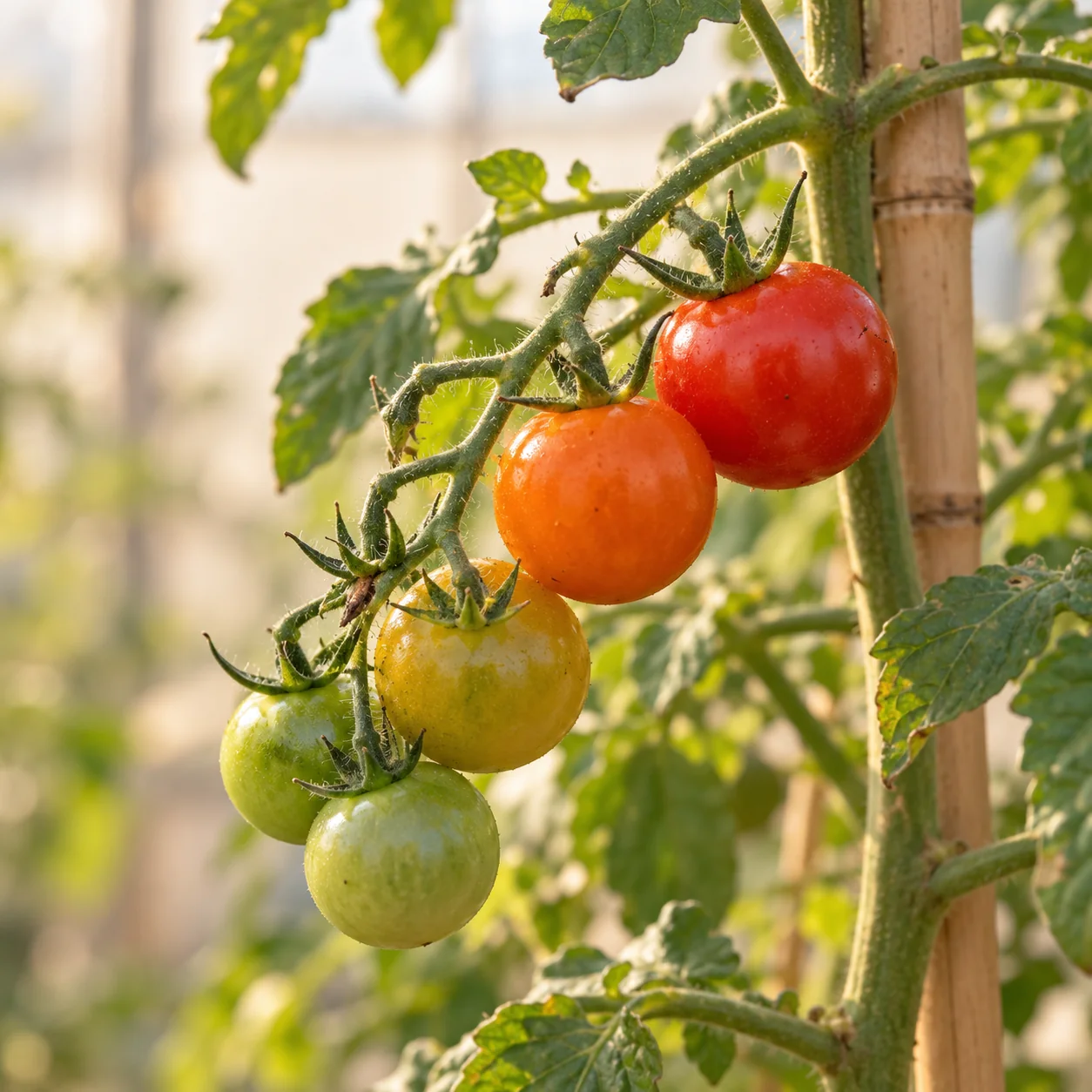
Fruiting crops
Compact tomatoes and peppers need more light, space and support; plan pollination indoors.
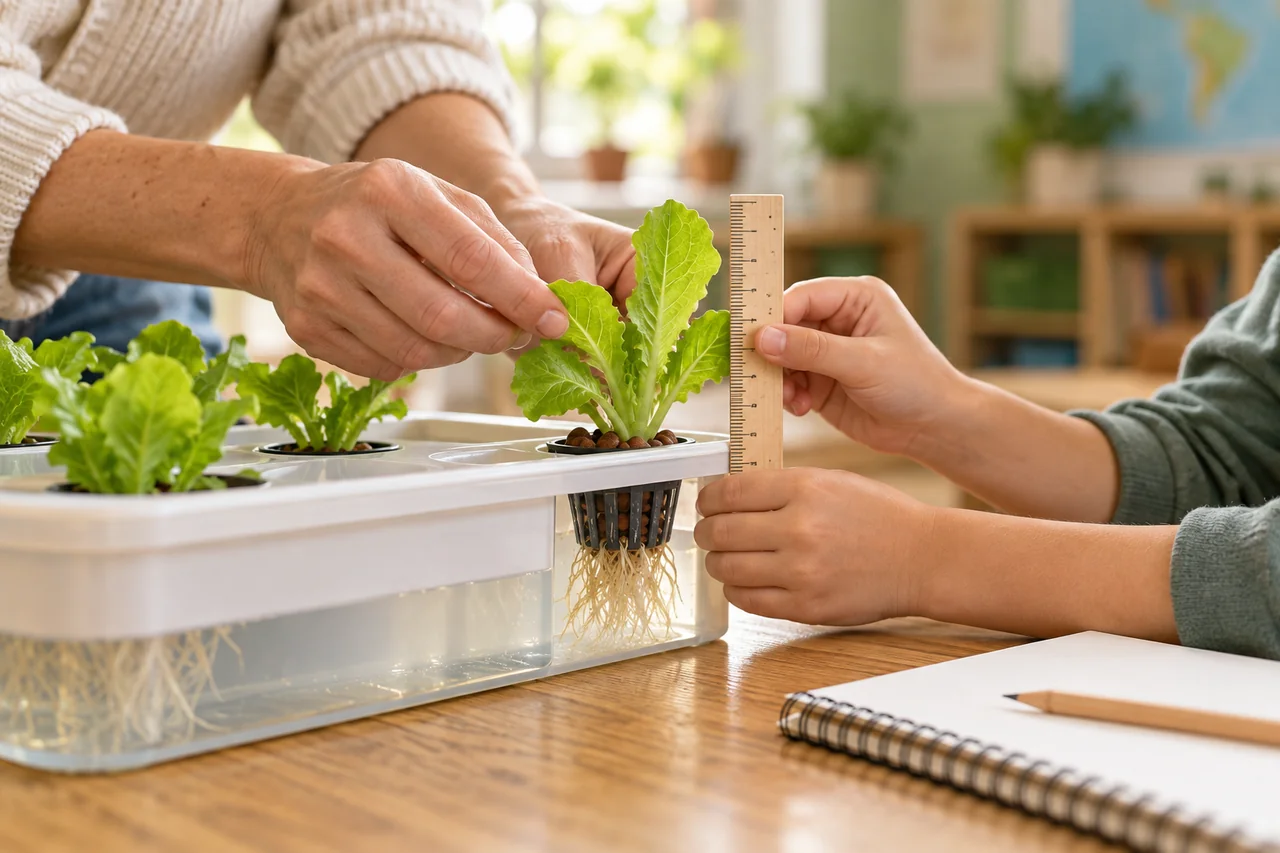
Young plants
Keep a new batch of healthy seedlings ready to replace crops after harvest.
Daily & weekly care
A quick daily look helps catch problems before plants suffer.
Check plants & water
Inspect plants and water level daily. Keep the pump adequately submerged.
Monitor the solution
Check pH weekly and after refills; use the model guide and nutrient label.
Prune & harvest
Harvest regularly, control crowding and watch for pests, even indoors.
Keep the loop clear
Clean the pump and shower-cap openings as directed. Unplug before servicing.
Benefits and trade-offs
What you gain
- Harvests close to the kitchen
- No soil beds or weeding
- Recirculating water delivery
- A hands-on growing experience
What to plan for
- Equipment, lighting and supplies
- Space beyond the reservoir
- Regular feeding and cleaning
- Seasonal or indoor climate limits
Count nutrients, starter media, electricity and replacements alongside the purchase price. Savings and harvest quantities vary with the crop and growing conditions. Explore the Nutraponics Pro Tower Garden →
Common questions
Answers to the practical questions behind a healthy first crop.
Can I grow food year-round?
Yes, if light, temperature and the rest of the growing environment suit the crop. Indoors, plan for grow lights and routine care. Outdoors, the tower does not remove seasonal heat, cold or frost limits. Replace finished crops with new seedlings to maintain a growing cycle.
Should I choose HOME or FLEX?
Compare your available space, crops and kit contents. HOME combines standard and baby-green sites in a smaller base. FLEX starts with standard planting sites and offers optional extensions. Both can be used indoors or outdoors; check current compatibility, lighting and support accessories before ordering.
Do I need special seeds or grow lights?
The manufacturer provides seed-starting guidance and compatible starter media; choose varieties suited to the growing space. Indoor crops need adequate light, and a bright-looking room is not proof of enough light for growth. Confirm that the chosen kit includes suitable lights or budget for them separately.
When can I transplant and harvest?
Look for established seedlings with roots emerging from the starter cube. Prepare indoor-grown seedlings for outdoor conditions before moving them. Harvest timing depends on the crop, variety and environment; use the crop guide and plant condition rather than a promised three-week schedule.
How often should I clean it?
The manufacturer’s care sheet calls for daily plant and water checks, weekly pruning and pH checks, monthly attention to the pump and shower cap, and periodic disassembly for cleaning. Follow the current model instructions, inspect more often if flow changes, and disconnect power before servicing.
What if plants wilt or water stops flowing?
Check water level and whether the timer should be running. With power disconnected, inspect the intake, hose and accessible distributor for blockage. For leaks, check that the unit is level and sections are properly seated. Yellow leaves alone do not identify one cause; review light, roots, water and feeding records before changing the routine.
Related guides
View all guides →Build your growing knowledge and compare the options for your home.
Sources and growing notes
Manufacturer information checked 24 September 2026. This is an independent Nutraponics guide, not a Tower Garden manual or a hands-on product test. Use the current instructions for your model and supplies.
- Tower Garden HOME — U.S. product listingHOME: mixed standard/baby-green sites, 13-gallon reservoir, base width and indoor/outdoor use. Listed heights/box dimensions conflict, so exact height is not repeated.
- Tower Garden FLEX — U.S. product listingFLEX: 20 standard sites, 20-gallon reservoir, base width, optional extensions and lighting. Advertised performance claims are not imported.
- Tower Garden growing guidance and assembly guidesOfficial model-specific instructions and plant guides. Assembly diagrams show pump, hose, shower cap and the return path.
- Maintaining and cleaning your Tower GardenDaily/weekly/monthly care; unplug before pump service. Follow current model and nutrient instructions.
- Growing strong, healthy seedlingsSeedling conditions, root readiness and preparation for outdoor transplanting.
- Tower Garden troubleshootingLevel placement, water delivery, obstructions and pest awareness.
- General harvesting guidelinesCrop-aware harvesting. No fixed yield, harvest date or grocery-savings guarantee.
- Tower Garden HOME assembly guideAssemble and fill before powering; correct cord routing and optional light installation.
- Tower Garden FLEX assembly guideFLEX-specific component assembly, hose and shower cap.