




The quick answer
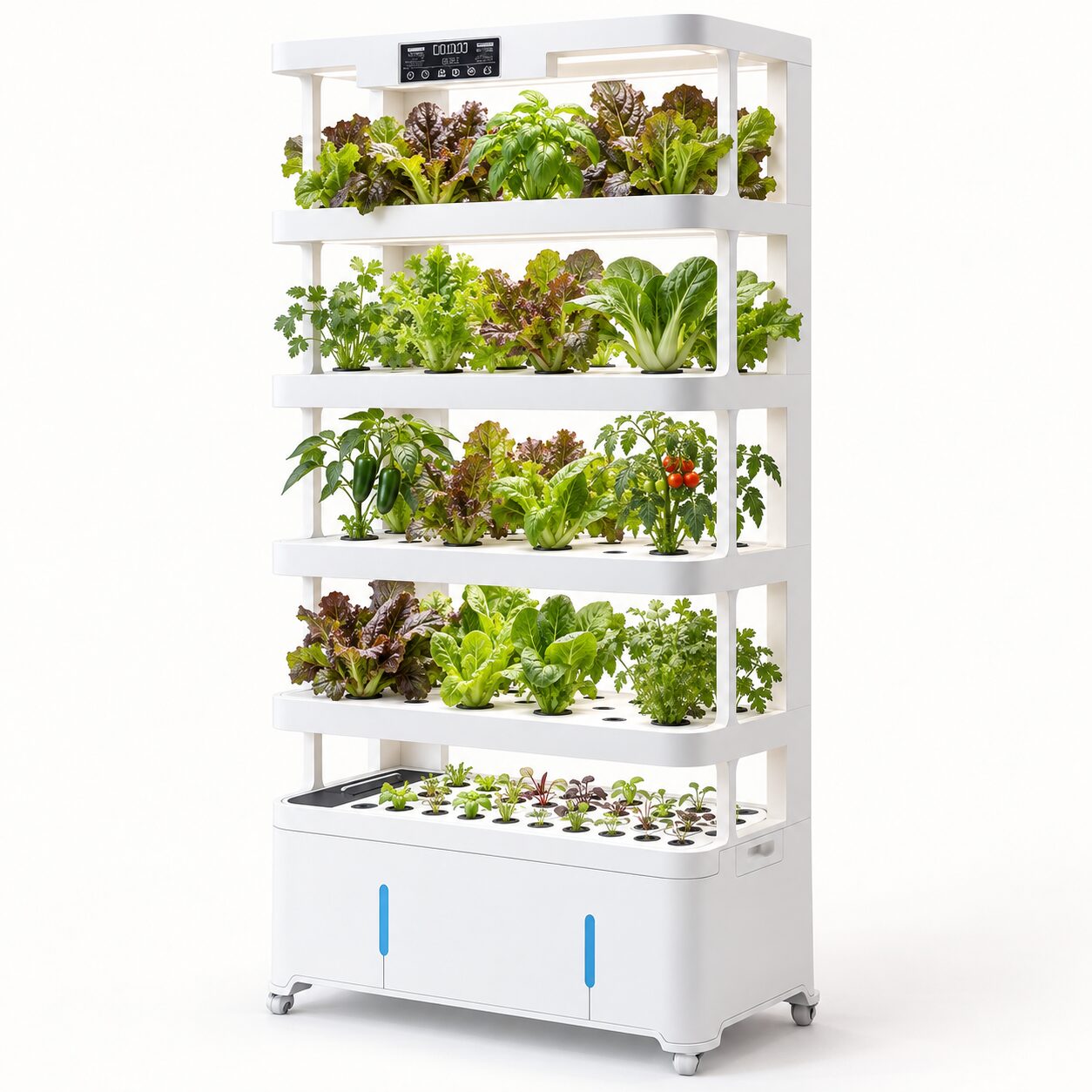
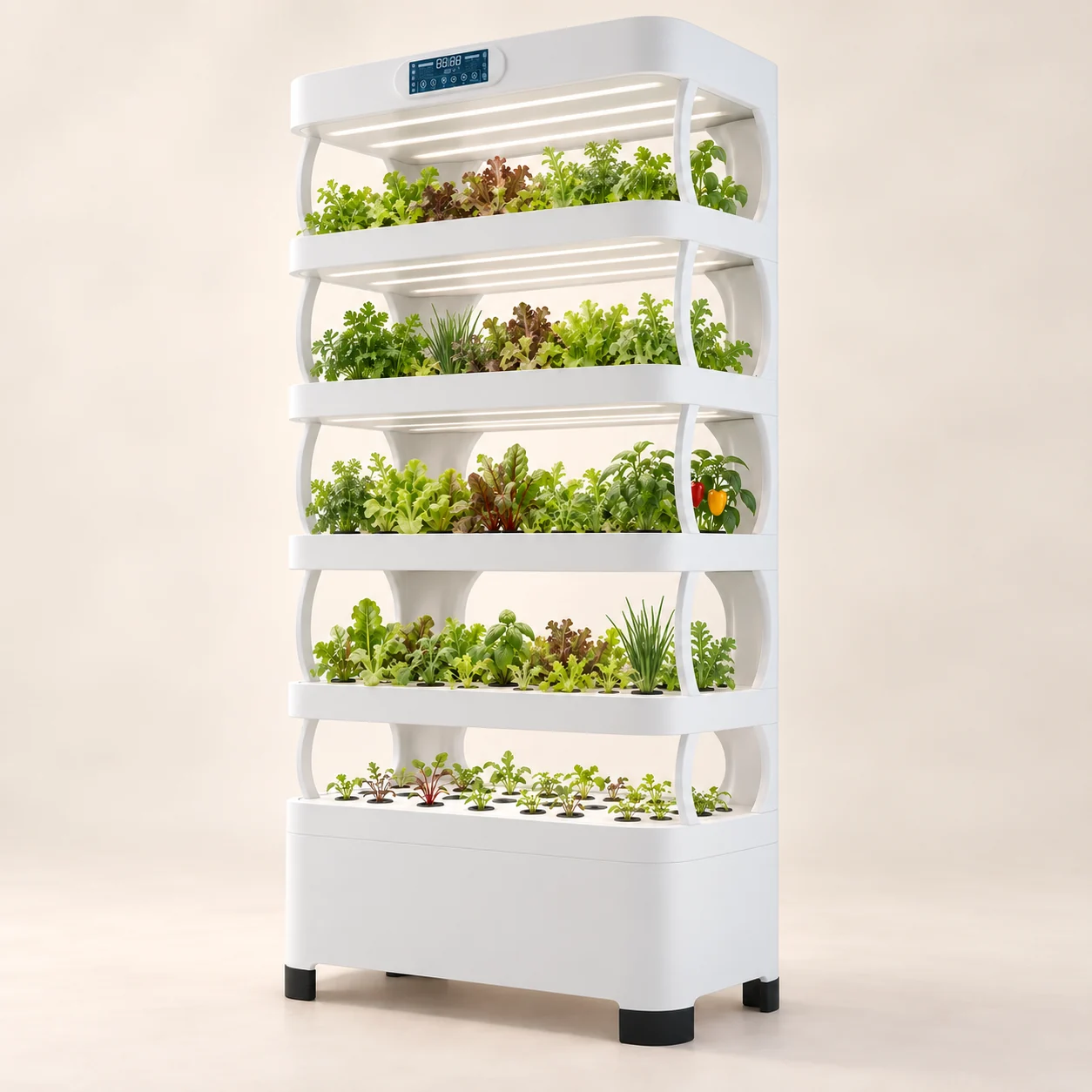
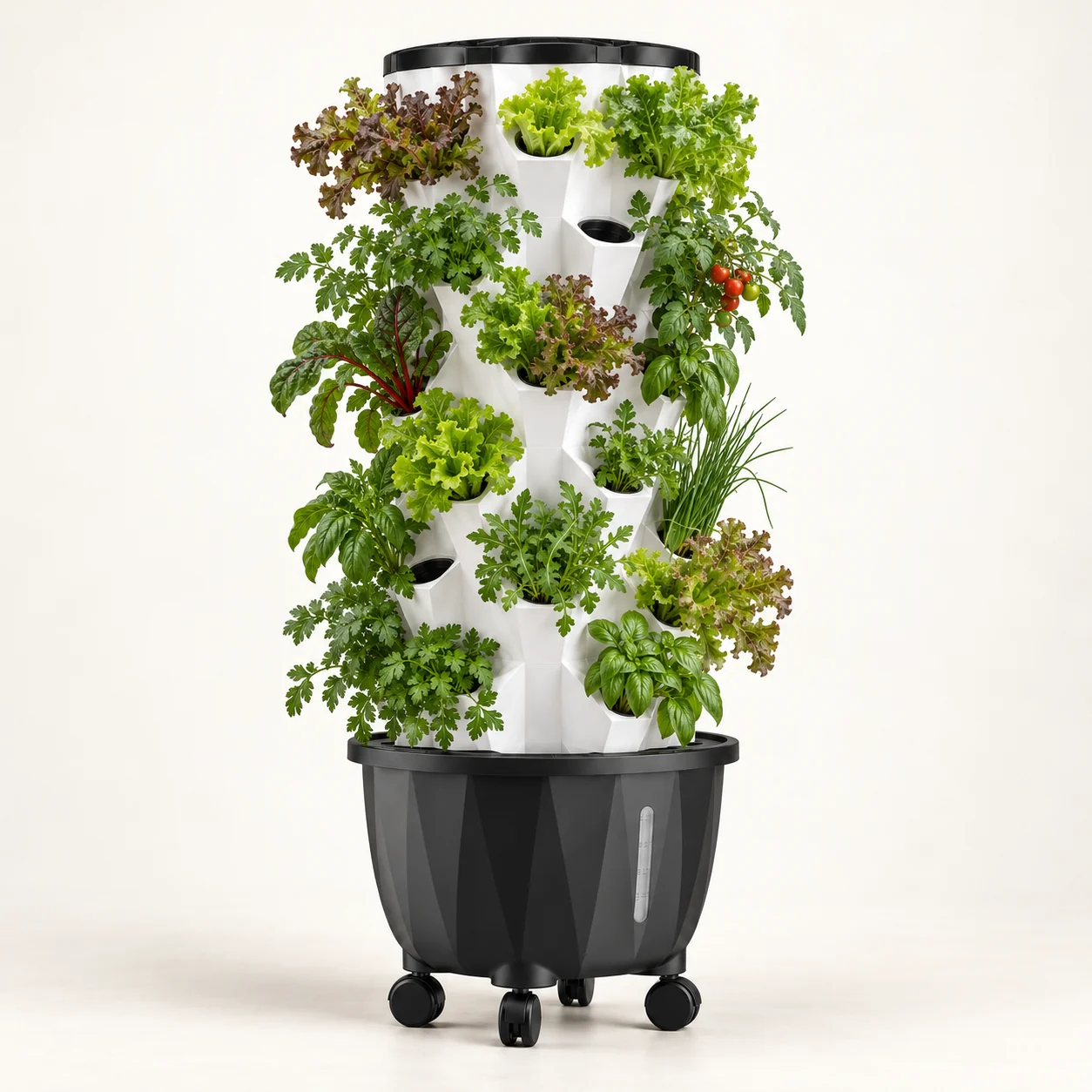
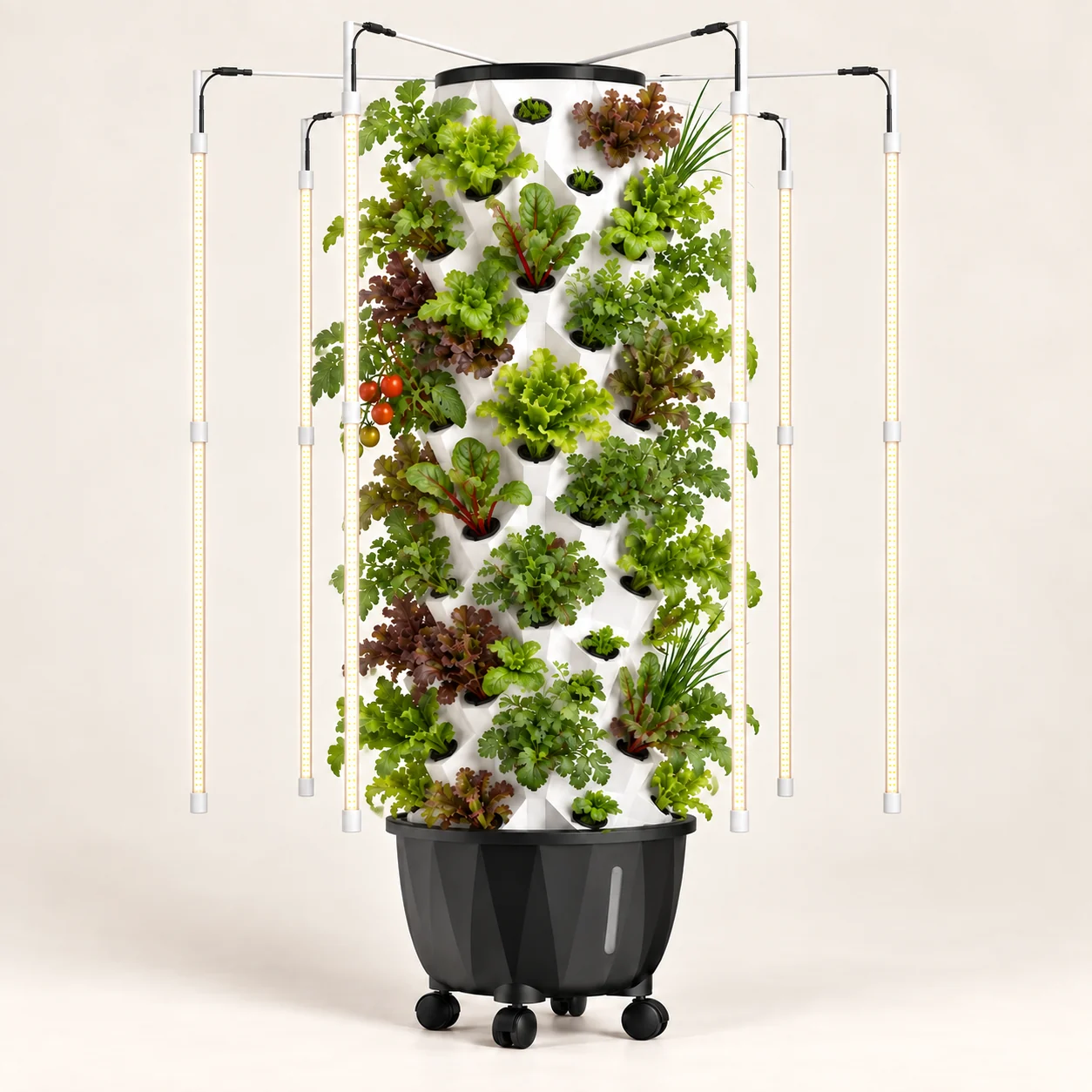
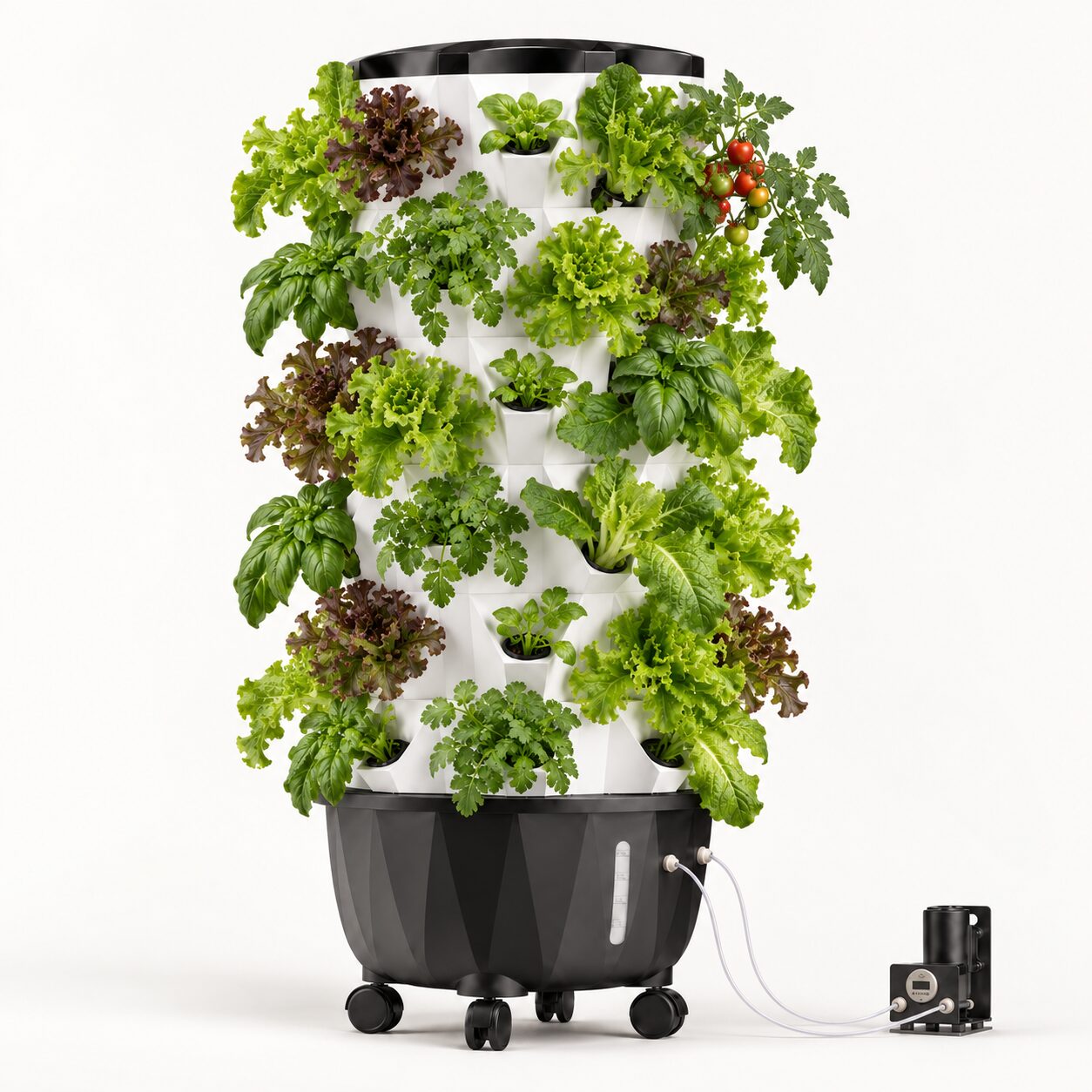
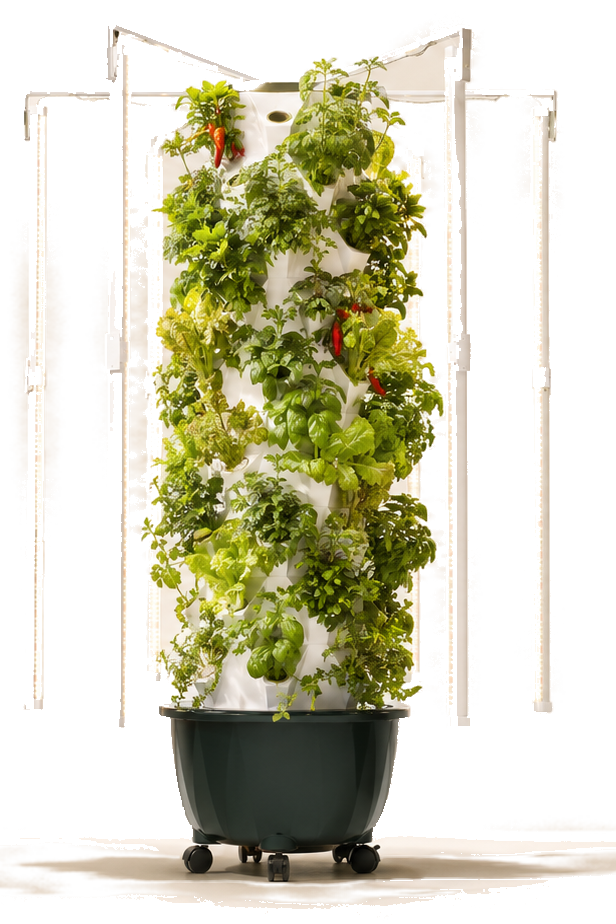
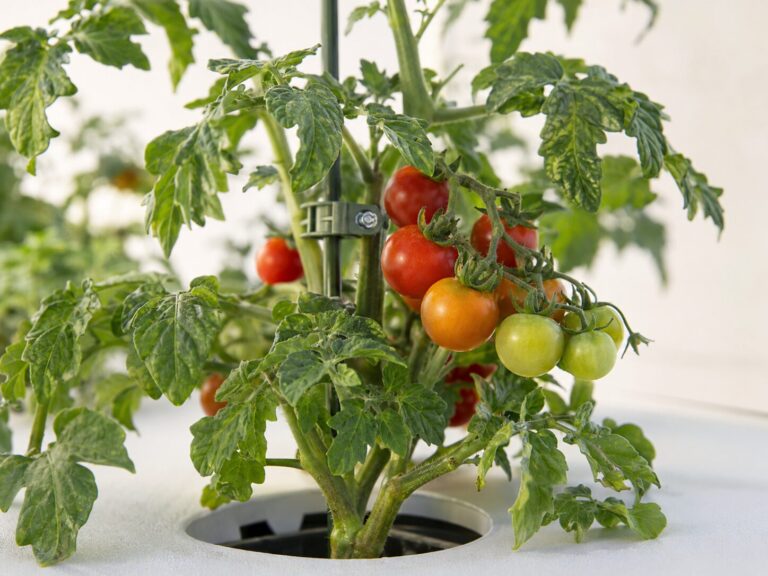
Yes, tomatoes can grow hydroponically indoors, but fruiting demands more than keeping a plant green. Choose a compact variety that fits the growing area, provide enough light across the canopy, use a complete hydroponic feed and support the crop before it becomes heavy. Indoor flowers may need gentle vibration for pollination. A tower’s planting-site count is not its mature tomato capacity.13611
Make Room for the Mature Plant
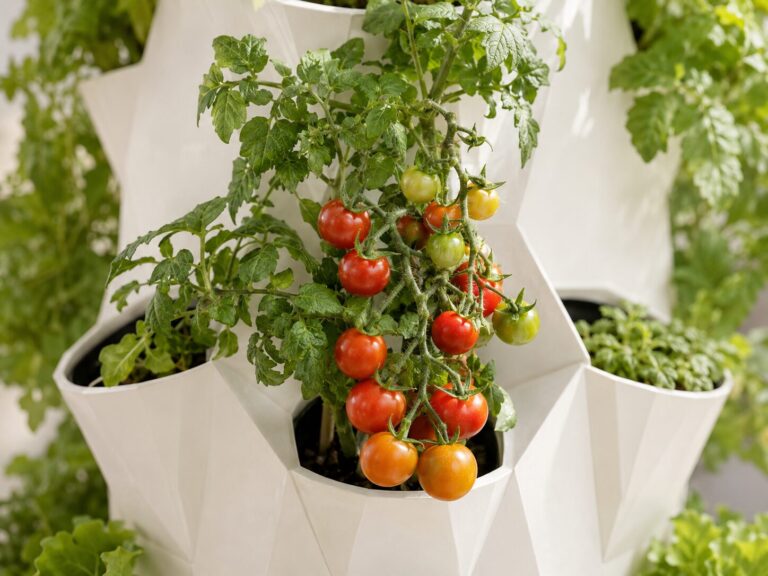
Choose by growth habit, not fruit size alone. A cherry tomato can still be a large indeterminate vine. Look for a compact, dwarf or container-suited cultivar and check its documented height and spread. Determinate and indeterminate plants need different pruning; neither label by itself proves that a cultivar fits your tower.
Plan access to the reservoir, roots and fruit. Leave room between neighboring plants and keep leaves clear of fixtures. For Nutraponics, confirm the exact model, cultivar, support arrangement and fruiting-light coverage before purchase; this guide does not approve a particular plant count.129
From Seedling to First Fruit
Use these four stages as a checklist—not a fixed calendar. Keep the cultivar name and sowing date with your notes so that observations mean something.
Start, transplant and pollinate
Start a healthy plant
Sow in clean, compatible plugs following the seed and medium instructions. Keep them moist without saturating the crown. Give emerging seedlings appropriate light. Transplant when true leaves and a sound root system are present, not when a universal height or day count is reached.2
Pollinate, then harvest
Once flowers open, gently vibrate flowering stems without damaging the blossoms. Check for developing fruit rather than assuming every flower has set. Maintain support and harvest when the cultivar reaches its normal ripe color and condition; do not pull against unsupported branches.69

For the detailed propagation sequence, use the seedlings guide. Indoor-to-outdoor moves also need gradual acclimation; an indoor light setup is not the same environment as direct outdoor sun.
Five Things the Setup Must Provide
A suitable system must serve the whole fruiting plant. Buy for mature crop requirements rather than the number of seedlings that fit on day one.1411

Root access
Use the correct holder and compatible medium. Keep roots supplied with water and oxygen; inspect for obstruction as they grow.
Complete nutrition
NPK alone is not a full nutrient program. Follow a hydroponic formula that also supplies calcium, magnesium and micronutrients.

Canopy lighting
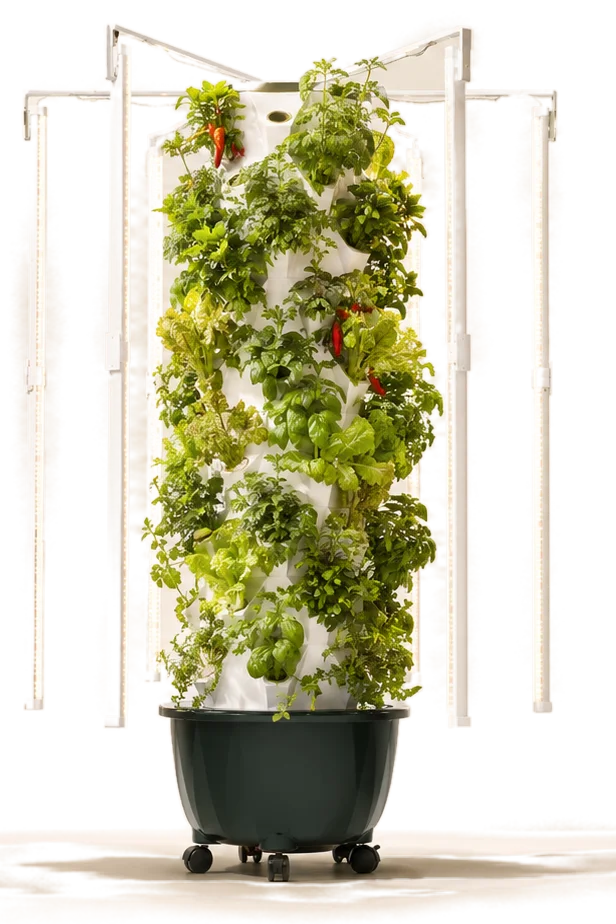
Compare useful light at the leaves, not advertised wattage alone. Recheck coverage and heat as the canopy grows and shades itself.
Stable support
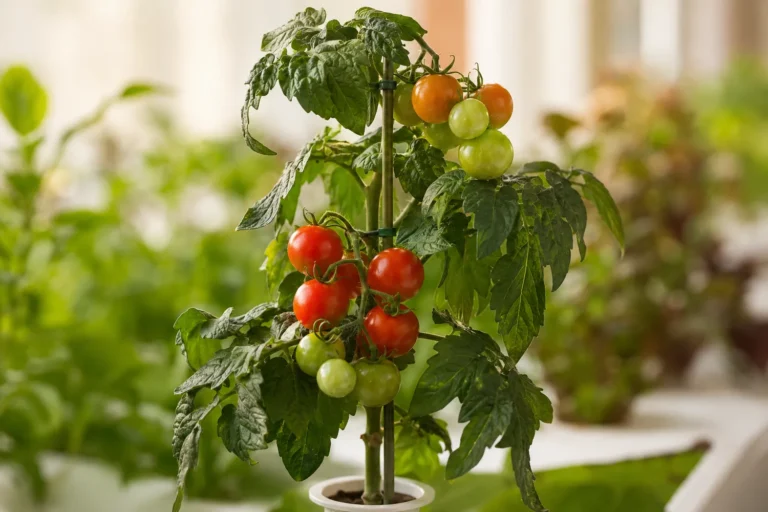
Use a suitable cage or trellis and soft ties. Do not load light arms, plumbing or trays that are not designed to carry the crop.
Useful measurements
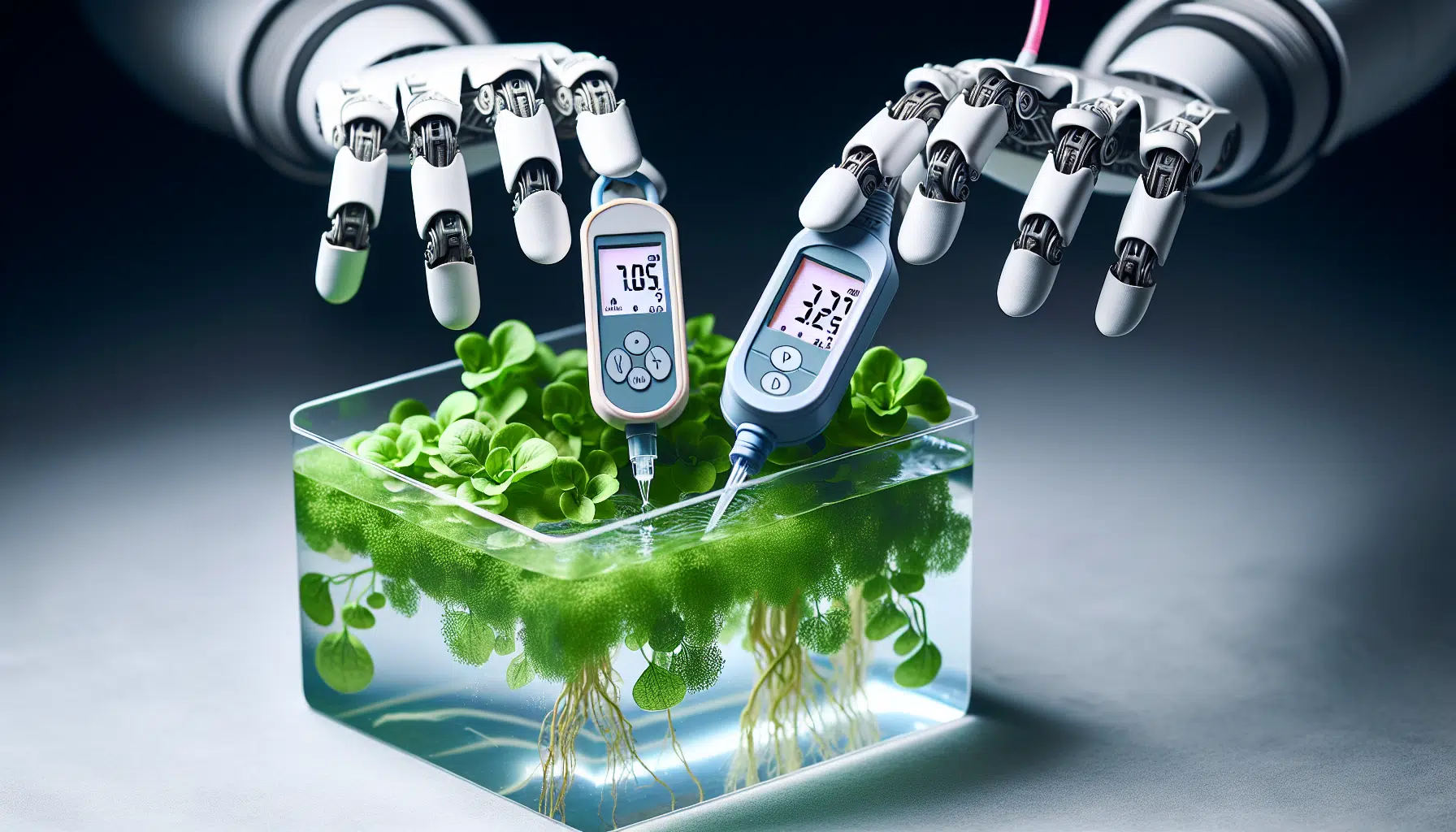
Use maintained pH and EC meters. Separate source-water readings from mixed-feed readings; record units and additions.
Set LEDs by the light delivered
Daily light integral (DLI) measures the light received over a day. Virginia Cooperative Extension lists 20–30 mol/m²/day as a general tomato planning range, with different needs for young plants. A constant 400 µmol/m²/s for 16 hours calculates to 23.0 mol/m²/day. This example assumes constant intensity and excludes sunlight; it is not a reading from any Nutraponics product.3
Use the fixture’s PAR coverage map and mounting guidance, then measure at representative canopy positions. Tomatoes are day-neutral: a mandatory switch to a 12-hour day is not required to initiate flowers. Keep a suitable light–dark schedule; simply extending a weak light or moving an unknown lamp closer is not a complete solution.1012
Check the Cause Before You Treat
A symptom is a clue, not a diagnosis. Compare recent changes with your log before adding more nutrients or applying a treatment.7813
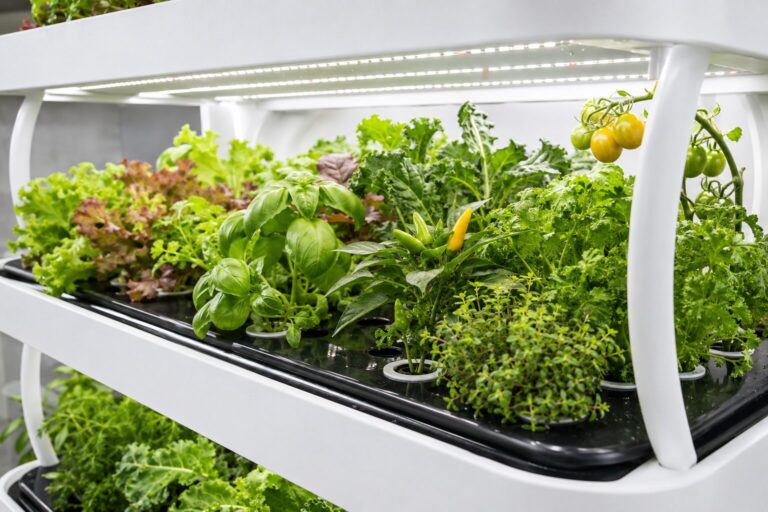
Stretched growth
Check canopy coverage, crowding and the light schedule. Do not prescribe a lamp distance from wattage alone.
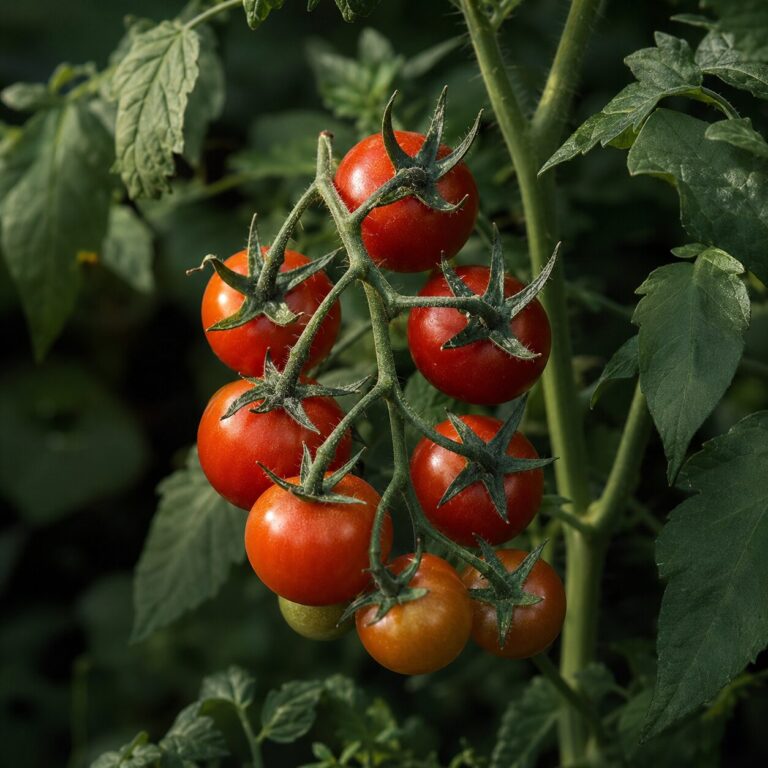
Flowers, no fruit
Review pollination, heat and growing conditions. More fertilizer will not automatically fix poor fruit set.
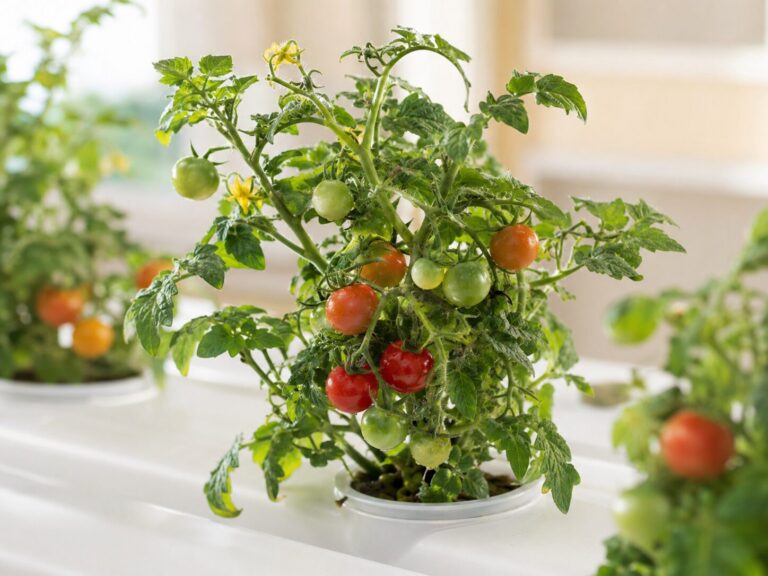
Dark blossom end
Blossom-end rot involves calcium delivery to developing fruit. Review water consistency and the full feed before adding calcium.
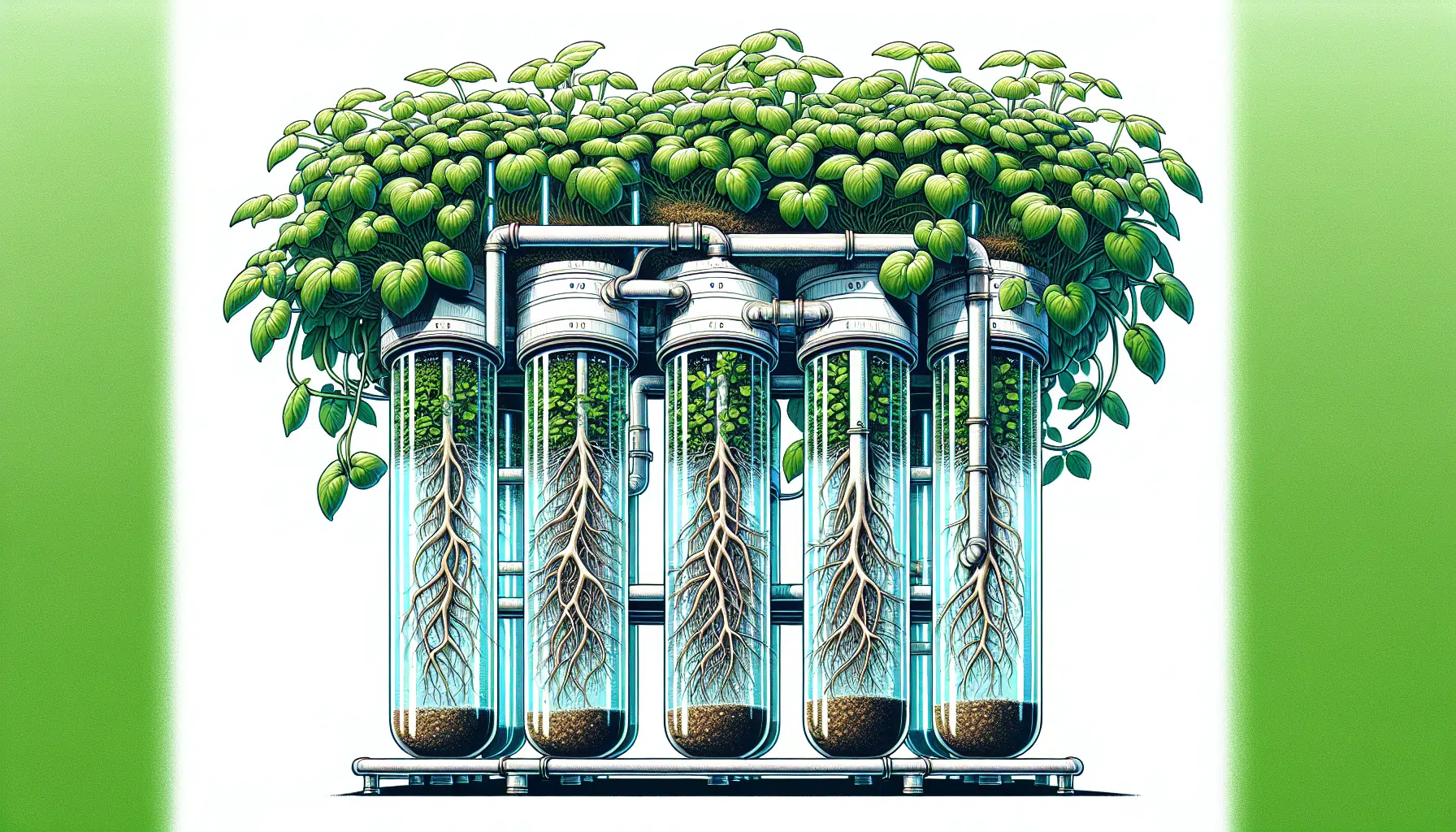
Wilting or yellowing
Confirm water delivery and root condition, then inspect leaves and readings. Avoid assuming every pale leaf needs more feed.
Inspect leaf undersides and isolate suspect plants where practical. Soilless growing does not make tomatoes pest- or disease-proof. Persistent problems merit diagnosis; do not add improvised oils, alcohol or disinfectants to the root zone. Check your source water and mixed feed →
Keep Care Consistent
Check delivery
Inspect solution level, flow, leaks and plant condition; increase checks during rapid growth or warm weather.
Record readings
Measure pH and EC with maintained tools. Recheck after mixing or top-ups before changing the feed.
Train selectively
Match pruning to growth habit. Do not remove every sucker from determinate plants or top a vine just to force it into an undersized system.
Check air and nutrient-solution temperatures separately. An overheated room or reservoir needs investigation, not an automatic heater adjustment. Use the crop program and equipment instructions; this guide does not prescribe one thermostat setting for every indoor system.17
Plan for a Real Harvest
What the setup can offer
- A crop you can observe closely.
- A growing space independent of garden soil.
- Harvests matched to a cultivar you enjoy.
What still takes work
- Adequate light and running costs.
- Support, pollination and daily attention.
- Space for roots and mature foliage.
Track sowing, transplanting, flowering and harvest separately. A seed packet’s maturity estimate often starts at transplanting; it is not a universal countdown from sowing.9 Explore growing food for your family →
Common Questions
Practical answers for planning and caring for an indoor tomato crop.
Which tomatoes are most realistic for a small indoor system?
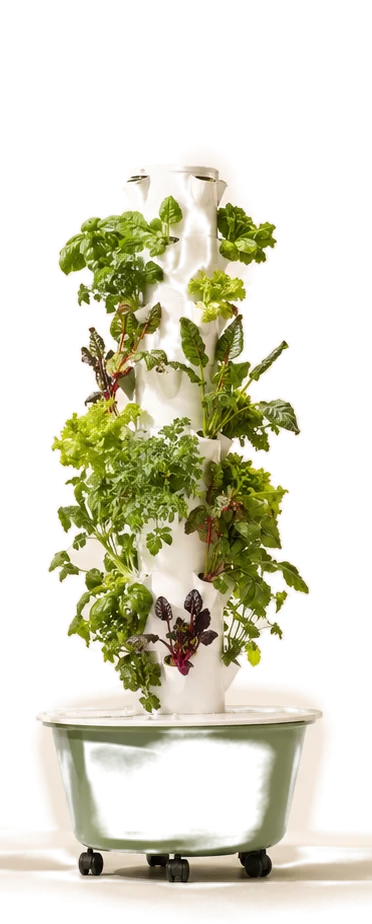
Begin with the mature size, not a picture of the fruit. Compact, dwarf or container-suited cultivars are worth evaluating; a cherry tomato is not necessarily a small plant. Confirm canopy clearance, root access and support with the system provider. A lettuce planting site is not evidence of full-size tomato capacity.19
How long until I can harvest?
There is no reliable two-month guarantee. Cultivar, transplant age, light, temperature and fruit set all affect timing. Use the seed supplier’s maturity estimate, check whether it starts at transplanting, and record your actual stages. Ripeness should match the variety—not every ripe tomato is red.29
Do I need two tomato plants for pollination?
A second plant is generally unnecessary: tomato flowers can self-pollinate. In a still indoor environment, gentle vibration of a flowering stem helps release pollen. Avoid brushing pollen between plants as a required step or damaging open flowers. Poor temperature conditions can still reduce fruit set even when flowers are vibrated.6714
Should I change to a 12-hour light cycle at flowering?
Not as a flowering trigger. Tomatoes are day-neutral. Plan the daily light received and retain a suitable dark period instead of copying an 18-hour vegetative/12-hour flowering rule. Fixture output, distance and canopy coverage matter alongside hours; a fixed wattage-to-distance chart is not a reliable substitute.31012
Should I flush with almost nutrient-free water before harvest?
Do not use a near-zero EC target as a universal preharvest rule. Fruiting plants need a complete program, and EC alone does not reveal nutrient balance. Follow the feed supplier’s crop-stage guidance and system instructions; diagnose unusual readings before abruptly diluting or replacing the reservoir.4
Can tomatoes share a system with lettuce or herbs?
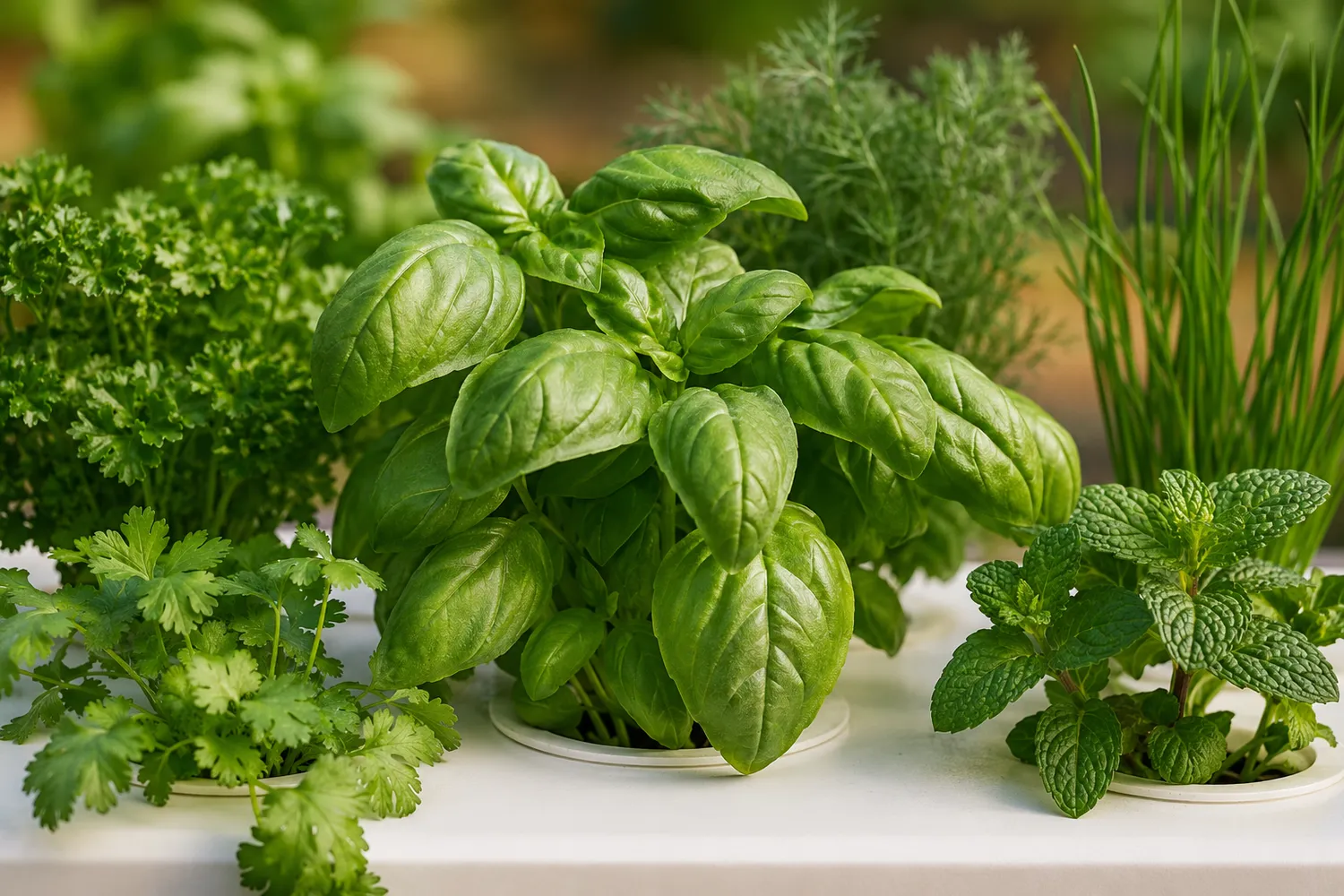
Only when their needs and mature sizes are compatible. Tomatoes can shade neighboring plants and may need a different feeding program. Plan fewer, well-supported plants and inspect root access. Where light, nutrition or space cannot be reconciled, use separate growing zones or select a more suitable crop.134
Related Guides
View all guides →
Sources & further reading
These primary sources support the proposed growing guidance. Garden or greenhouse advice is not a Nutraponics capacity certificate or pump-setting specification.
- University of Minnesota Extension — Small-scale hydroponicsGeneral hydroponics; not a Nutraponics capacity certification. Soil/DIY rates and universal schedules are not copied.
- University of Minnesota Extension — Growing tomatoes in home gardensGarden context; soil pH, in-ground spacing and irrigation amounts are not hydroponic prescriptions.
- Virginia Cooperative Extension — Calculating and Using Daily Light Integral (DLI): An Introductory GuideGeneral planning range, not a guaranteed yield or measured Nutraponics LED specification; seedlings differ.
- Oklahoma State University Extension — Electrical Conductivity and pH Guide for HydroponicsBroad crop reference. Not an instruction to run seedlings, every cultivar or a mixed reservoir at the upper value.
- University of New Hampshire Extension — Pruning Tomato PlantsDo not translate greenhouse high-wire methods into hardware loading limits or recommend topping every dwarf.
- Mississippi State University Extension — Bumble Bee Hive, No. 30Pollination mechanism only; no recommendation to introduce bee hives into a home or classroom.
- University of Minnesota Extension — How excessive heat affects the vegetable gardenGeneral crop physiology; no universal room thermostat, nutrient-solution temperature or humidity recipe.
- Mississippi State University Extension — Tomato Troubles: Common Problems with TomatoesSymptoms are not a remote diagnosis. Soil calcium amendments and pesticides are not copied into a reservoir.
- University of Maryland Extension — Growing Tomatoes in a Home GardenGarden comparisons do not certify tower suitability. Harvest dates are estimates, not promises.
- University of Washington Botanic Gardens — The Weekly Dirt 09.04.24Botanical growing note, not a stage-by-stage sole-source-lighting experiment.
- University of Minnesota Extension — Trellises and cages to support garden vegetablesNo soil-stake construction instructions are applied to a hydroponic reservoir or light brackets.
- University of New Hampshire Extension — Growing Seedlings Under LightsSeedling article is not a mature tomato LED mounting-distance specification.
- University of Minnesota Extension — Bacterial spot of tomato and pepperNo chemical treatment or harvest-interval instructions reproduced; diagnosis and labeled treatments remain separate.
- University of Illinois Extension — Open-pollinated vs. hybrid: An important distinction when saving seedsNo need to transfer pollen between two tomato plants; not a commercial seed-purity guarantee.