
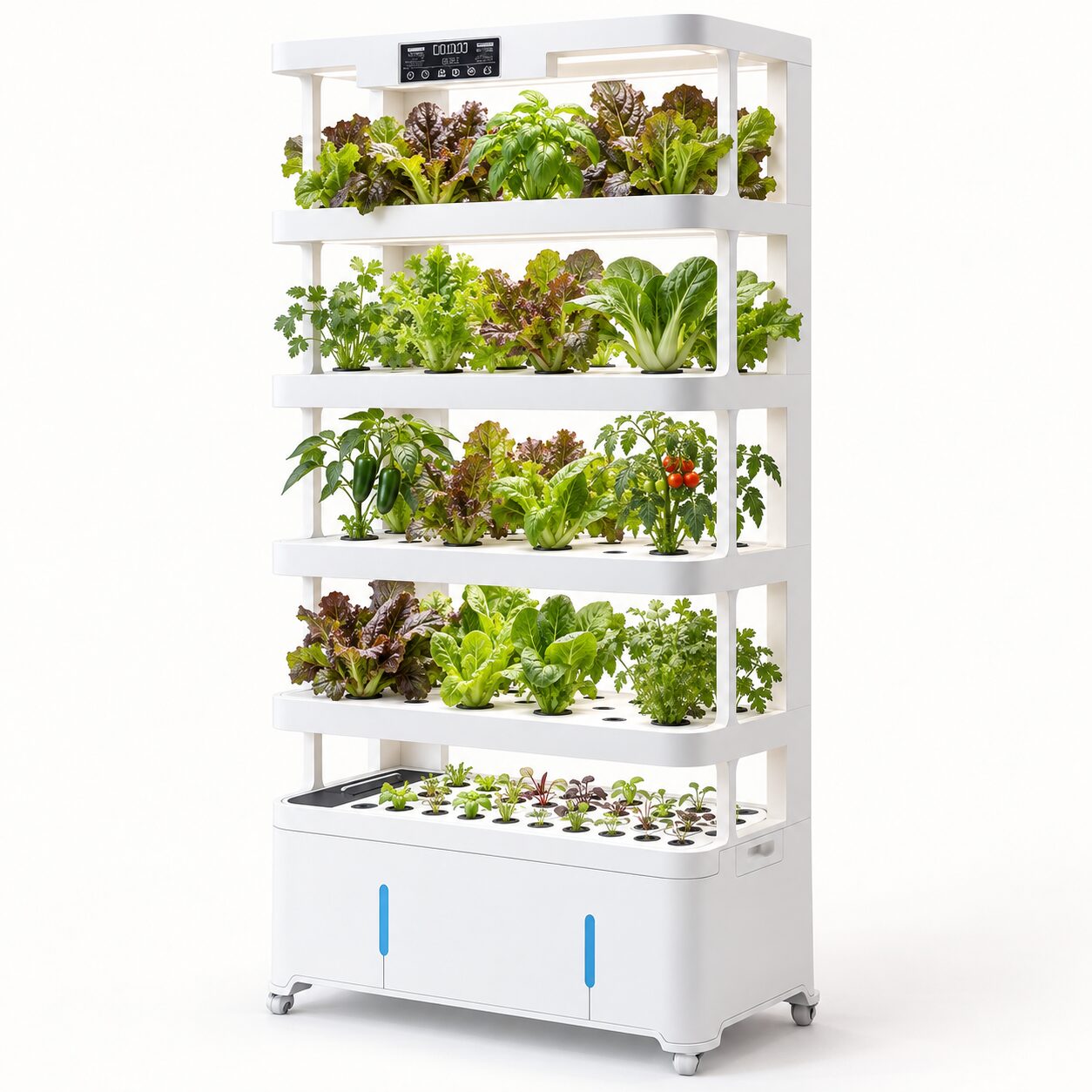
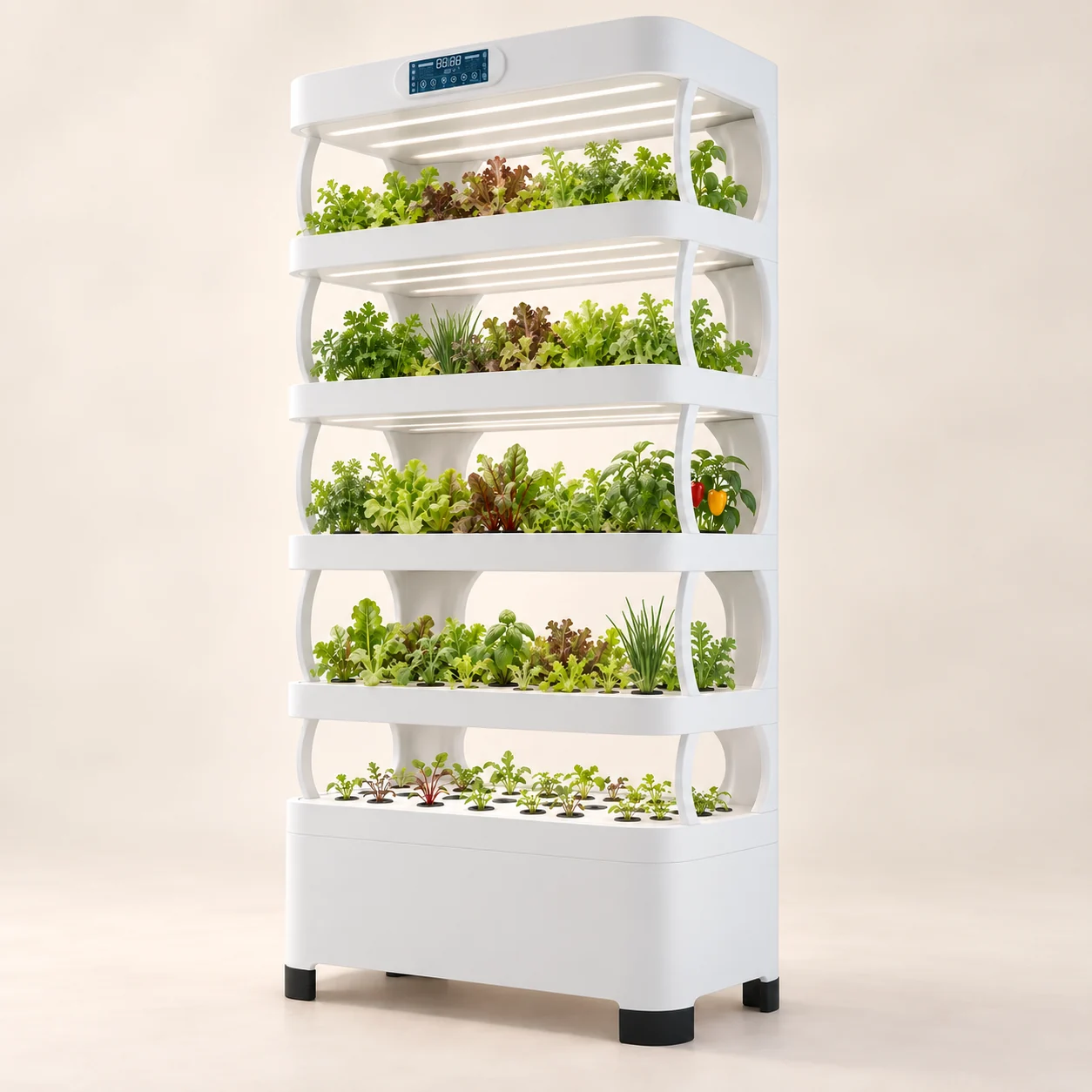
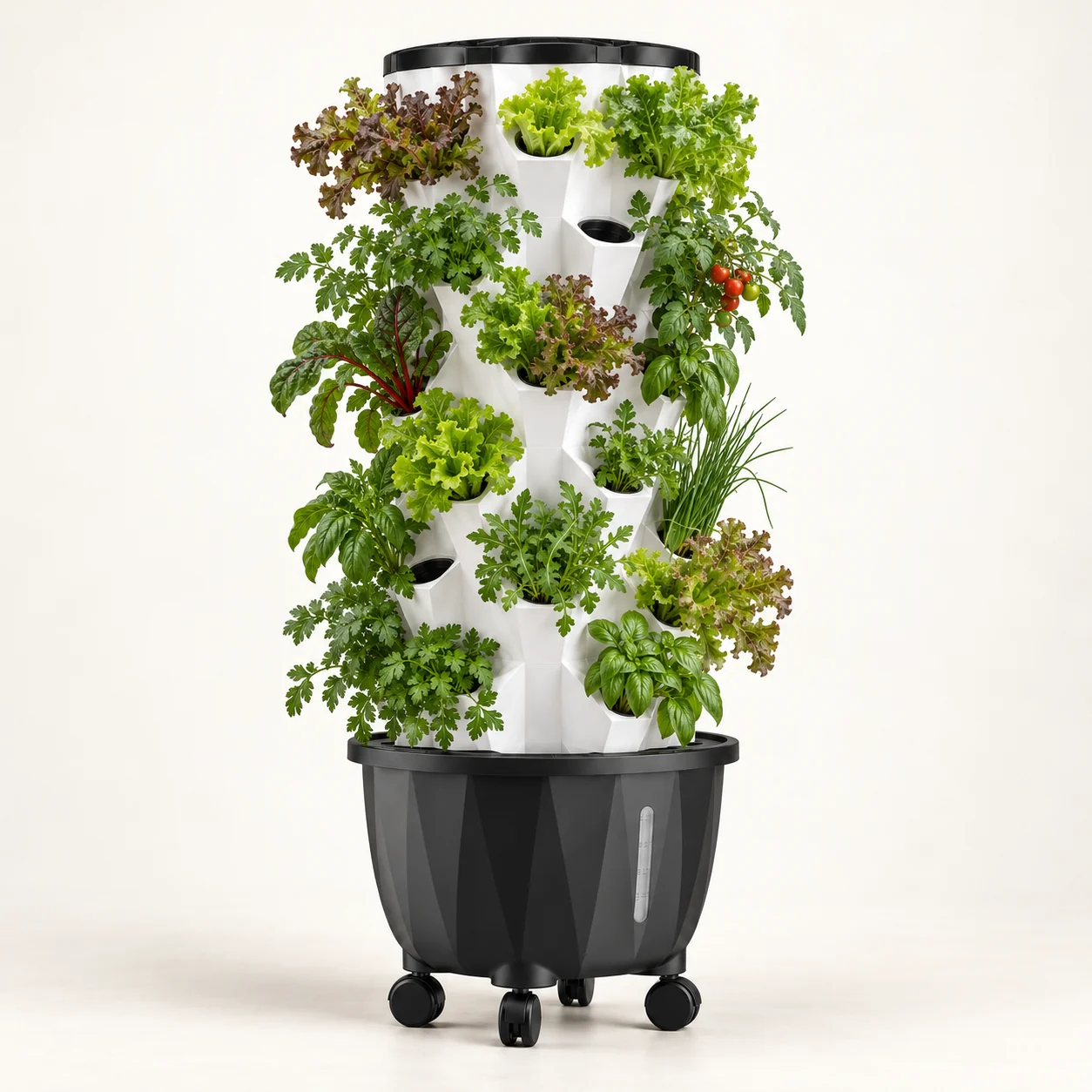
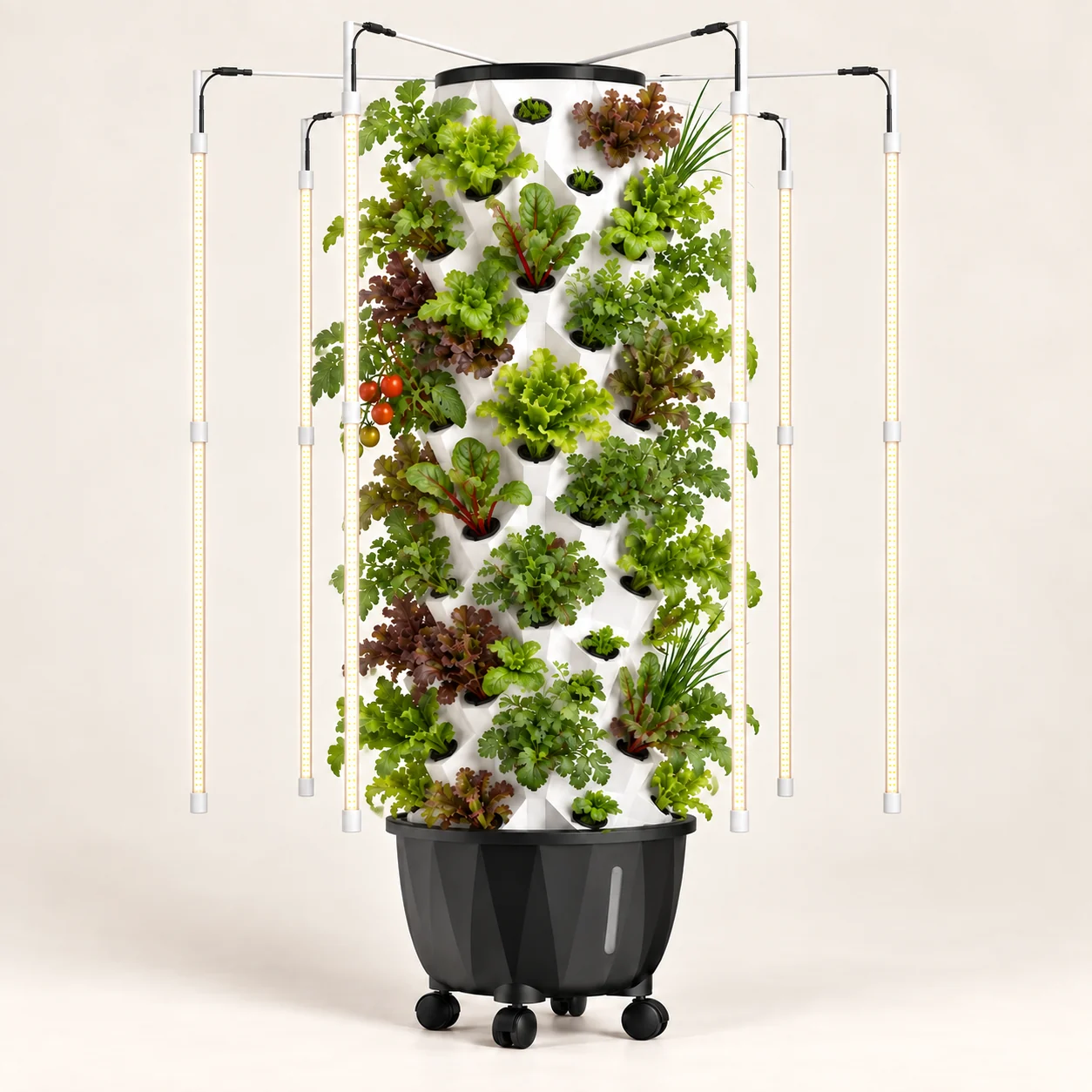





The quick answer
Neither method is best for every gardener. A recirculating hydroponic tower can suit frequent greens and herbs in a compact space when you can provide suitable light, reliable power and routine care. Soil beds or containers can suit growers with usable outdoor space, different crop needs or a simpler equipment budget. Compare the complete setup—not just “water versus soil.”123
Start With a Fair Comparison
Start with two real setups rather than an abstract debate. Growing location changes the answer. An indoor tower with LEDs and a sunny outdoor bed differ in lighting, climate control and growing season as well as root environment. A fair comparison names those differences instead of attributing every result to hydroponics.
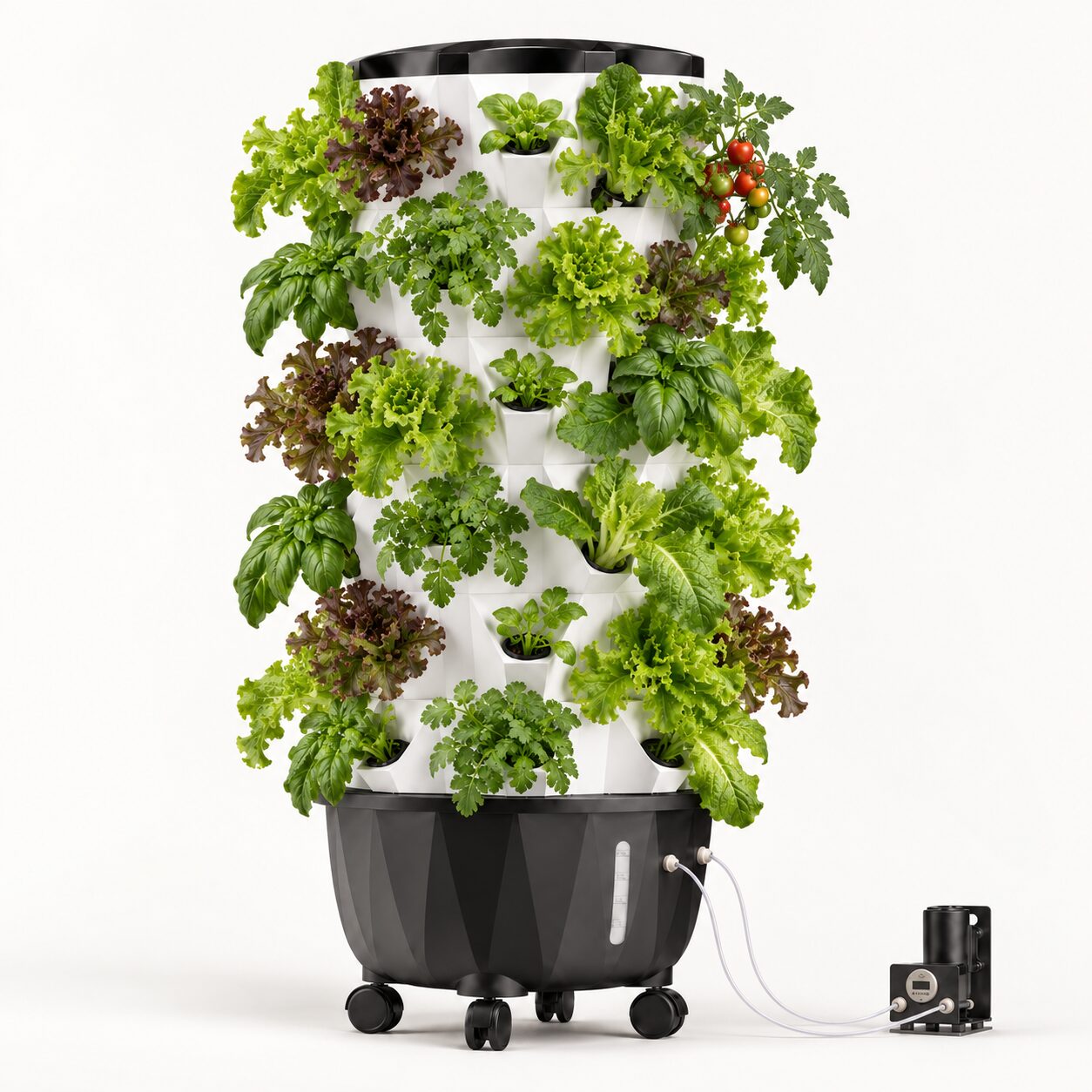
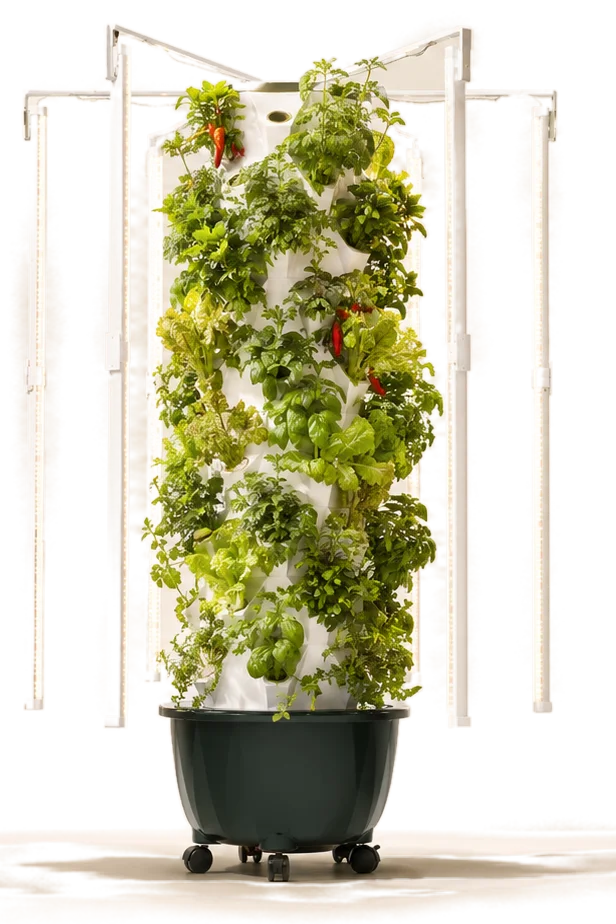
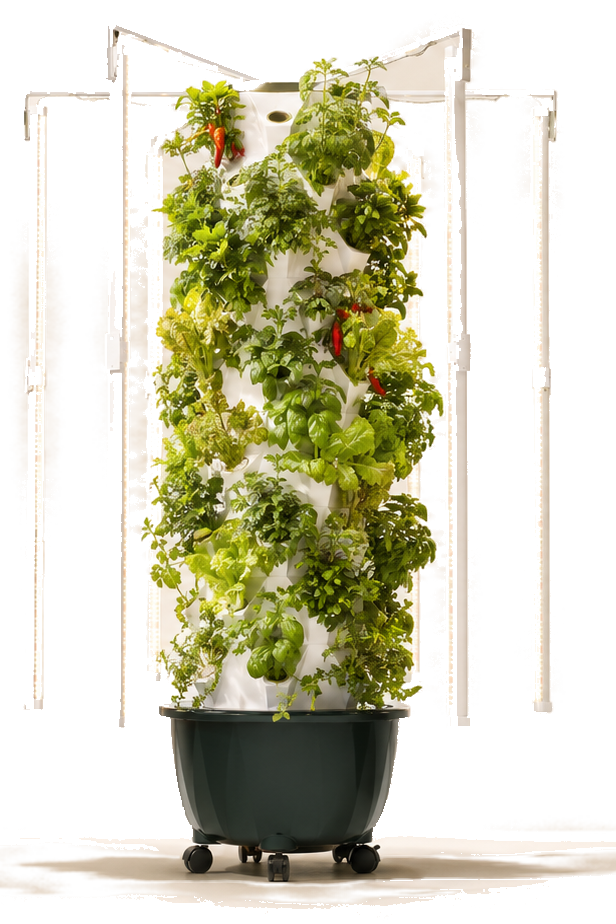
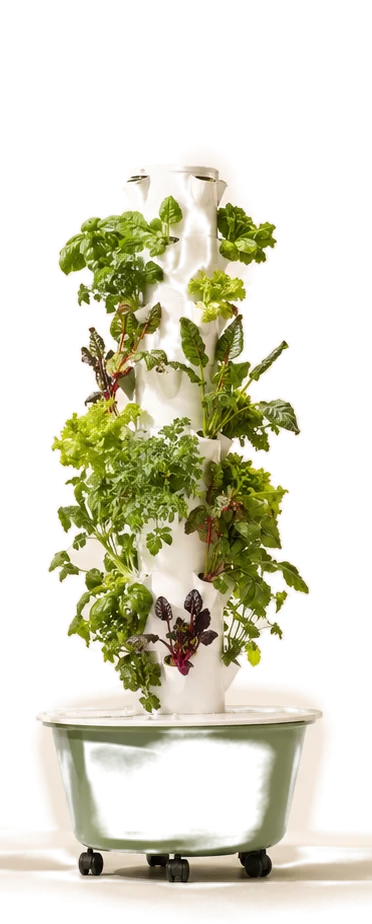
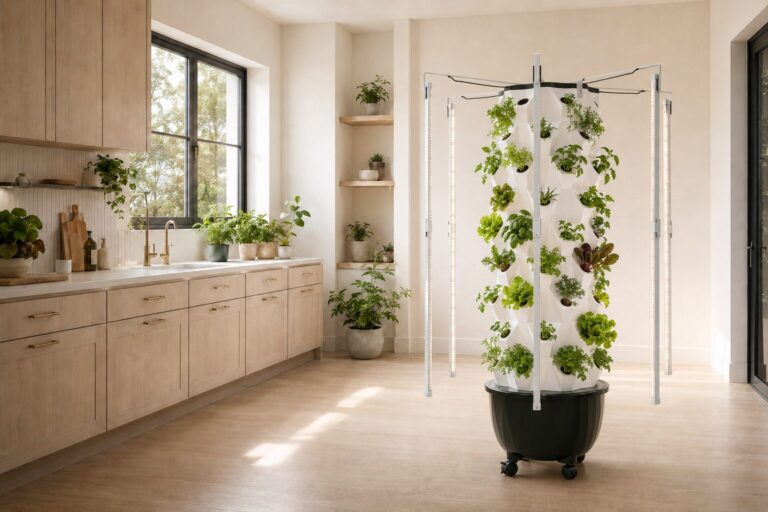
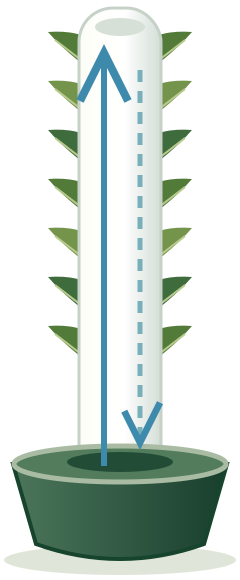
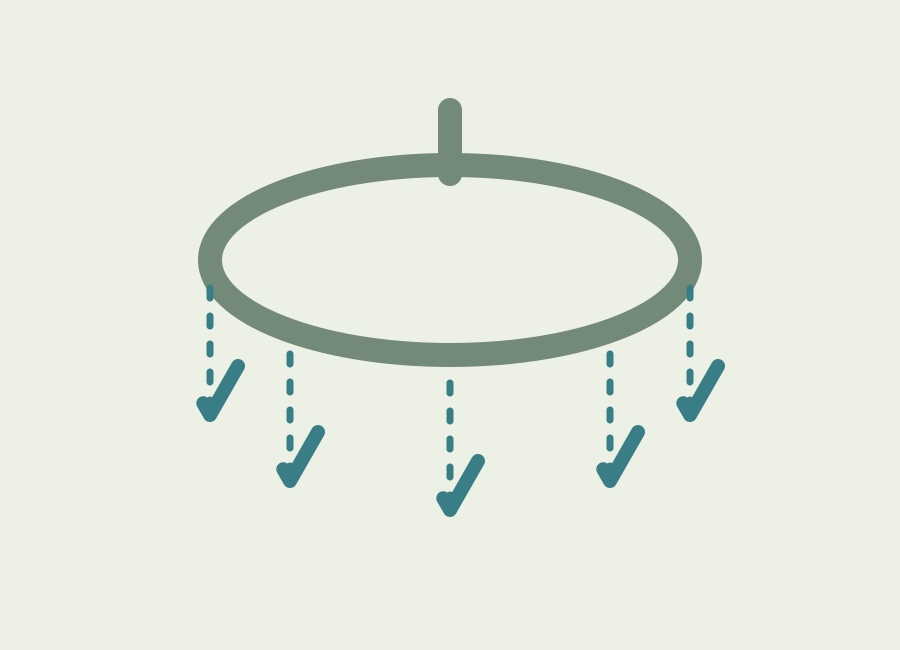
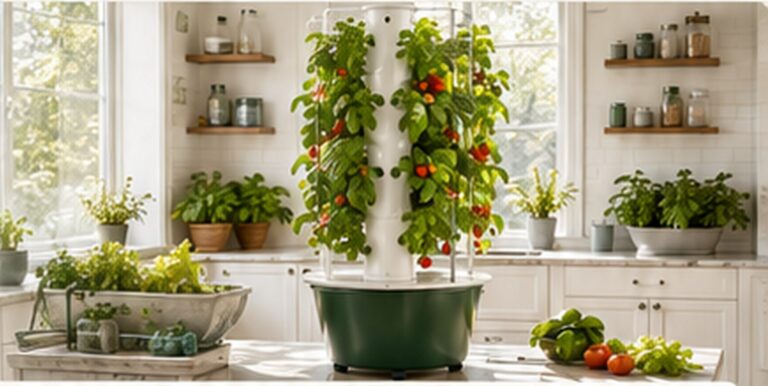
Here, “tower” means a pump-fed, recirculating vertical system. Water delivery may be a flow, drip or mist; roots are not necessarily submerged. “Soil gardening” includes beds and conventional planted containers, although many potting mixes are technically soilless. The practical distinction is how the roots receive water and nutrients.23
Four Questions Before You Choose
Use the same crop goal and comparison period for both options. These questions turn a broad debate into a practical buying decision.
Four decision questions
Choose your crops
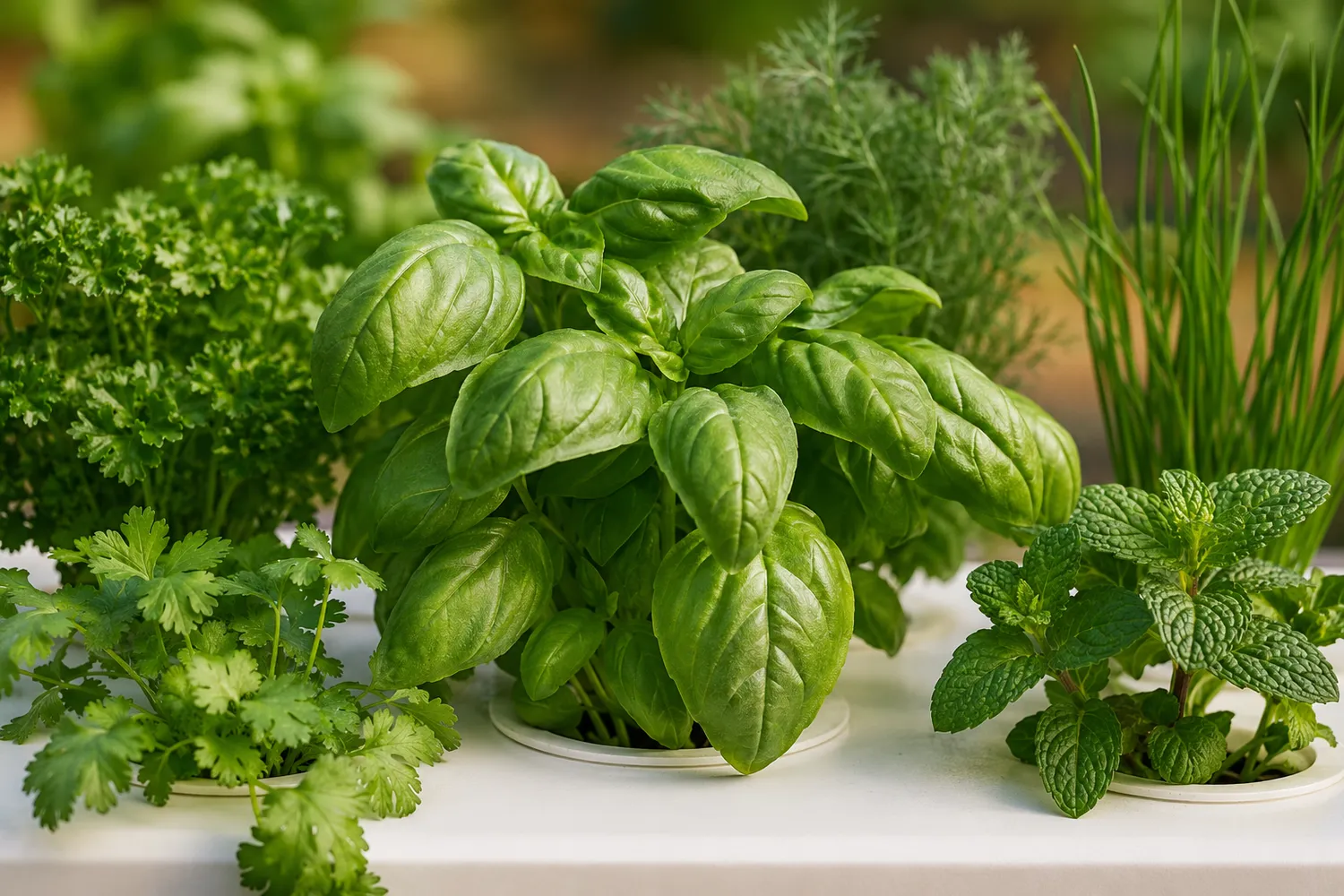
Start with what you actually cook. Leafy greens and herbs are practical tower candidates; large fruiting plants need more canopy space, support and light. Check the exact cultivar and equipment rather than assuming every planting site suits every crop.1
Count the whole cost
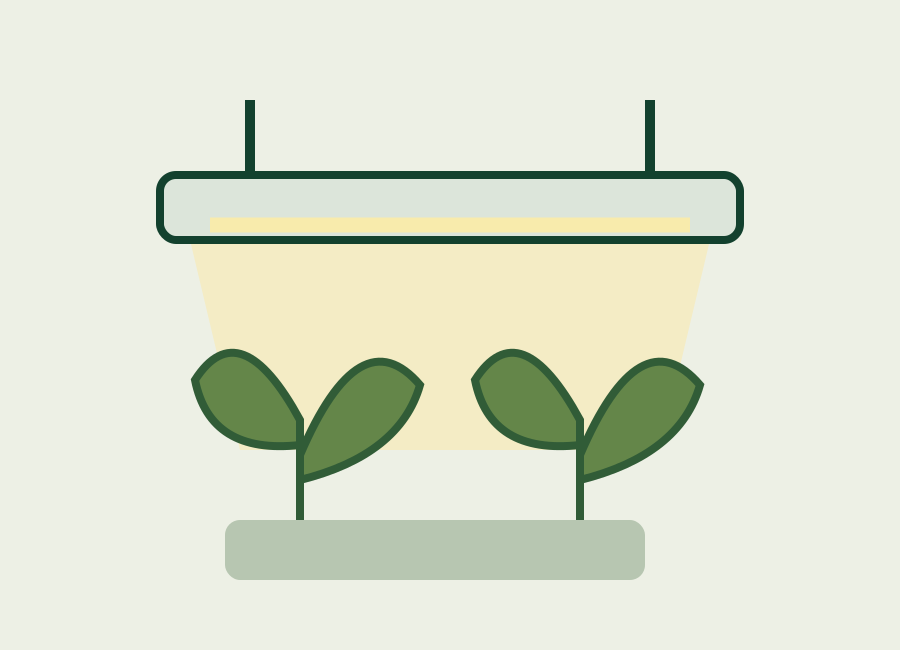
Compare equipment and setup with ongoing electricity, seed, nutrients or amendments, water, replacement parts and your time. Use your own quotes and energy tariff. A harvest you never use should not be counted as a grocery saving.
Five Trade-Offs That Matter
Both methods can work well. The meaningful differences are in inputs, constraints and the way you manage the garden.
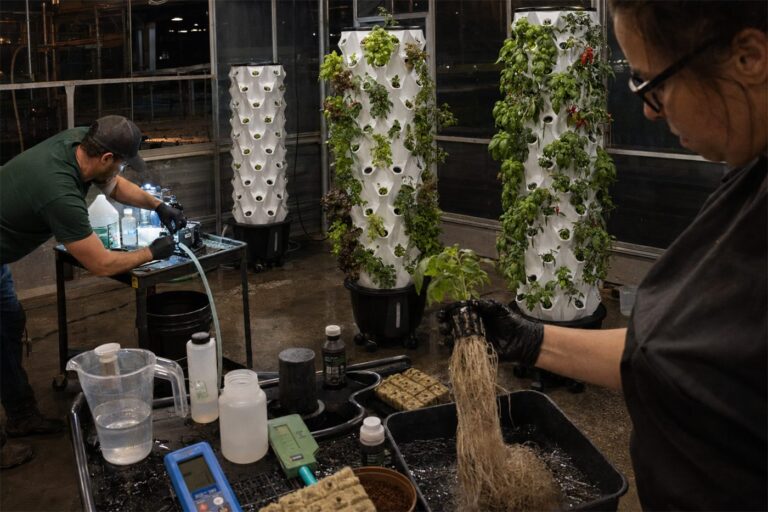
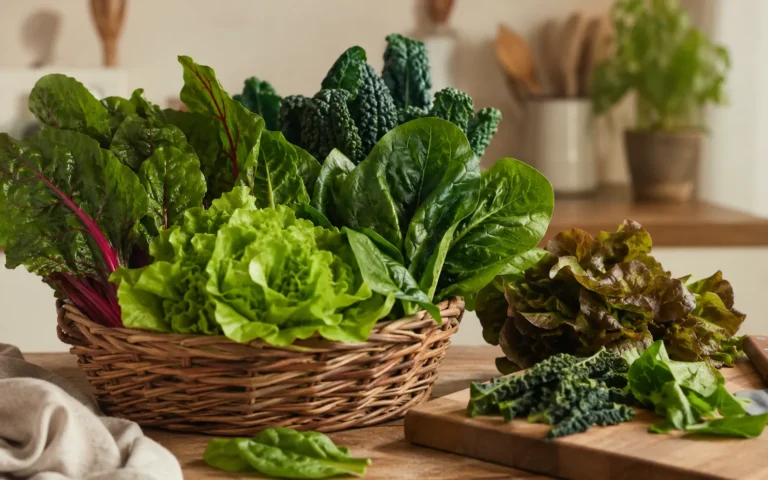
Research context: a 2015 Arizona lettuce study modeled higher greenhouse hydroponic output per area and lower water demand alongside higher energy demand than conventional production. It was not a home-tower trial. Its ratios are not promises for your garden or for Nutraponics.4 Explore practical sustainability choices →
Choose for Your Situation
These are starting points, not model approvals. Check your space, crop and care capacity before committing.13
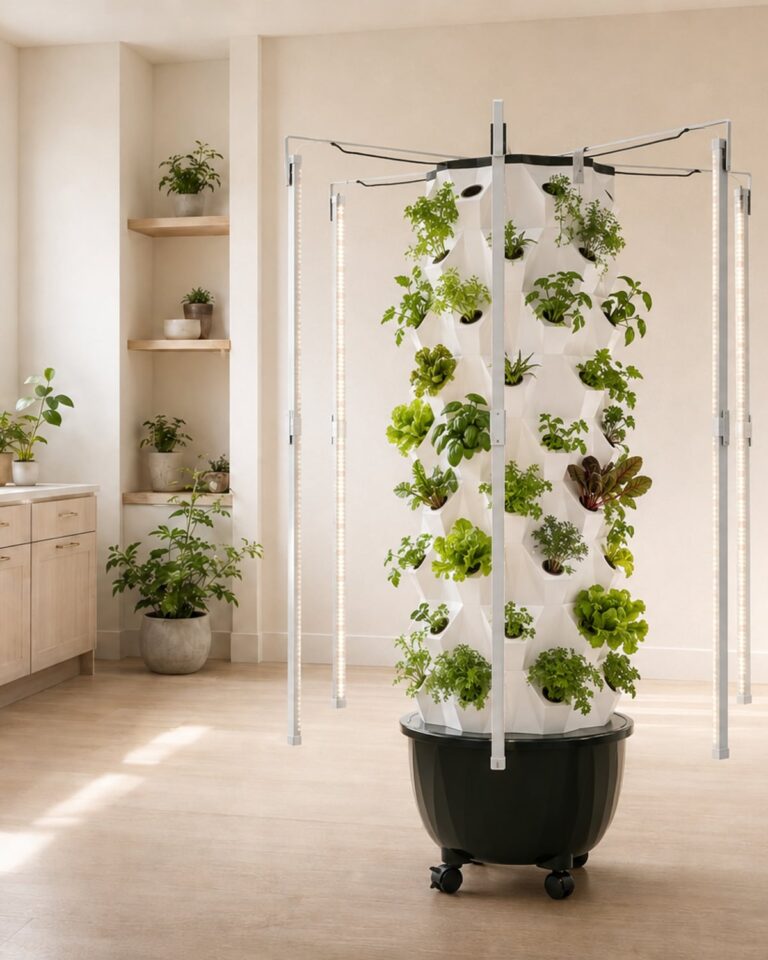
Indoor greens
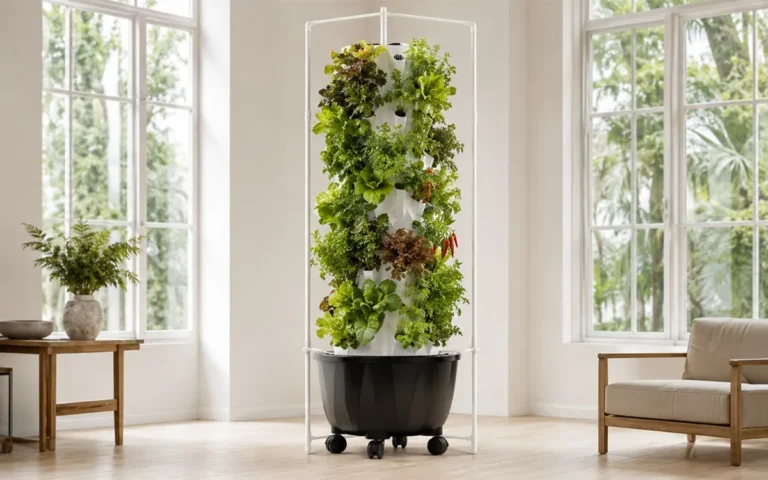
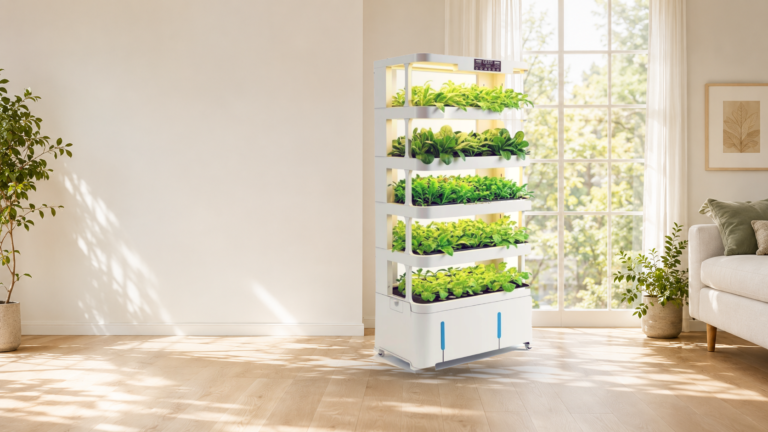
A tower can be a useful option for a regular supply of greens and herbs when its mature canopy, light and care needs fit your room.
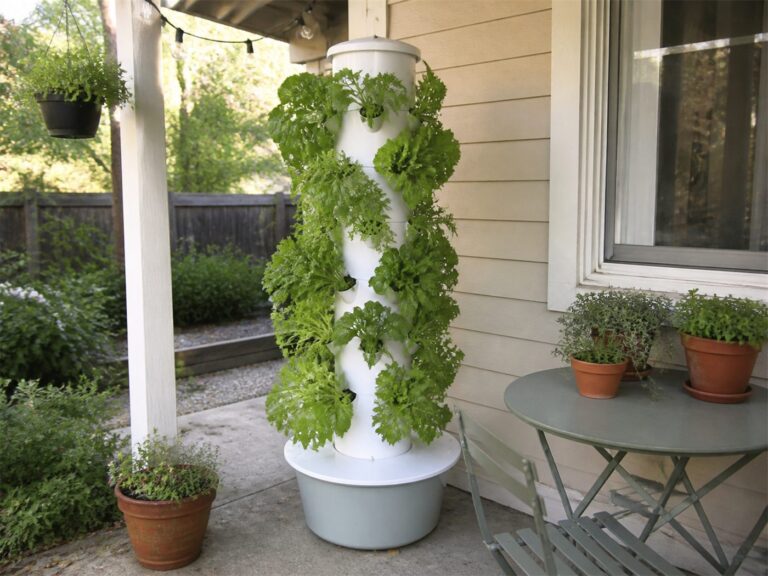
A sunny patio
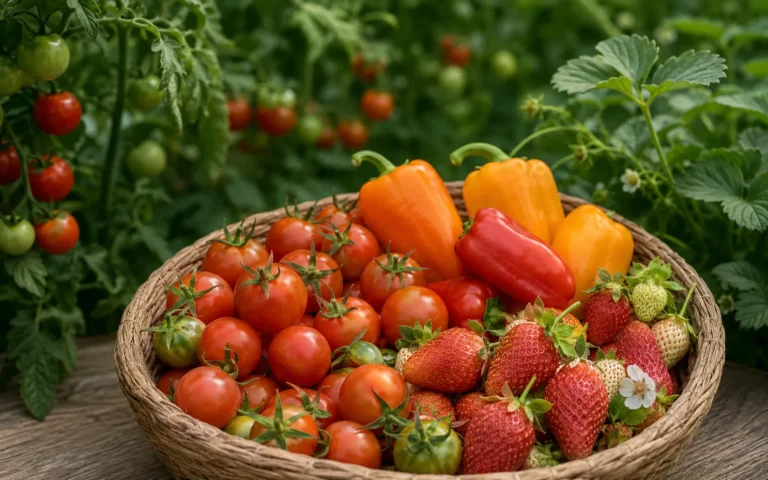
Conventional containers are a valid small-space alternative. Choose adequate root volume, drainage and crop-appropriate light; an outdoor tower also needs weather-suitable equipment.
A broader crop plan
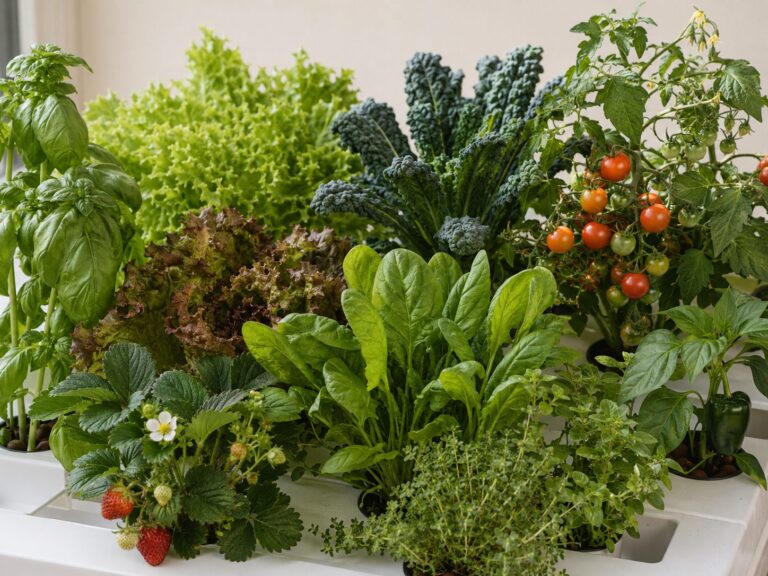
For root crops or large vines, a bed or suitable container may be simpler than forcing plants into small tower ports. Hydroponics can grow many crops, but equipment fit matters.
Use both
Keep greens or herbs indoors and larger seasonal crops outdoors. A mixed approach can serve different meals and seasons without making either method the wrong choice.
A tower does not make unsuitable source water or a contaminated growing location safe. Investigate the actual issue; a normal nutrient or fertility reading is not a complete safety assessment. Plan growing around your family’s meals →
Care Still Matters
Inspect the plants
Look for changes in leaves, growth and roots where accessible. Investigate before assuming a nutrient deficiency.
Keep water dependable
For towers, check levels and delivery. For soil or containers, check actual moisture and drainage rather than watering only by the calendar.
Feed deliberately
Use a complete hydroponic program in the tower. For beds, base amendments on crop needs and a soil test; containers need their own feeding plan.
A Practical Choice
Why consider a tower?
- Grow without a garden bed.
- Bring suitable crops within reach.
- Reuse circulating nutrient water.
What to plan for
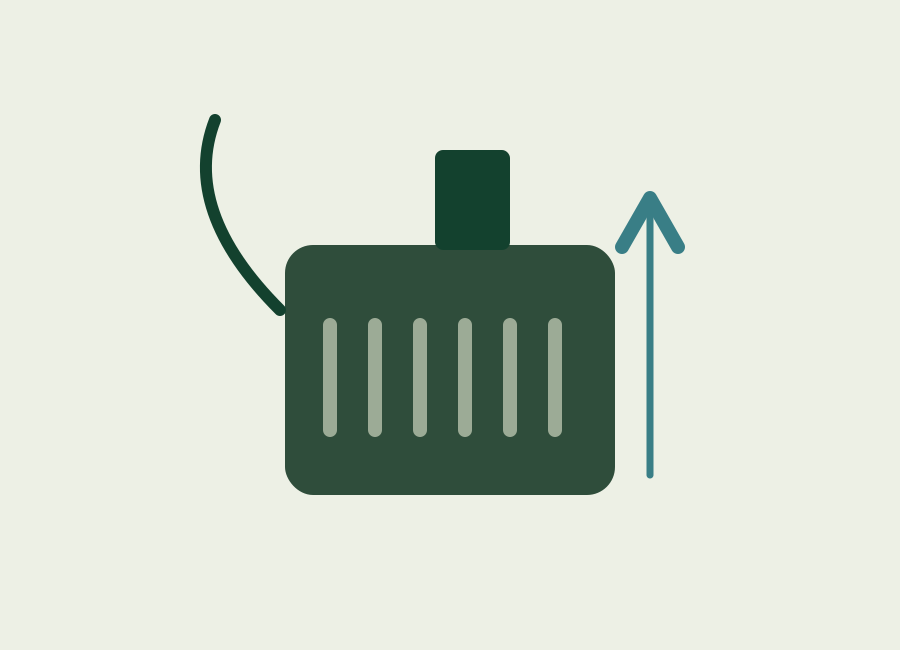
- Lighting, power and recurring inputs.
- Regular checks and equipment care.
- Crop size—not just planting sites.
Keep a simple log of money spent, time, water added and usable harvest. Your own comparison is more useful than a blanket savings claim. Start at a scale you can maintain well.
Common Questions
Answers to the questions that often decide the next step.
Is hydroponics better than soil gardening?
It depends on the crop, growing area and management. A tower can make sense for greens where garden space is limited; soil or container growing may suit other crops or budgets. Compare like-for-like conditions where possible. The choice is about a workable routine and reliable harvest, not a guaranteed winner.13
Does a tower use no water once it is filled?
No. Recirculation reuses solution, but plants remove water through transpiration and water is also used for refills, cleaning and solution replacement. Track all water inputs. A covered reservoir can reduce some losses; it does not turn a growing garden into a zero-water system.210
Are hydroponic plants free from pests and diseases?
No. Avoiding garden soil removes one exposure route, not every pathogen or pest. Pythium can affect hydroponic roots, and shared systems require good hygiene. Keep tools and equipment clean, inspect new plants and seek a diagnosis for persistent symptoms rather than relying on “soilless” as protection.5
Which method is cheaper?
An existing productive bed and a new indoor tower have different starting costs. Include lighting and other electricity, replacement parts, water, seed, growing media and feed. Compare the same period and the harvest you will actually use. This guide provides no guaranteed payback, utility saving or income estimate.
Will hydroponic produce taste better or be healthier?
This comparison does not establish a universal taste or nutrition advantage for either method. The sources used here concern growing systems and their inputs, not a controlled taste or nutritional trial for your crop. Treat those claims as a separate evidence question, not a reason to promise superior food quality.
Can I grow successfully indoors with soil instead?
Yes, suitable containers and growing mix can be used indoors. They still need adequate light, drainage, crop-appropriate root space and feeding. Putting a plant in soil does not remove indoor lighting constraints. Plan for drainage water and surface protection, and distinguish a potting mix from dense garden soil.39
Related Guides
View all guides →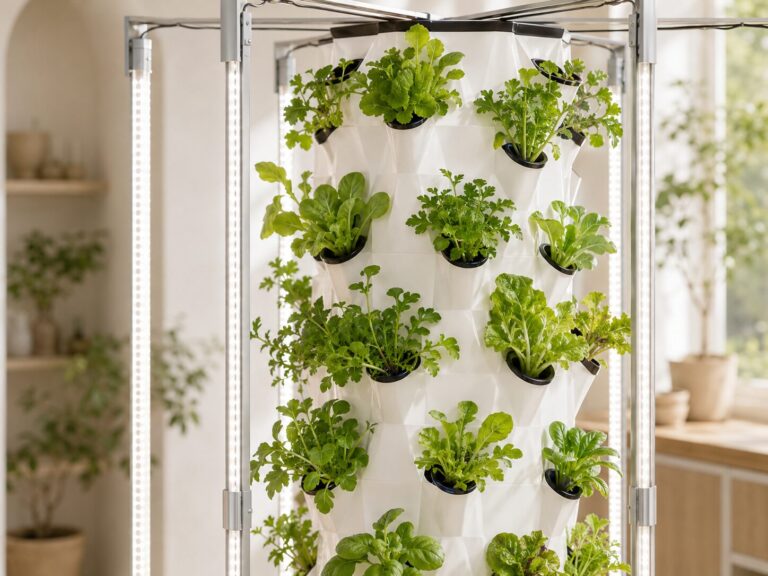
Sources & further reading
External research supports the qualified draft. These sources are not product certifications or a Nutraponics comparative trial.
- University of Minnesota Extension — Small-scale hydroponicsGeneral guidance; not a Nutraponics model specification or measured yield claim.
- Oklahoma State University Extension — Hydroponics (HLA-6442)Does not establish universal savings, disease immunity or one tower watering cycle.
- University of Maryland Extension — Growing Vegetables in Containers and Salad TablesContainer culture is not the same as in-ground soil. Regional advice is not a universal crop prescription.
- Barbosa et al. / IJERPH — Comparison of Land, Water, and Energy Requirements of Lettuce Grown Using Hydroponic vs. Conventional Agricultural Methods (2015)Yuma, Arizona; engineering/literature model and conventional statistics, not a measured home tower trial. No ratios are transferred to Nutraponics.
- Penn State Extension — PythiumUsed for disease risk only. No sanitizer, pesticide, dose or treatment protocol adopted.
- University of Minnesota Extension — Mulching 101: the secret to a healthy and happy gardenNo promise of a measured water saving for a particular garden.
- University of Maryland Extension — Soil Testing and Soil Testing LabsA routine fertility test is not a complete contamination or food-safety assessment.
- Oklahoma State University Extension — Electrical Conductivity and pH Guide for HydroponicsNo universal feeding target, older prices, household acid recipes or unit-conversion examples adopted.
- University of Minnesota Extension — Lighting for indoor plants and starting seedsLighting requirements depend on the plant and fixture; no fixed lamp height prescribed.
- University of Minnesota Extension — Keep gardens thriving through the heatUsed as environmental context; regional date-specific watering instructions are not copied.