






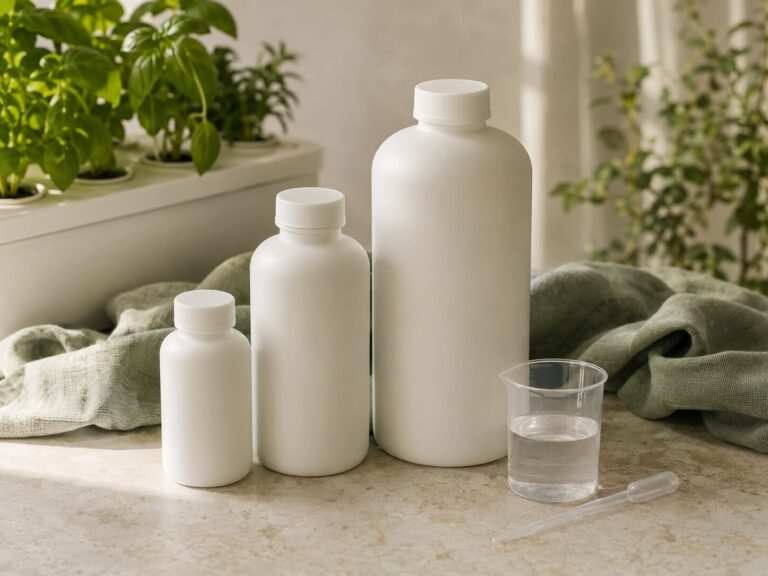

The quick answer
Use a complete hydroponic nutrient program matched to your crop and system. Dilute each component separately into water, check EC, then check pH. Recheck after adjustments. More fertilizer is not automatically better, and a falling water level is not an instruction to add a full dose.249
Start With a Complete Nutrient Program
Plants need more than nitrogen, phosphorus, and potassium. Calcium, magnesium, and sulfur are also macronutrients; iron and other trace elements matter too. Choose a complete hydroponic program, not an ordinary garden fertilizer or a collection of unverified boosters. Liquid and powder formats can both work when prepared correctly.125
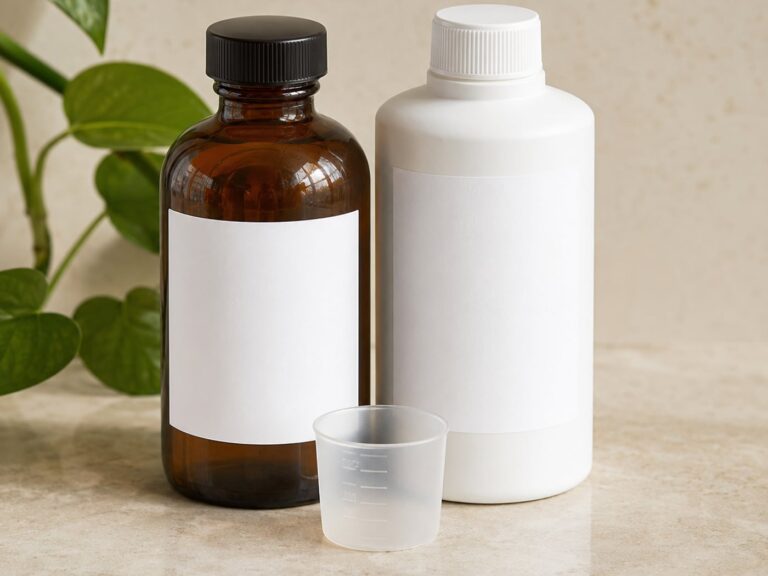
Mix in the Right Order
Use your nutrient label for component order, quantity, and crop stage. This sequence is a general routine—not a universal Nutraponics dosing recipe.48
Water first. Measure. Mix. Check.
Build the solution one step at a time.
Measure the water
Use the actual mixing volume. Note your source-water EC and pH before adding nutrients.
Add each part separately
Follow the label order. Mix thoroughly between additions; never combine undiluted nutrient concentrates.
Check EC, then pH
Compare with the crop’s feed program. Adjust cautiously, mix, and recheck before use.
Record and revisit
Log the mix, readings, crop stage, and changes. Check again after the solution circulates.
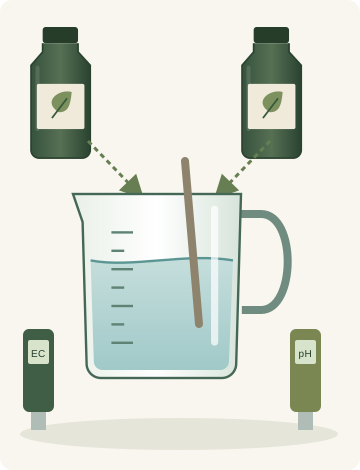
Follow label and safety instructions for handling and protective equipment. Keep concentrates and pH adjusters away from children; use dedicated measuring tools.7
Your Nutrient-Care Toolkit
Keep these five essentials together. Clean tools and reliable readings make each refill easier to understand.
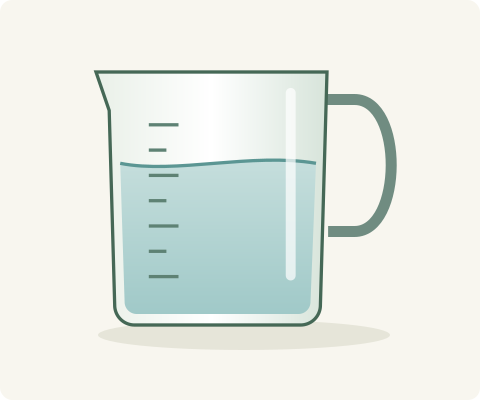
Measured water
Know the actual volume; do not dose for the tank’s maximum capacity.
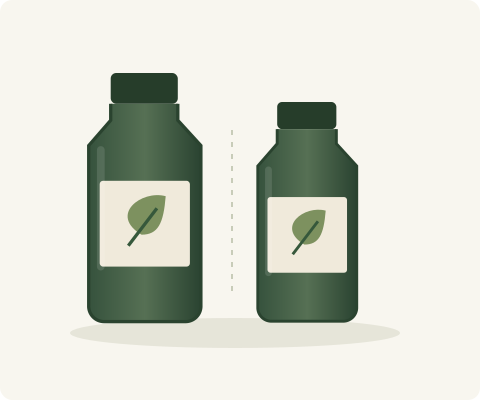
Complete nutrients
Use every required component in the program, at the label’s crop-stage rate.
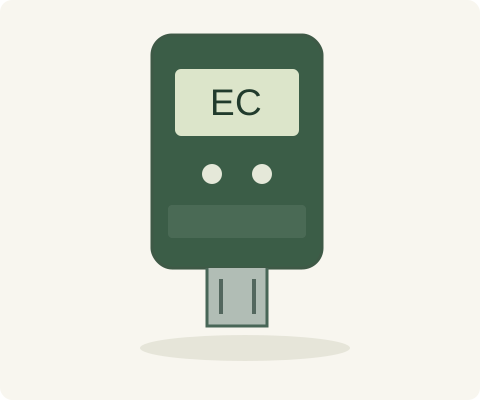
EC meter
Read solution conductivity—not each nutrient’s concentration.
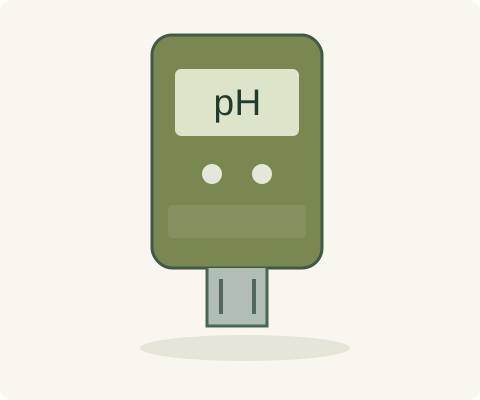
pH test
Use a suitable test or calibrated meter; follow its care instructions.
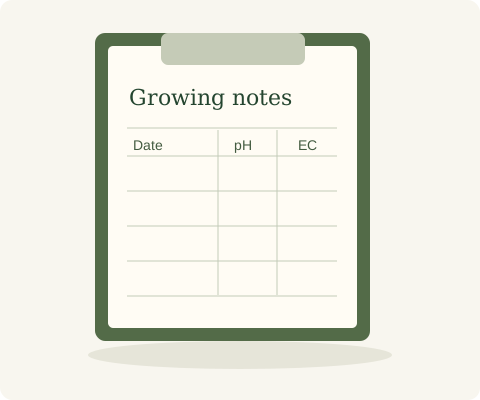
Simple log
Record water, nutrient additions, pH, EC, and plant observations.
For powders, use the label’s measuring method and dissolve fully. Meter readings support—not replace—the feeding instructions.26 Check your source water →
Match Feeding to the Crop
Plants sharing a reservoir share a nutrient solution. Group crops and growth stages with compatible feeding needs.25
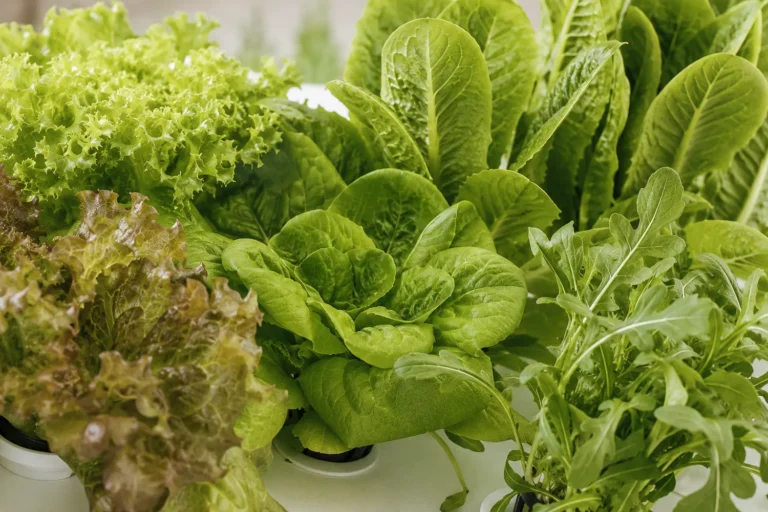
Leafy greens
Use a crop-appropriate complete program for lettuce and similar greens.
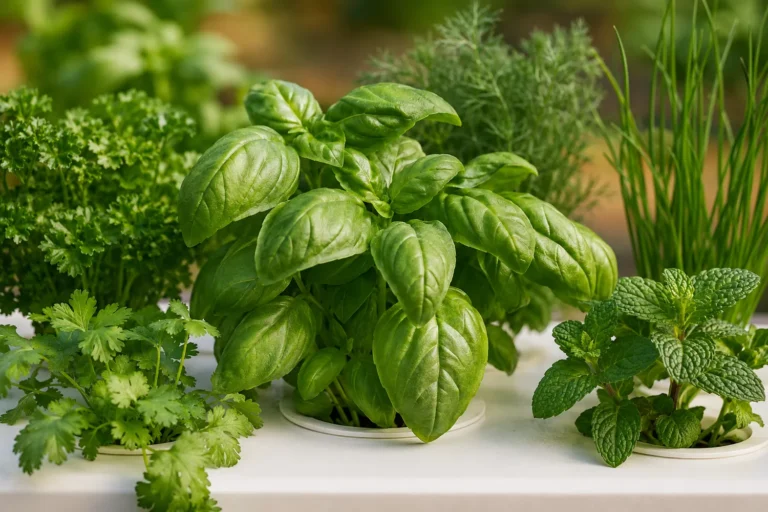
Herbs
Follow guidance for the herb and its stage—not a stronger mix by default.

Fruiting crops
Check the feeding program as plants develop flowers and fruit.
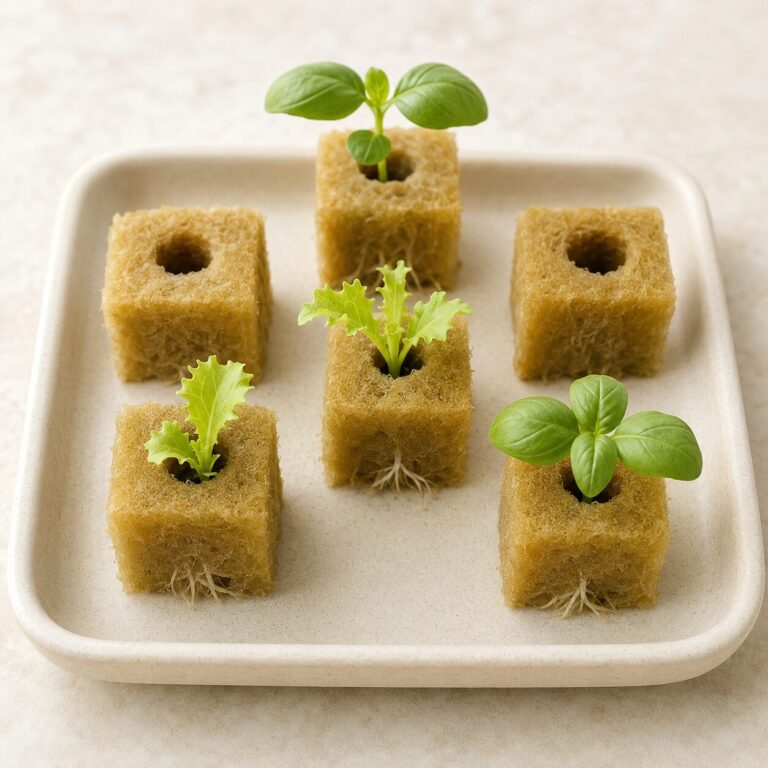
Young plants
Use seedling guidance; do not assume mature-plant strength is suitable.
Keep the Mix in Balance
Start with frequent checks. Let the label, system, and recorded changes guide your routine.89
Check level and delivery
Keep the system within its operating range; inspect roots and circulation.
Measure before feeding
Review EC and pH before deciding whether the refill needs nutrients.
Recheck after changes
Mix thoroughly, then test again. Avoid repeated unmeasured additions.
Refresh and clean
Follow the system and nutrient guidance. A top-up is not a full solution change.
Keep a log of additions and use label-led cleaning and disposal practices. Follow the starter guide →
Control Without Guesswork
Good feeding supports the garden; it does not replace light, healthy roots, or regular attention.
Helpful habits
- Use a complete, compatible program.
- Make measured changes.
- Compare readings over time.
Avoid these shortcuts
- Adding fertilizer for every yellow leaf.
- Treating EC as a complete nutrient test.
- Assuming “organic” means system-compatible.
Common Nutrient Questions
Practical answers for your next mixing or refill check.
What pH should I aim for?
Many hydroponic programs use about pH 5.5–6.5, but the crop and recipe determine the target. Adjust the mixed solution using the product directions; do not force every crop to one number.37
What is the right EC?
Use the target for your crop, growth stage, water source, and nutrient program. A high EC is not automatically better. EC reflects dissolved ions, not whether each nutrient is balanced.36
Can I use organic nutrients or compost tea?
Only use products confirmed compatible with your hydroponic system and feeding program. Do not add compost tea or boosters by default. “Organic” alone does not tell you whether a product supplies complete nutrition or suits small pumps and nozzles.2
Is tap water suitable?
It can be. Start with source-water readings; persistent pH drift or mineral deposits may warrant an alkalinity test or water analysis. Filtering requirements depend on the water and nutrient program—not simply on whether water comes from a tap.38
Should I add nutrients every time I top up?
Not automatically. Water and nutrient uptake vary. Follow the refill instructions and compare readings before and after additions. Replace the full solution as the program requires; do not keep adding full-strength feed without checking the result.9
Keep Growing Your Confidence
View all guides →Follow the next question—not another version of this guide.


Getting started
Set Up Your First Garden
Put your feeding routine into a practical first setup.
Read guide →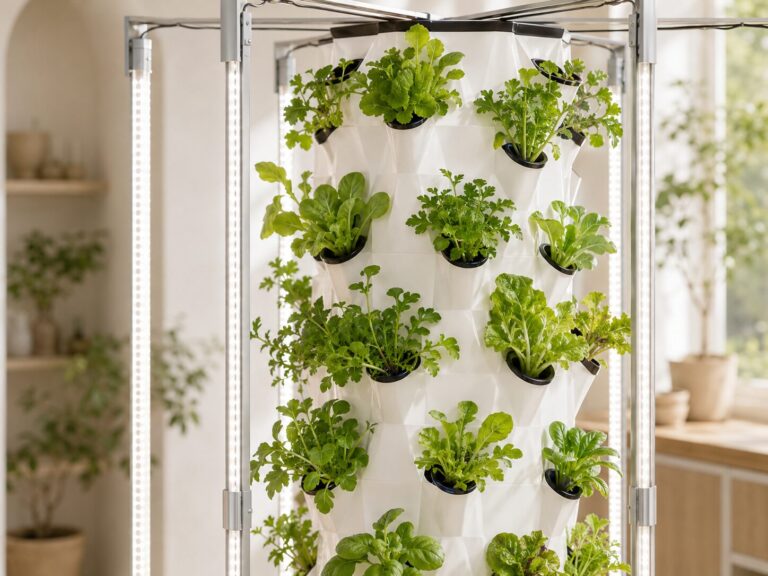
Sources & growing notes
- Penn State Extension — Essential nutrients, function, deficiency and excess
- Penn State Extension — Nutrient solution programs and recipes
- Oklahoma State University Extension — Electrical conductivity and pH guide for hydroponics
- General Hydroponics — Getting started with hydroponics
- University of Minnesota Extension — Small-scale hydroponics
- GRODAN — What is EC?
- General Hydroponics — pH Down: use and safety guidance
- University of Missouri Extension — Hydroponic nutrient solutions
- Oklahoma State University Extension — Hydroponics
General guidance; follow your crop, nutrient, meter, and system instructions. Product-specific doses and certification claims are not supplied here.