
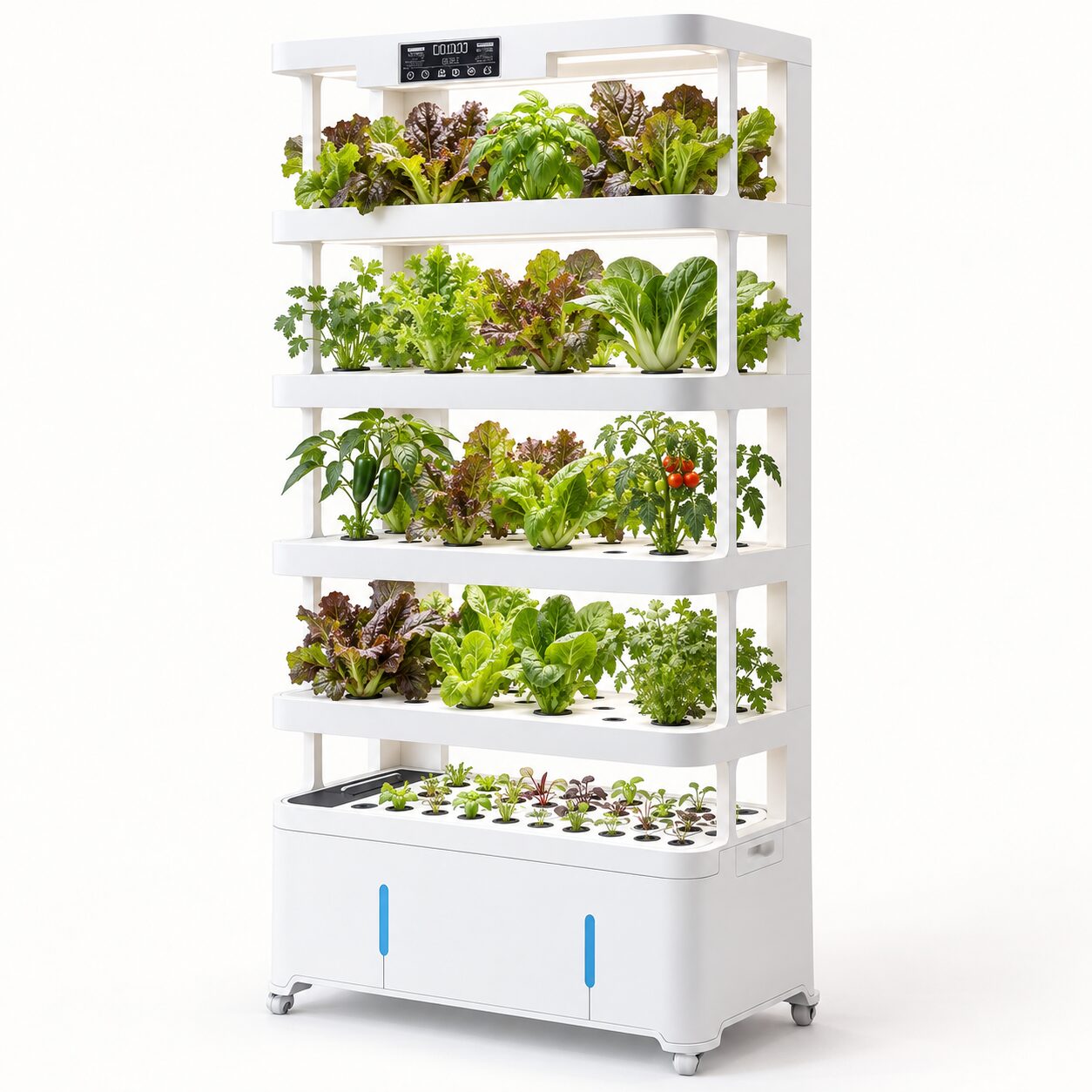
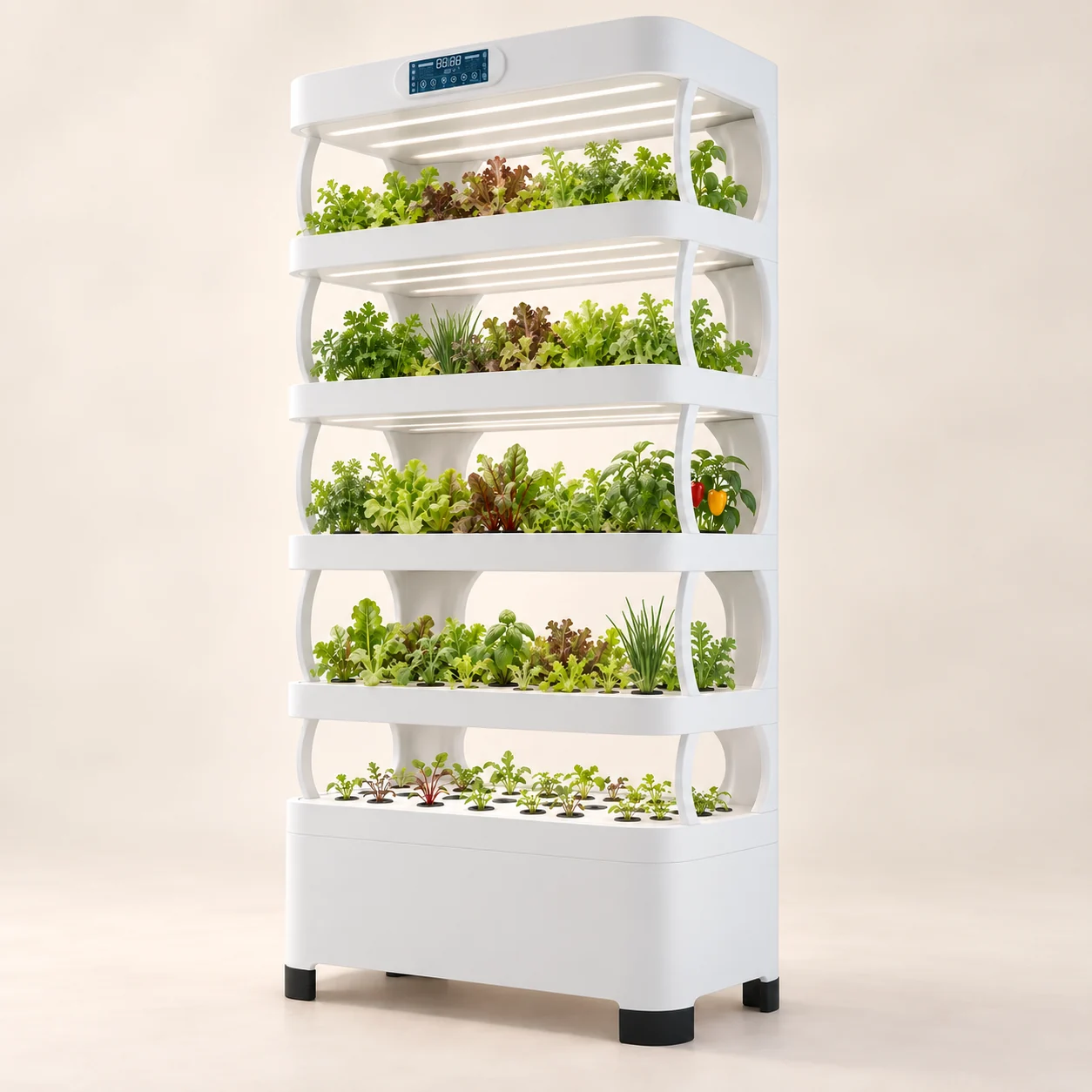
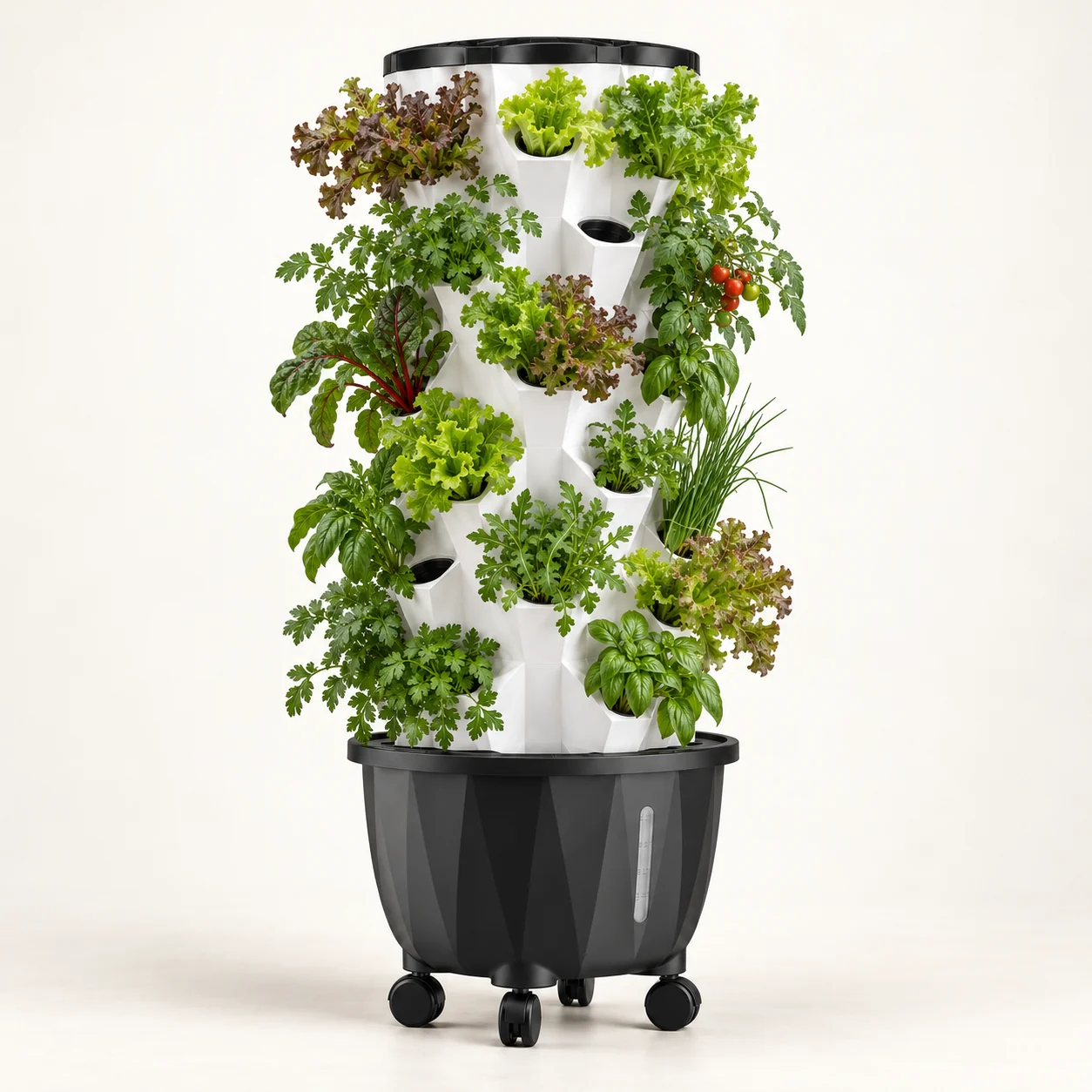
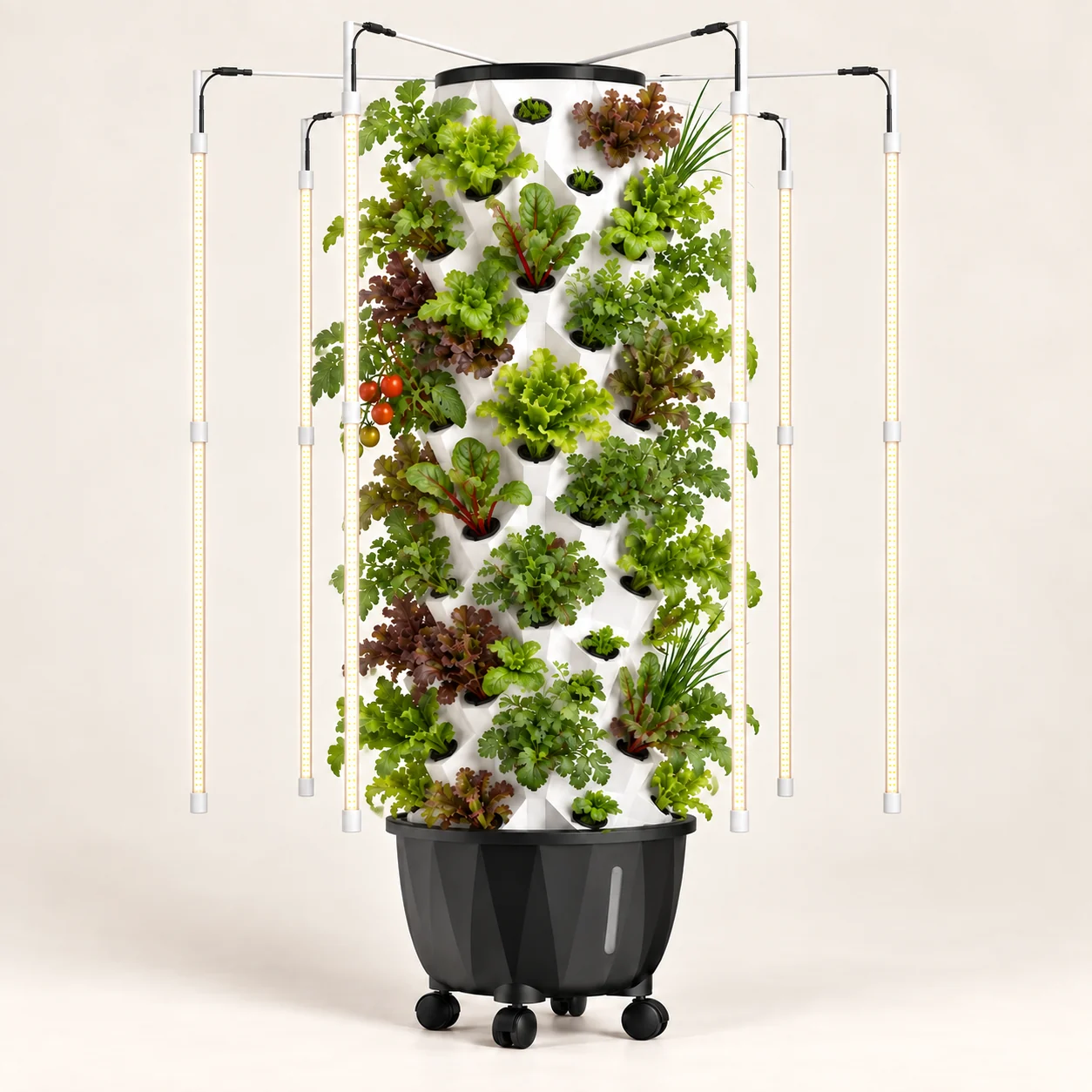



The quick answer
Basil, parsley, chives, cilantro, and mint are useful herb-garden candidates, but they do not all grow at the same pace or need identical conditions. Start with a few varieties, use compatible plugs and a complete hydroponic feed, and plan for mature foliage and roots. Harvest selectively and replace declining plants rather than expecting one planting to last forever.123
What Makes a Good Herb Tower?
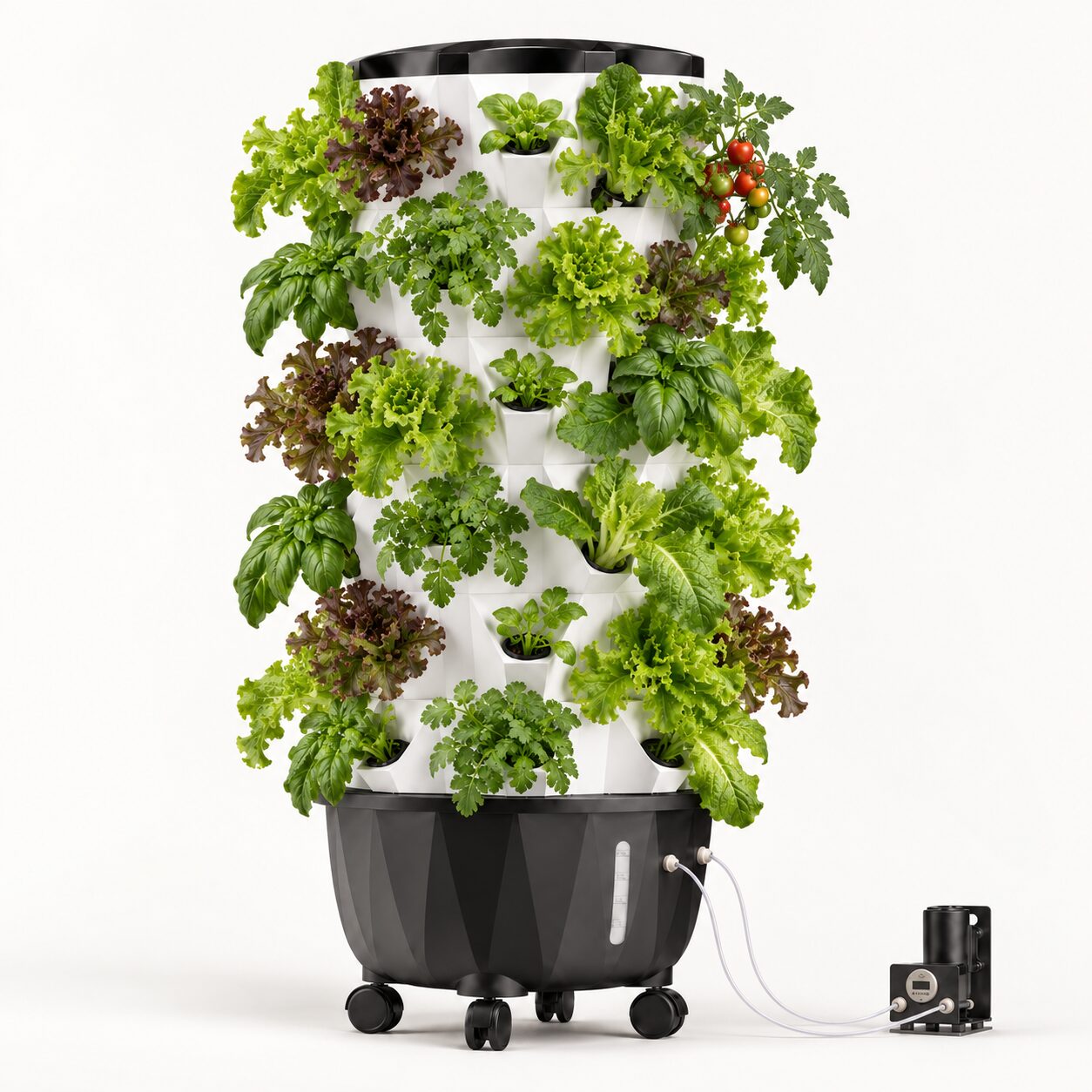
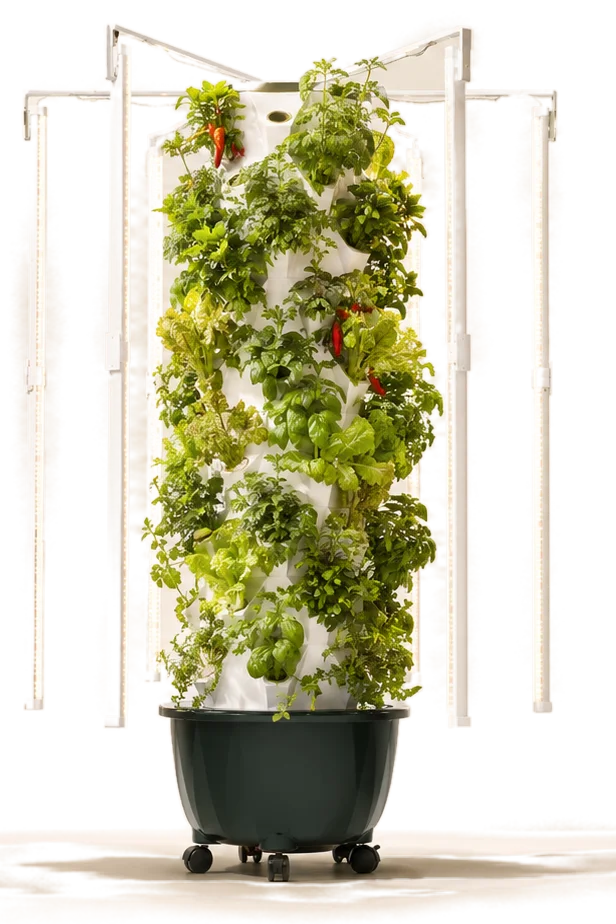
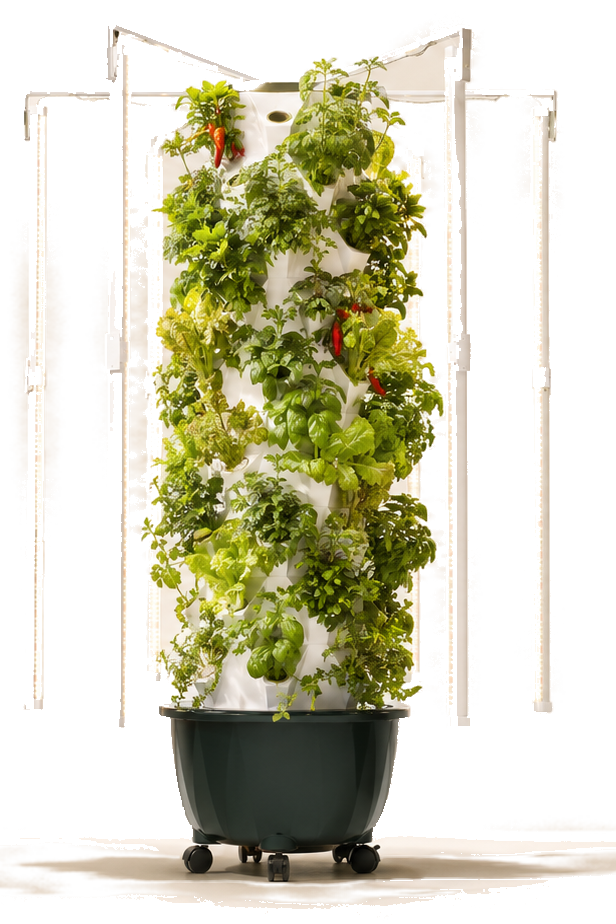
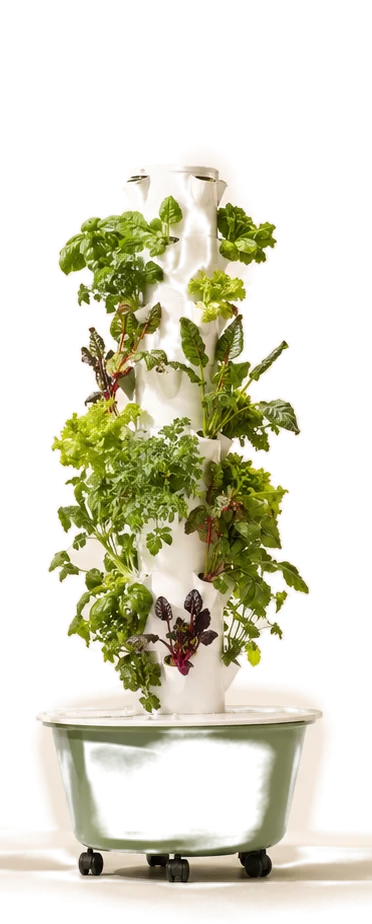
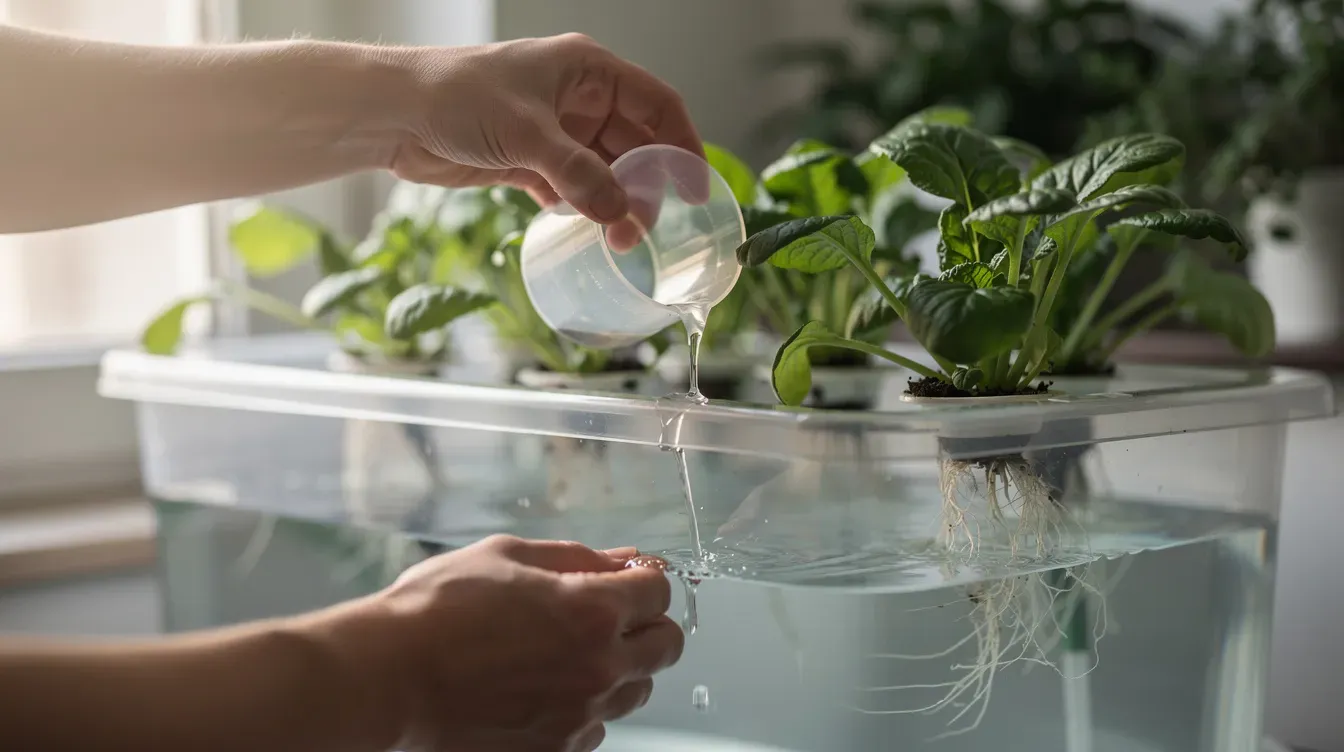
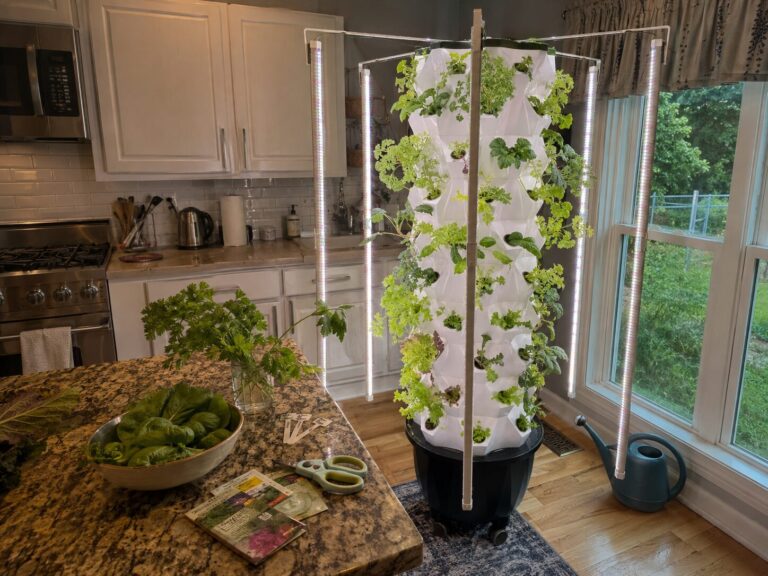
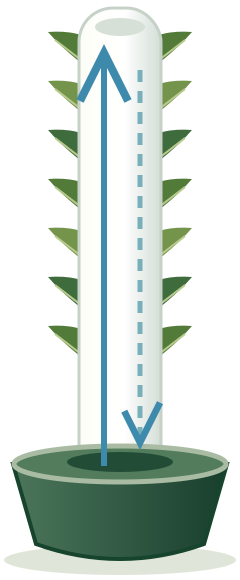
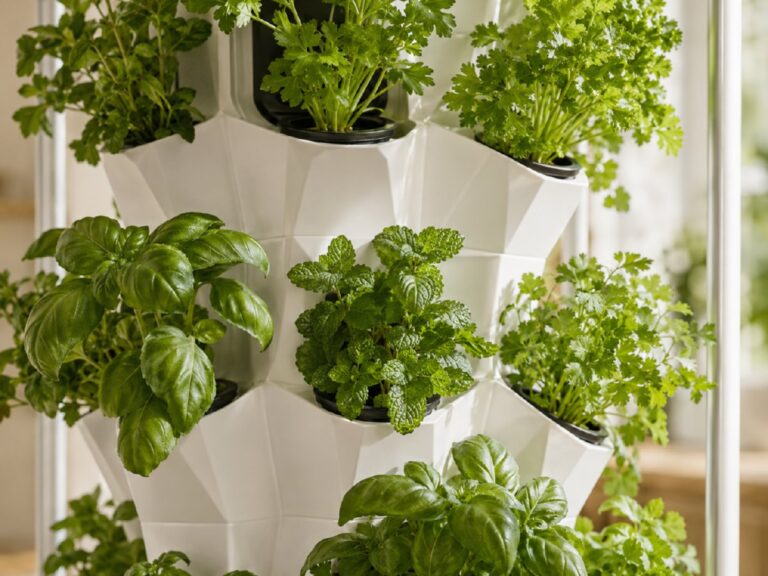
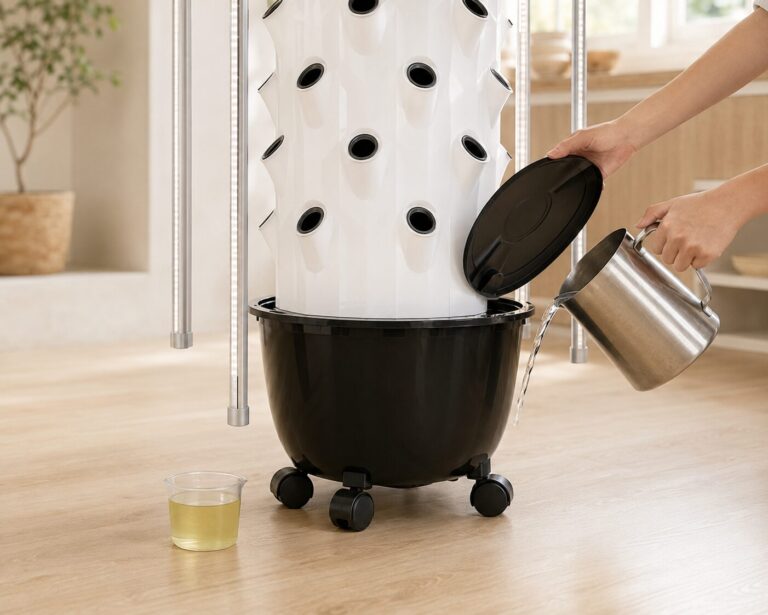
A hydroponic herb tower grows plants without potting soil, using water and dissolved nutrients. Aeroponics uses mist or spray; other towers use flowing or dripping solution. The system’s shape does not identify its method. Keep the actual model’s delivery and care instructions—not another brand’s settings.
Choose for the meals you make and the room you can provide. Fewer well-spaced plants can be more manageable than filling every opening and allowing leaves to shade their neighbors.311
From Starter Plants to Fresh Herbs
Four practical steps, followed by a repeatable care routine.
From starts to harvest
Already planning your first garden? Set up the system before moving the seedlings; confirm water reaches their roots without burying their crowns.1
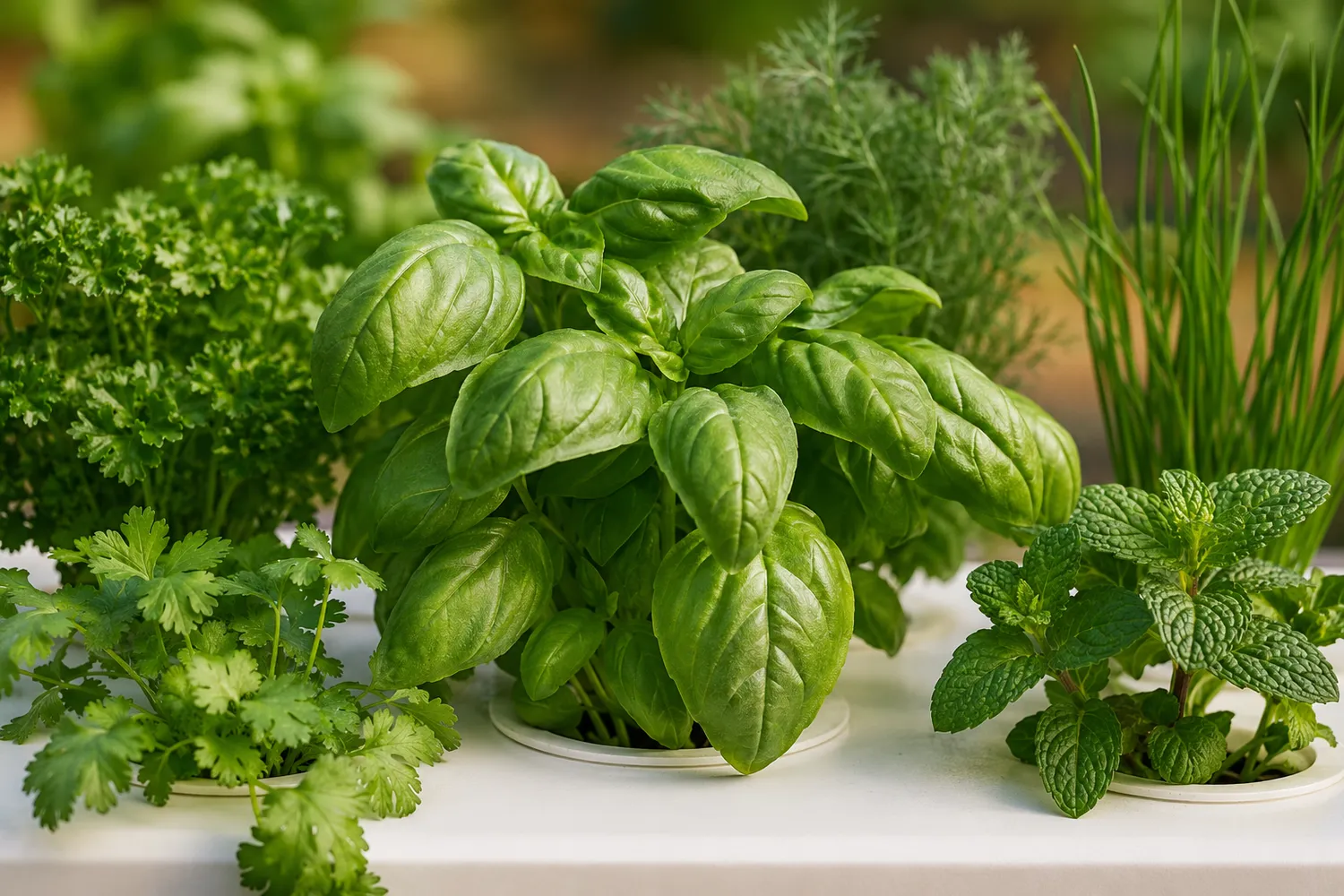
Five Herbs to Start With
These are candidates, not a promise that every variety fits every system. Choose compact varieties where available.12
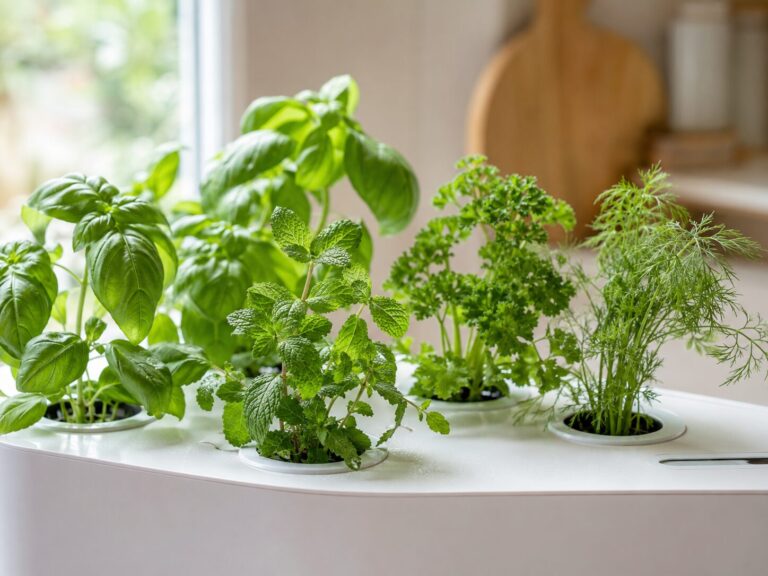
Basil
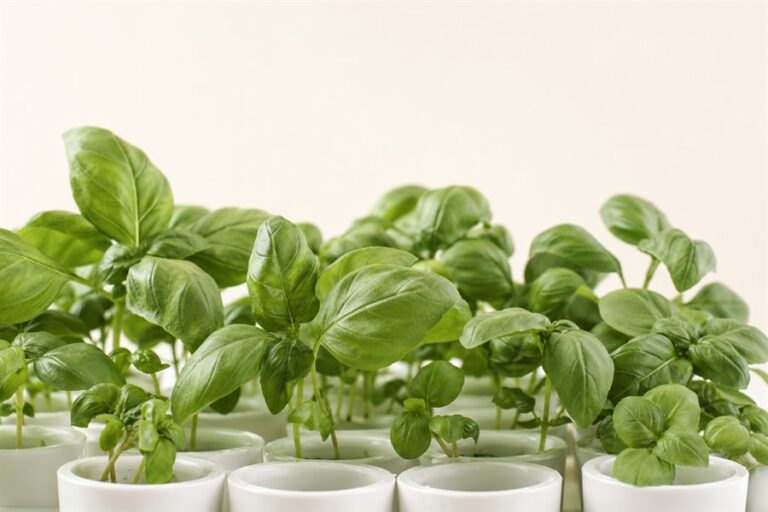
A familiar choice for leafy harvests. Give it warmth and good light; pinch above a leaf pair to encourage branching.4
Chives
Grow as a clump. Snip usable leaves above the crown and leave enough growth for the plant to recover.7
Cilantro
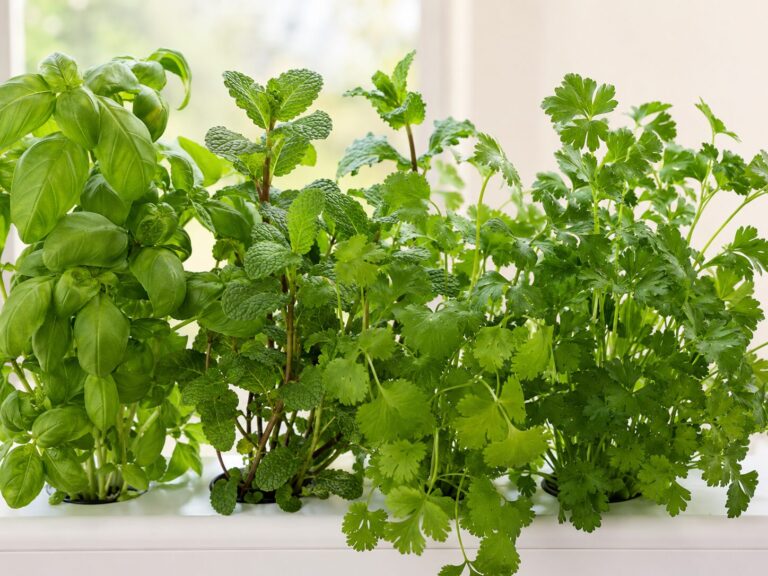
Better treated as a succession crop than a permanent plant. Heat encourages bolting; keep replacement starts underway.6
Mint
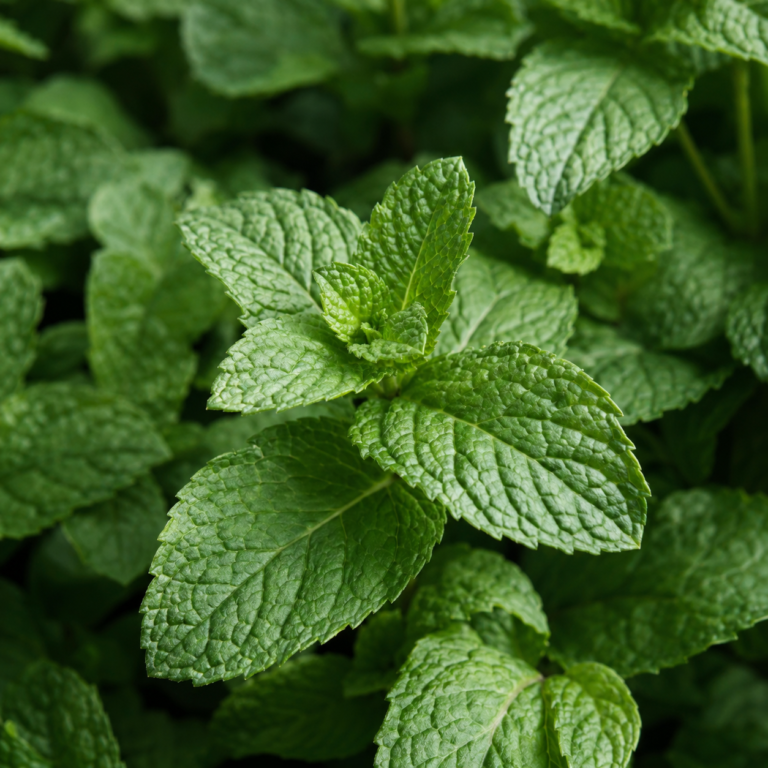
Vigorous growth needs room and inspection. In a shared tower, monitor root and foliage crowding; do not assume frequent hard root-trimming is harmless.3
Next to try: oregano and thyme for tender tips, or dill where its mature height will not shade nearby crops. Rosemary and lavender need a more deliberate light and root-zone plan; do not add them simply because an opening is empty.2310 Compare more suitable crops →
Harvest for the Next Meal—and the Next
Use clean tools and take only what the established plant can replace. The right cut depends on its growth habit.9
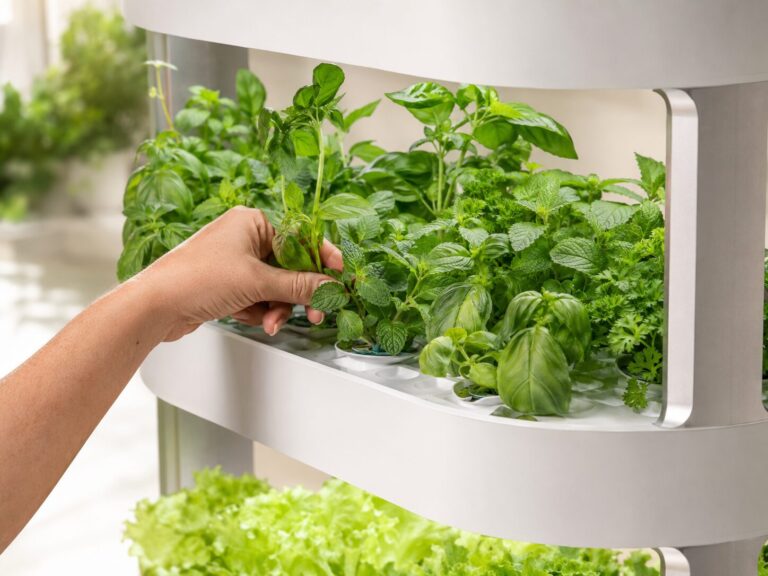
Basil and mint
Cut tender stems above healthy leaf pairs; retain foliage for regrowth.49
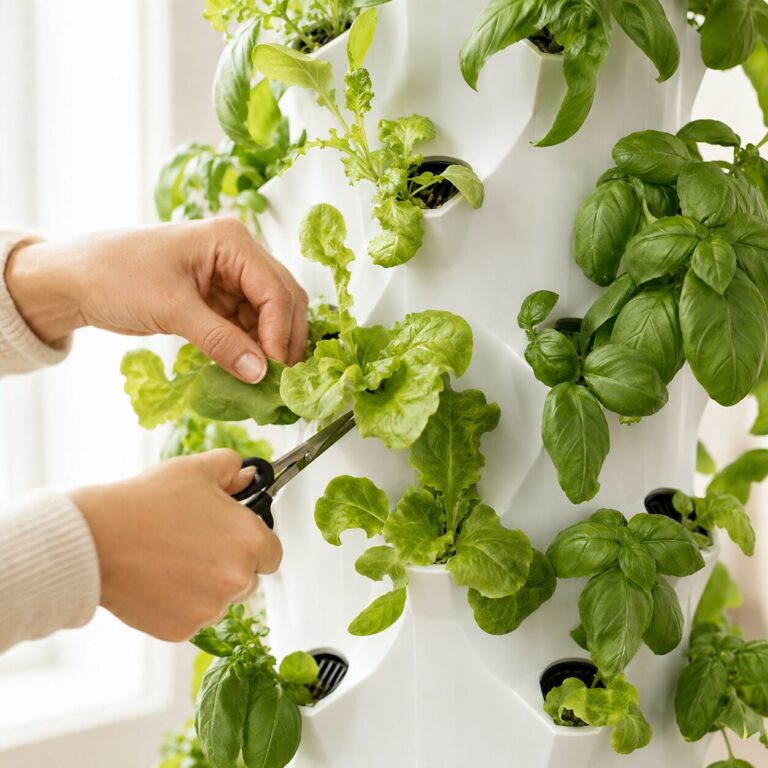
Parsley and cilantro
Take usable outer leaf stems. Preserve the central growing area.9
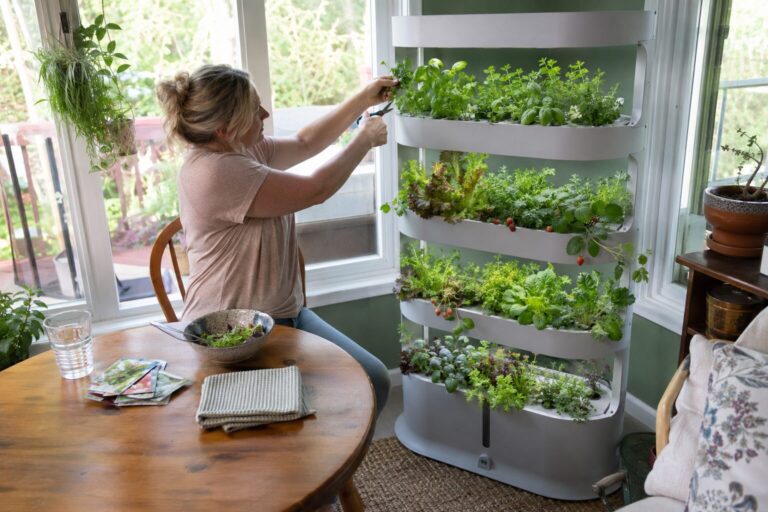
Chive leaves
Snip above the crown rather than pulling out whole plants.7
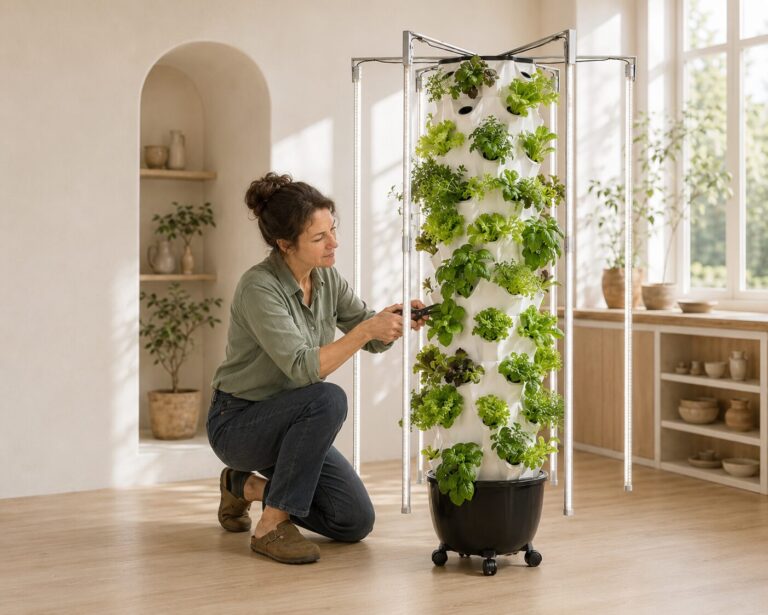
Thyme and oregano
Take soft leafy tips. Avoid cutting deeply into bare, old wood.910
Plan small batches around what your household uses. A flowering cilantro plant will not become a young leafy plant again just because you harvest harder. Replace it or allow mature seed production, depending on your goal.6
Plan fresh food for your family →Bring home-grown ingredients into everyday meals →
Keep the Routine Simple
Roots and equipment
Watch water delivery and remove debris. Follow model guidance for cleaning or root management; do not tug at a shared root mass.1
Leaves and new starts
Inspect both leaf surfaces and isolate suspect new plants. Yellowing is a reason to investigate, not an automatic fertilizer diagnosis.8
Useful Habits, Realistic Expectations
Build good habits
- Choose herbs you actually use.
- Harvest lightly and observe regrowth.
- Keep a few replacement starts.
Avoid these assumptions
- More nutrients do not automatically mean more flavor.
- Indoor growing does not exclude pests.
- One feed recipe or harvest date does not fit all herbs.
Common Questions
Practical answers for a more manageable herb garden.
Which herbs should I try first?
Choose a small mix you use in cooking: basil, parsley, or chives are practical candidates. Add cilantro when you can manage its shorter leafy stage, and mint when you can monitor its vigorous growth. Start with a few plants so you can learn their mature size and care needs.2367
How much light do indoor herbs need?
They need adequate usable light, not simply a bright-looking room. Check the fixture’s coverage and crop guidance, including the lower growing sites. A timer helps maintain a consistent day and night. Changing duration cannot always compensate for weak intensity or heavy shading.12
Do all herbs use the same nutrient mix?
They need complete nutrition, but the right strength depends on the crop, stage, source water, and fertilizer program. Group compatible crops and follow a suitable hydroponic feed label. Record pH and EC; do not copy soil fertilizer rates or increase the dose solely because a leaf looks pale.112
Why does my cilantro keep flowering?
Cilantro readily bolts as conditions become unsuitable, particularly in heat. Harvest usable leaves and keep new starts coming. Cooler conditions and an appropriate variety may help extend the leafy stage, but repeated cutting does not make the plant perennial.68
Can I keep mint in the same tower?
Possibly, provided the variety and system fit. Mint spreads vigorously, so keep its canopy manageable and inspect the shared water path. Follow the manufacturer’s root-care guidance; isolate or replace an overcrowded plant rather than improvising aggressive root cuts beside other plants.3
Can rosemary, thyme, and oregano grow hydroponically?
They are not interchangeable. Thyme and oregano can be candidates with appropriate conditions; rosemary is a more demanding indoor choice. Trial a small number and check the root-zone, light, and feed requirements. Do not copy advice to let soil dry out into instructions to stop a tower’s water supply.2310
This is a culinary growing guide, not a medicinal-herb guide. Use the correct edible species, and follow appropriate produce-handling practices before serving a harvest.
Related Guides
View all guides →
Sources & further reading
The sources below support the growing advice. Soil/container guidance is not a hydroponic dosing or pump-setting specification.
- University of Minnesota Extension — Small-scale hydroponicsGeneral systems guidance; not a Nutraponics model manual or universal feed recipe.
- Iowa State University Extension and Outreach — Growing Herbs IndoorsContainer/indoor context; soil moisture instructions are not translated into reservoir settings.
- University of Maryland Extension — Care of Herbs and Starting Herbs from SeedGarden/container guidance; no direct evidence of a particular tower yield or root-trimming method.
- University of Minnesota Extension — Growing basil in home gardensDo not copy soil pH, garden fertilizer rates or container feed intervals into hydroponics.
- University of Maryland Extension — ParsleyNot a hydroponic harvest-day guarantee.
- University of Maryland Extension — Cilantro/CorianderGarden spacing/timing is not a fixed tower setting.
- University of Maryland Extension — ChivesKeep crown/growing points intact; do not use soil level as a tower assembly specification.
- University of Maryland Extension — Herb ProblemsSymptoms are not a remote diagnosis. No pesticide or disinfectant recipe reproduced.
- University of Maryland Extension — Harvesting and Preserving HerbsGeneral herb handling, not a shelf-life or food-safety guarantee.
- University of Maryland Extension — OreganoSoil guidance is not proof that all woody herbs share one hydroponic feed regime.
- Oklahoma State University Extension — HydroponicsEducational definitions, not a verified schematic of Nutraponics equipment.
- Penn State Extension — A Water Quality Toolkit for Greenhouse and Nursery ProductionGreenhouse/nursery context; no universal tower EC target is inferred.