
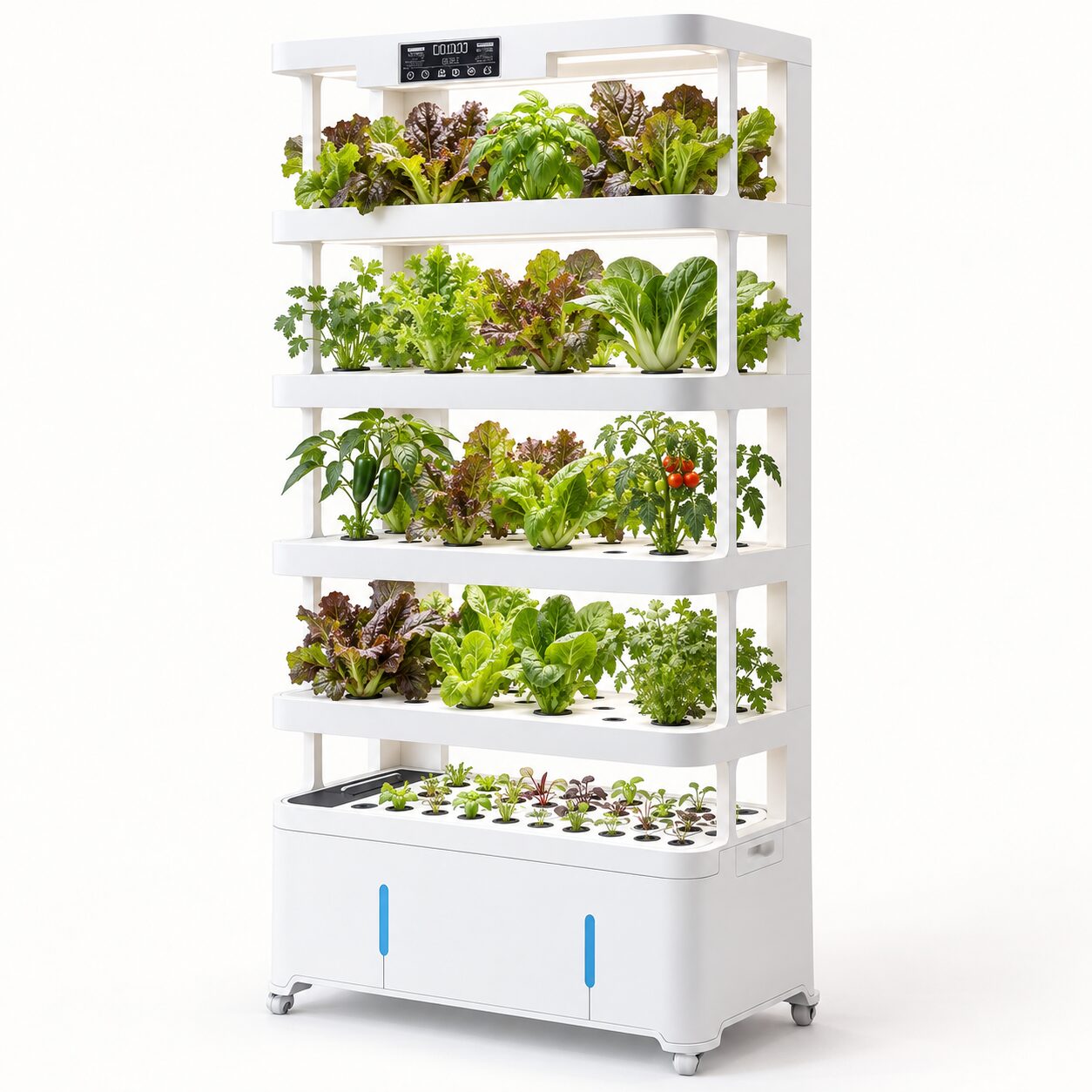
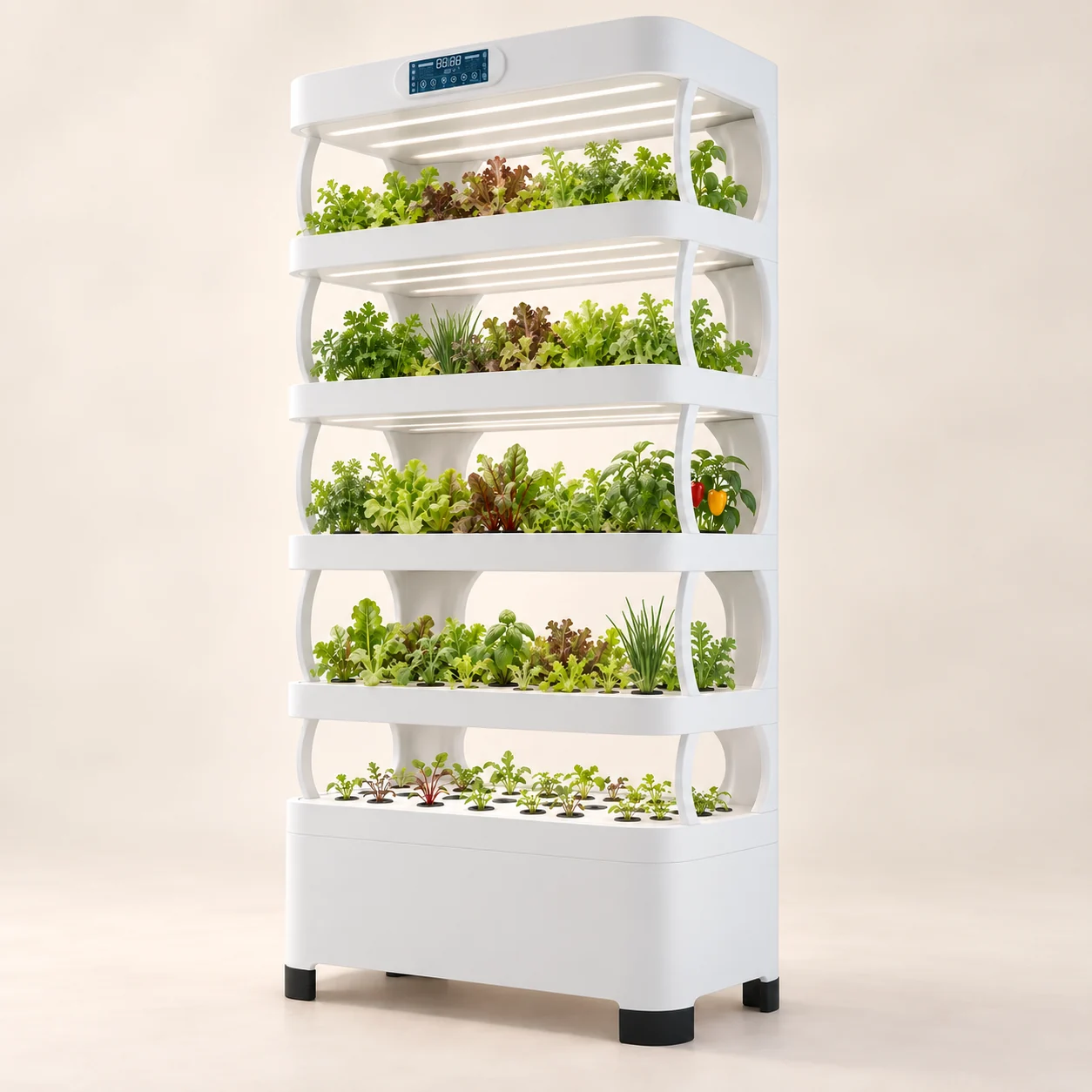
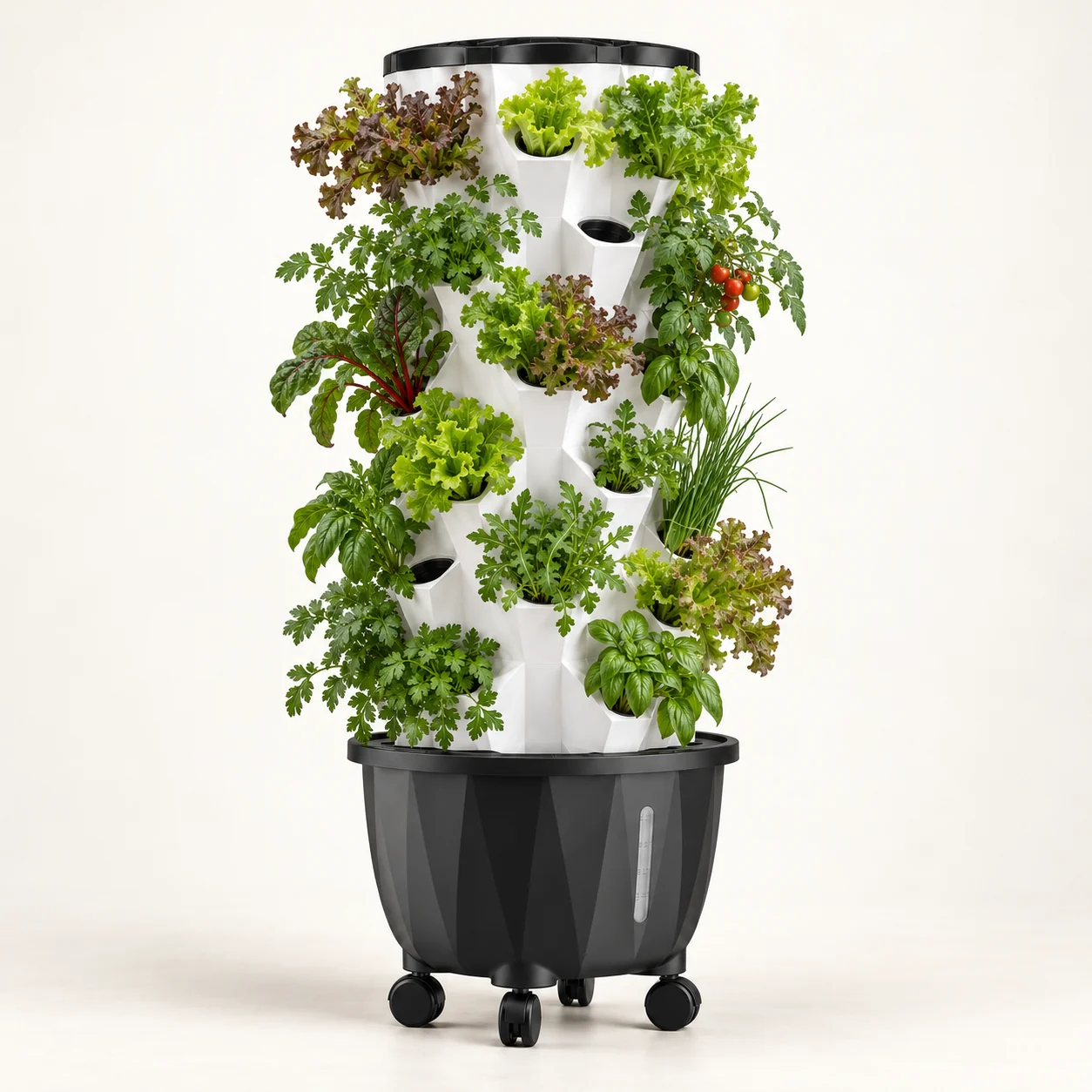
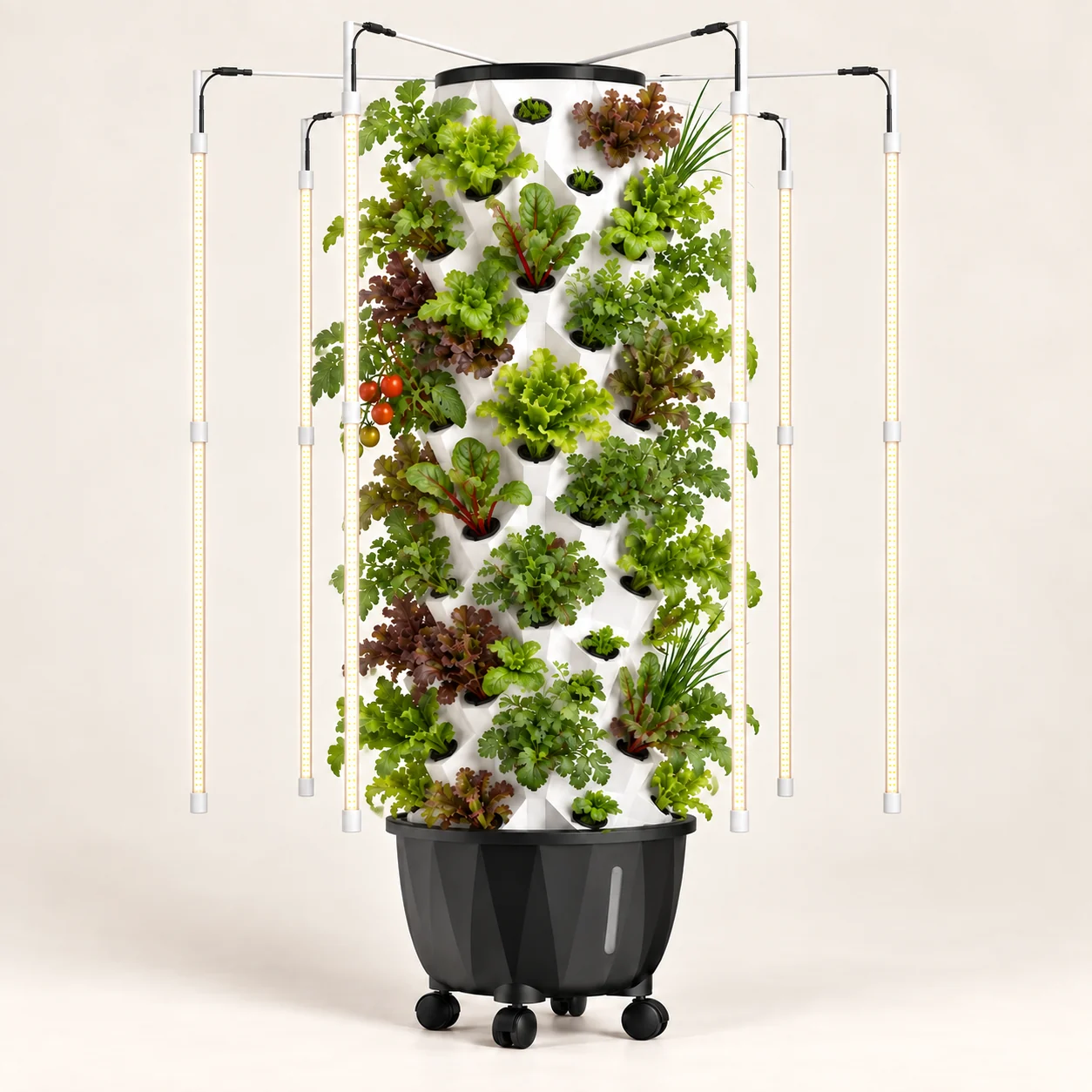





The quick answer
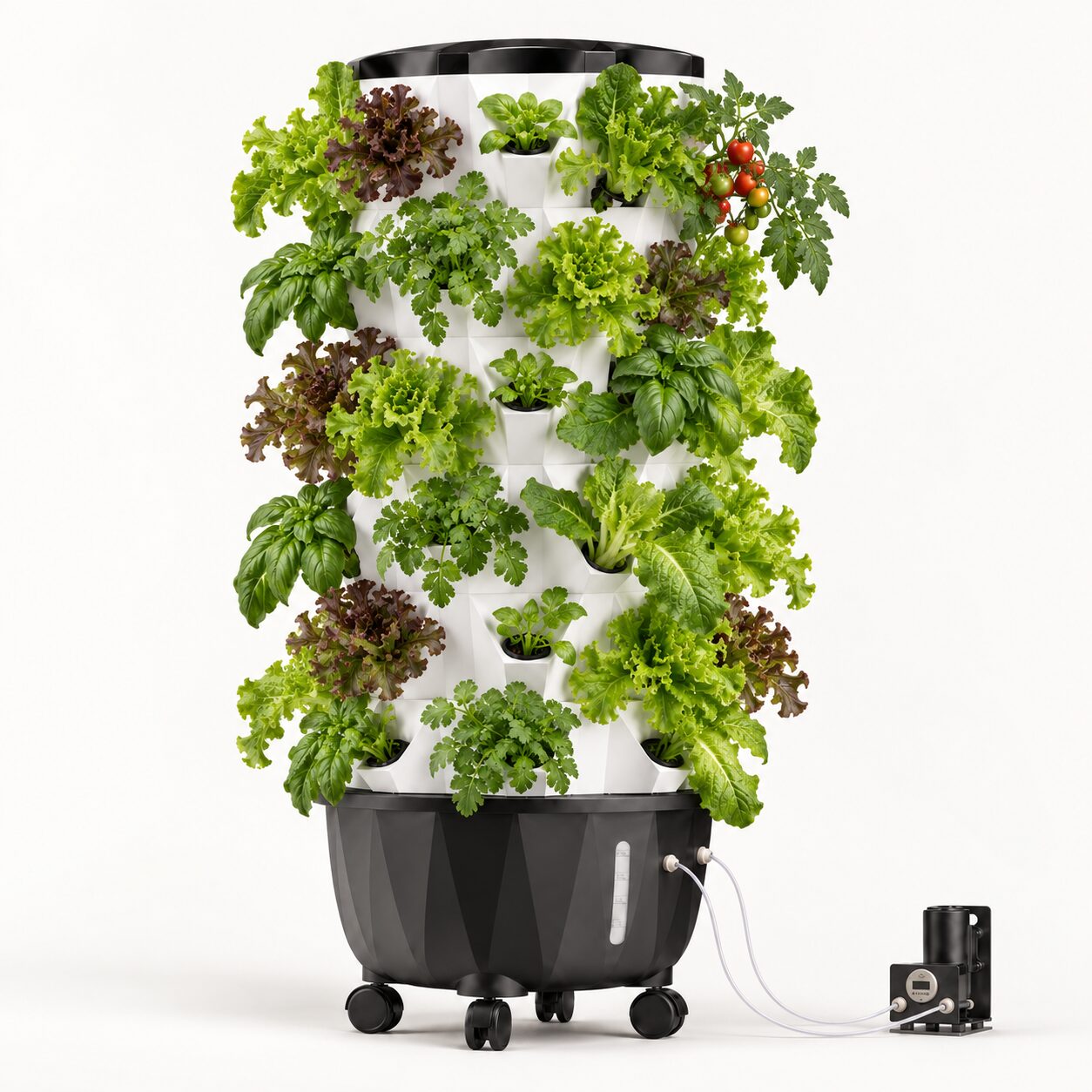
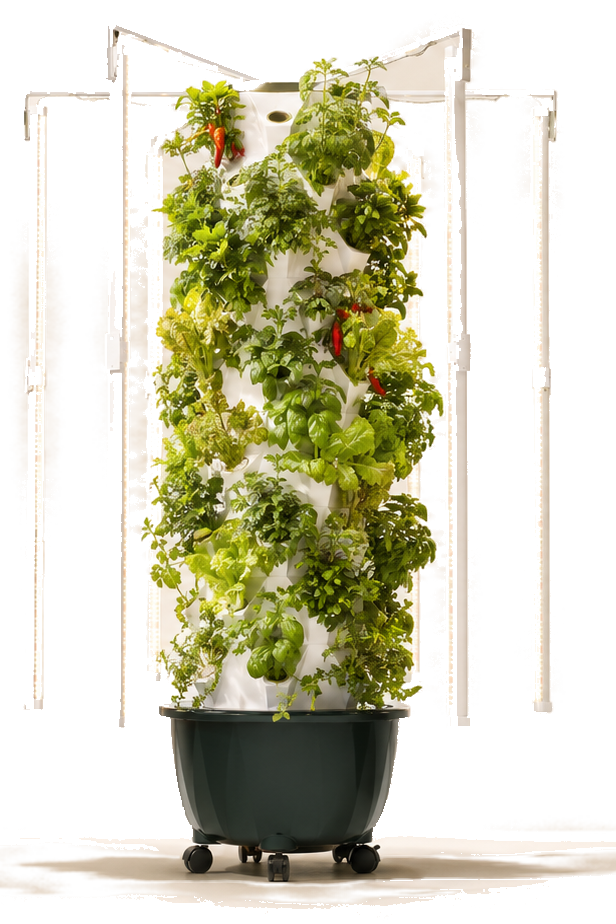
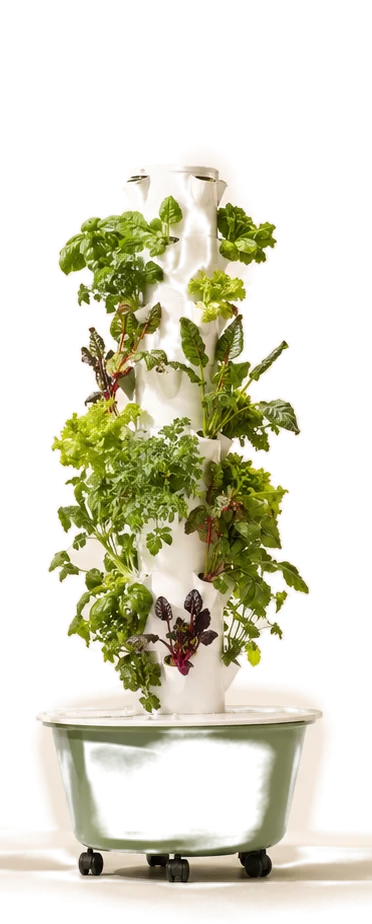
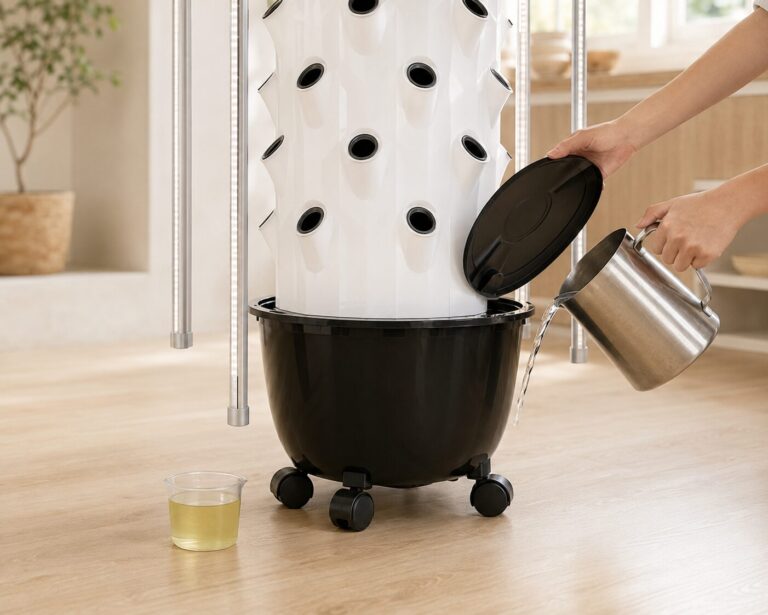
An aeroponic tower holds roots in an enclosed chamber and wets them with nutrient spray or mist. In recirculating designs, surplus solution drains back to a reservoir. Roots need both moisture and oxygen: misting is not an excuse to let them dry out.1
What Is an Aeroponic Tower?
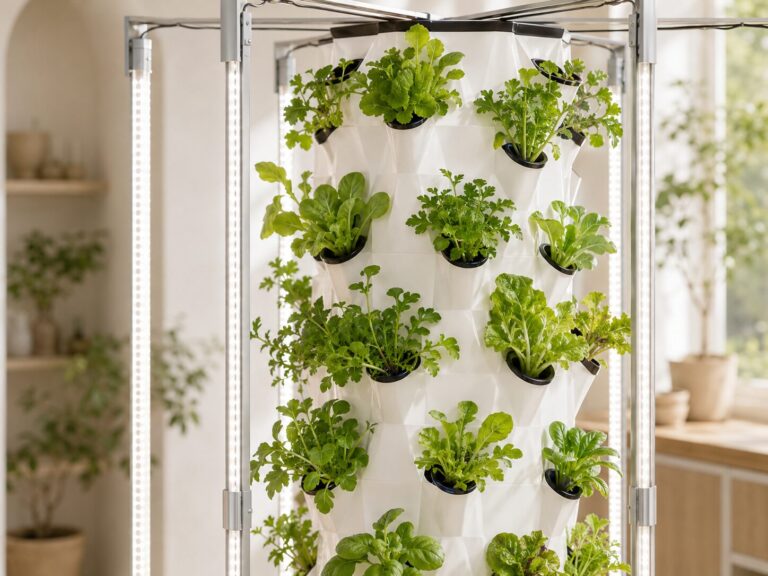
Think of aeroponics as a root-feeding method, not a tower shape. Plants sit in supported openings while roots hang inside. A gravity-fed tower that trickles water down the roots is different from one that sprays them; the product name alone does not tell you which you are buying.1

How the Mist Cycle Works
A pump-and-nozzle design delivers solution inside the root chamber. These four steps explain the principle—not a universal timer setting.15
Mist. Moisten. Drain. Repeat.
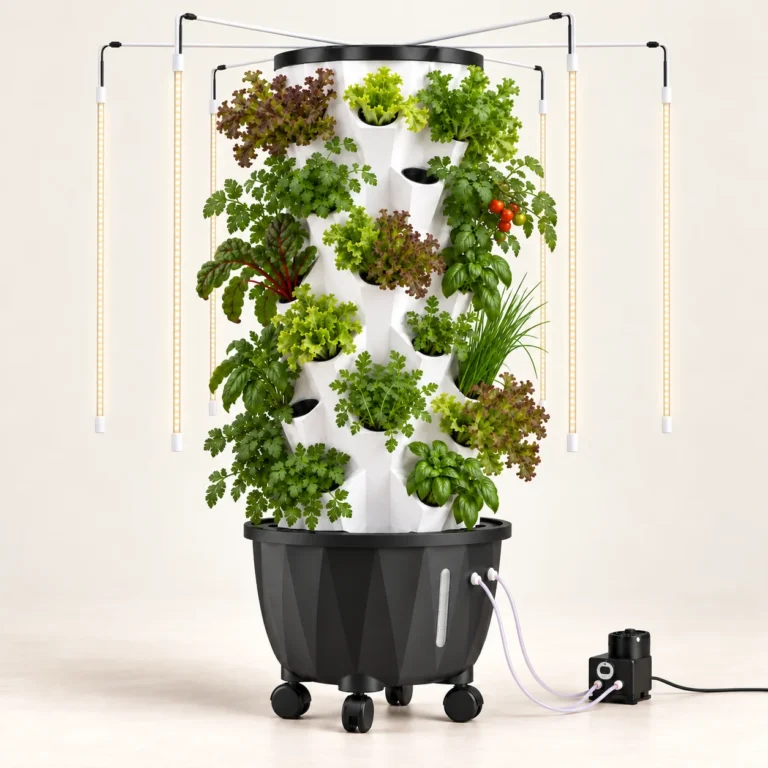
A simplified root-chamber cutaway. Hardware varies by model.
Supply the solution
The reservoir holds a mixed nutrient solution; the pump feeds the spray line.
Mist the roots
Nozzles wet suspended roots. Their coverage matters as the roots grow.
Maintain moisture
Timed delivery keeps roots moist while air surrounds them. Do not extend pauses by guesswork.
Recover the surplus
Excess drains back in a recirculating design. Water use still requires top-ups.

Before planting: assemble to the model manual, mix and test the solution, then verify delivery and drainage. Never assume that a running pump means every root receives mist.14
Five Parts to Understand
Know what you are checking before the first planting.15

Reservoir
Holds the water and dissolved nutrients.

Pump & control
Supply delivery pressure and the programmed cycle.

Spray nozzles
Distribute solution inside the chamber. Keep them clear.

Plant holders
Support seedlings while roots extend into air.

Grow lighting
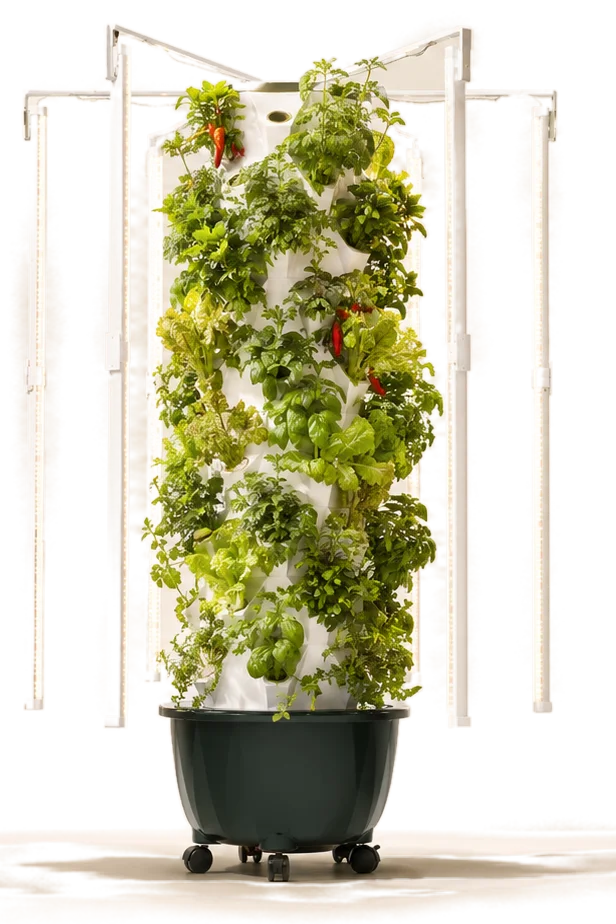
Provides suitable light where daylight is insufficient.
What Can You Grow?
Begin with crops that fit the light, root space, and support your system provides.2
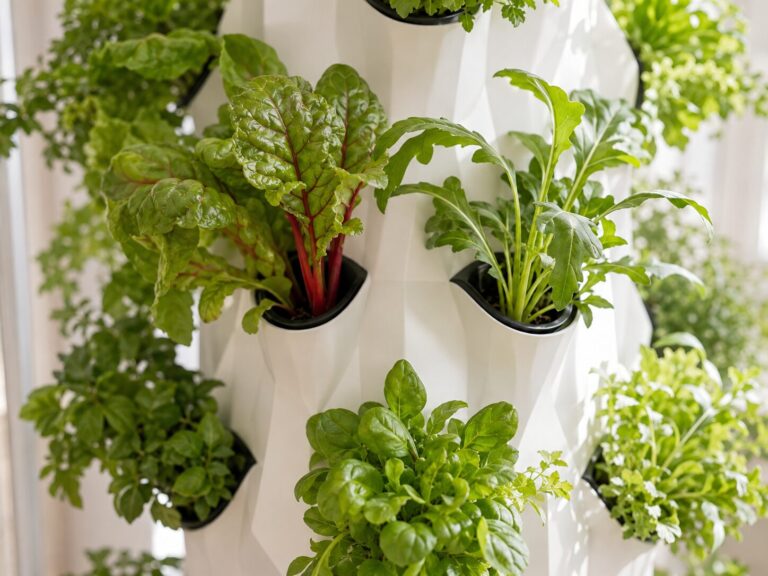
Leafy greens
Lettuce, arugula, and compact greens.
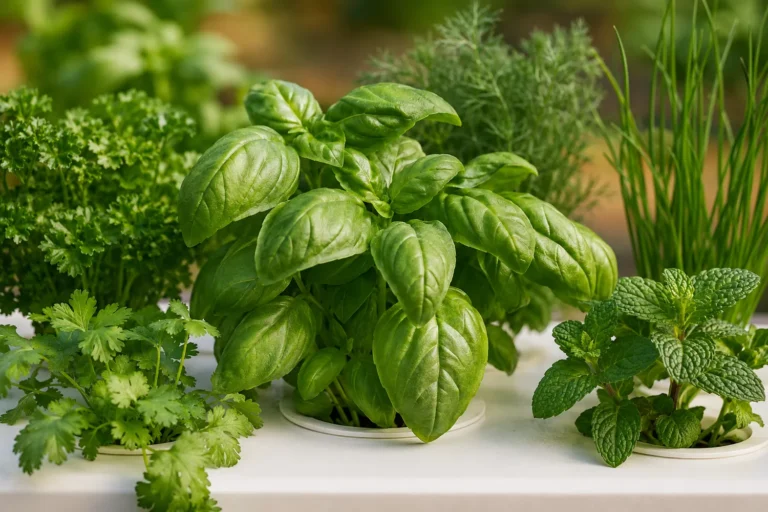
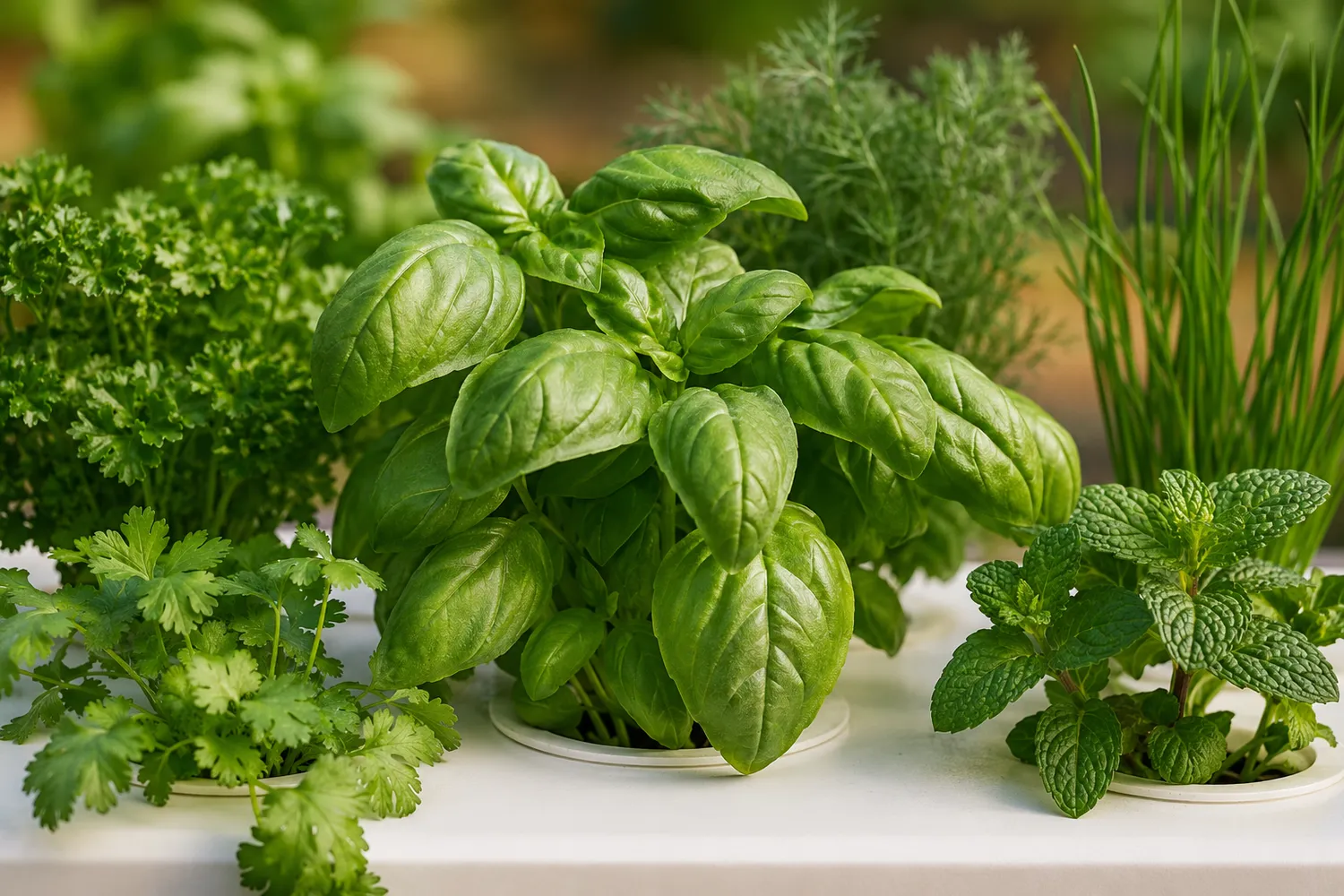
Fresh herbs
Basil and parsley; leave room to fill out.
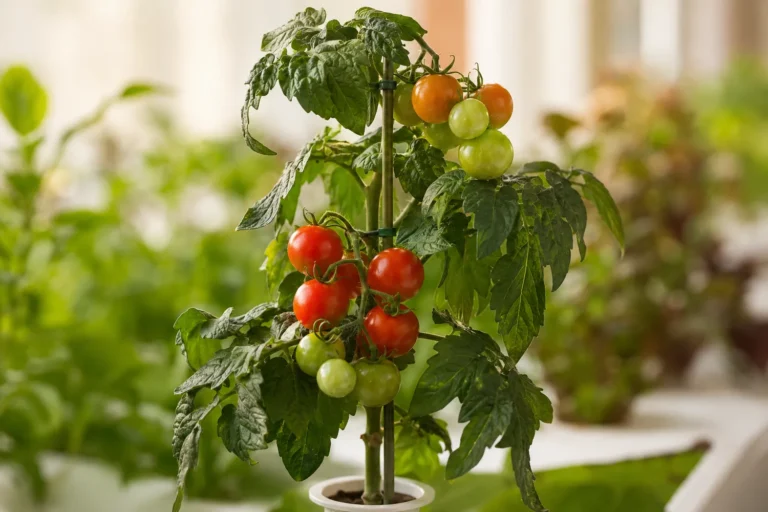
Fruiting crops
Compact tomatoes or peppers need more space and support.
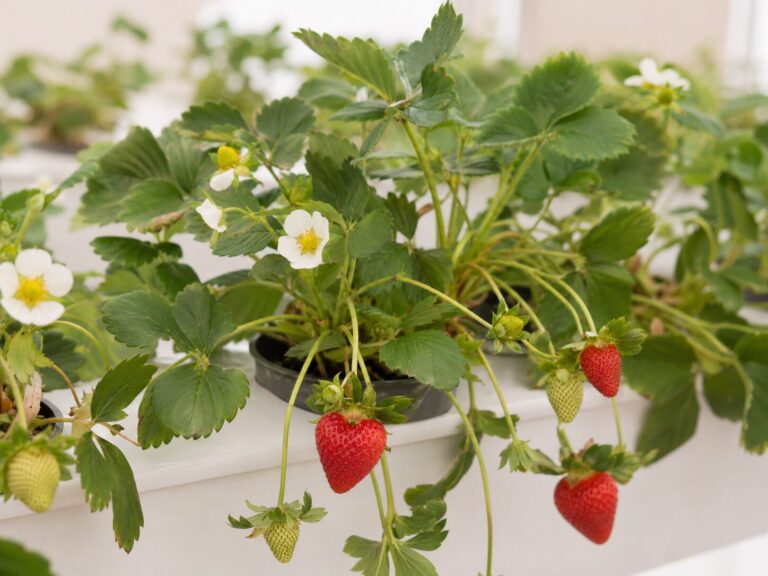
Other options
Try strawberries only with suitable conditions and support.
Care That Makes It Work
Build a daily check into your routine.
Check delivery
Watch for wilting or uneven wetting. Inspect the reservoir, controller, and lines.
Check the solution
Measure pH and EC daily. Use crop-specific targets; follow the nutrient label.
Keep things clean
Inspect filters and nozzles. Use the model-approved cleaning method, not improvised chemicals.
Watch plants and light
Check coverage, crowding, and leaf symptoms. Do not diagnose every yellow leaf as a pH problem.
Mist stops? Act promptly. Disconnect power and follow pressure-release instructions before opening fittings; contact support for model-specific recovery.234 Read the nutrient guide →
Benefits & Trade-Offs
Choose the routine as well as the hardware.
What appeals
- Roots access moisture and air
- Vertical growing without garden soil
- Recirculation can reuse solution
What needs attention
- Nozzle blockages and interrupted delivery
- Lighting, nutrients, and regular checks
- Space for mature plants and servicing
Water savings, yield, noise, and running costs depend on the setup. Soilless does not mean pesticide-free or contamination-free.6
Common Questions
The details to understand before choosing a system.
Is aeroponics always faster than hydroponics?
No. Light, variety, root-zone conditions, and reliable delivery determine performance. This guide does not promise a faster harvest or higher yield than another growing method.24
How often should the roots be misted?
Use the approved settings for your specific system and crop stage. Nozzles, pressure, and conditions differ. A pause lets delivery cycle; it is not intended to dry the roots.15
What is high-pressure vs. low-pressure aeroponics?
Pressure and nozzle design influence the spray. Those labels do not guarantee a particular droplet size or crop result. Do not swap pumps or nozzles without checking compatibility.5
Do indoor towers need grow lights?
They need enough suitable light, from daylight or supplemental lighting. Check coverage around the whole tower and the selected kit. Include lamp wattage and operating hours when estimating electricity costs.2
What causes blocked nozzles or dry roots?
Debris or deposits can restrict nozzles; low water, pump faults, or controller problems can interrupt delivery. Inspect safely using the manual. Keep a response plan for outages rather than assuming a long unattended window.4
How often do I refill and change the solution?
Check the level daily and top up as directed. Full replacement is a separate task, guided by the nutrient program and system manual. EC estimates dissolved salts, not the balance of every individual nutrient.3
Related Guides
View all guides →Choose the next answer for your garden.

Sources & further reading
- Oklahoma State University Extension: Hydroponics
- University of Minnesota Extension: Small-scale hydroponics
- Oklahoma State University Extension: Electrical Conductivity and pH Guide for Hydroponics
- Cornell Small Farms, 2010: Aeroponics: a piece of the urban farming jigsaw puzzle?
- Narasegowda and Kumar, 2022: Experimental observations on interaction between a root and droplets in relation to aeroponic agriculture
- USDA National Agricultural Library / University of Arkansas research project: Outsmarting food and waterborne pathogens for the safe production of leafy greens in recirculating hydroponic systems